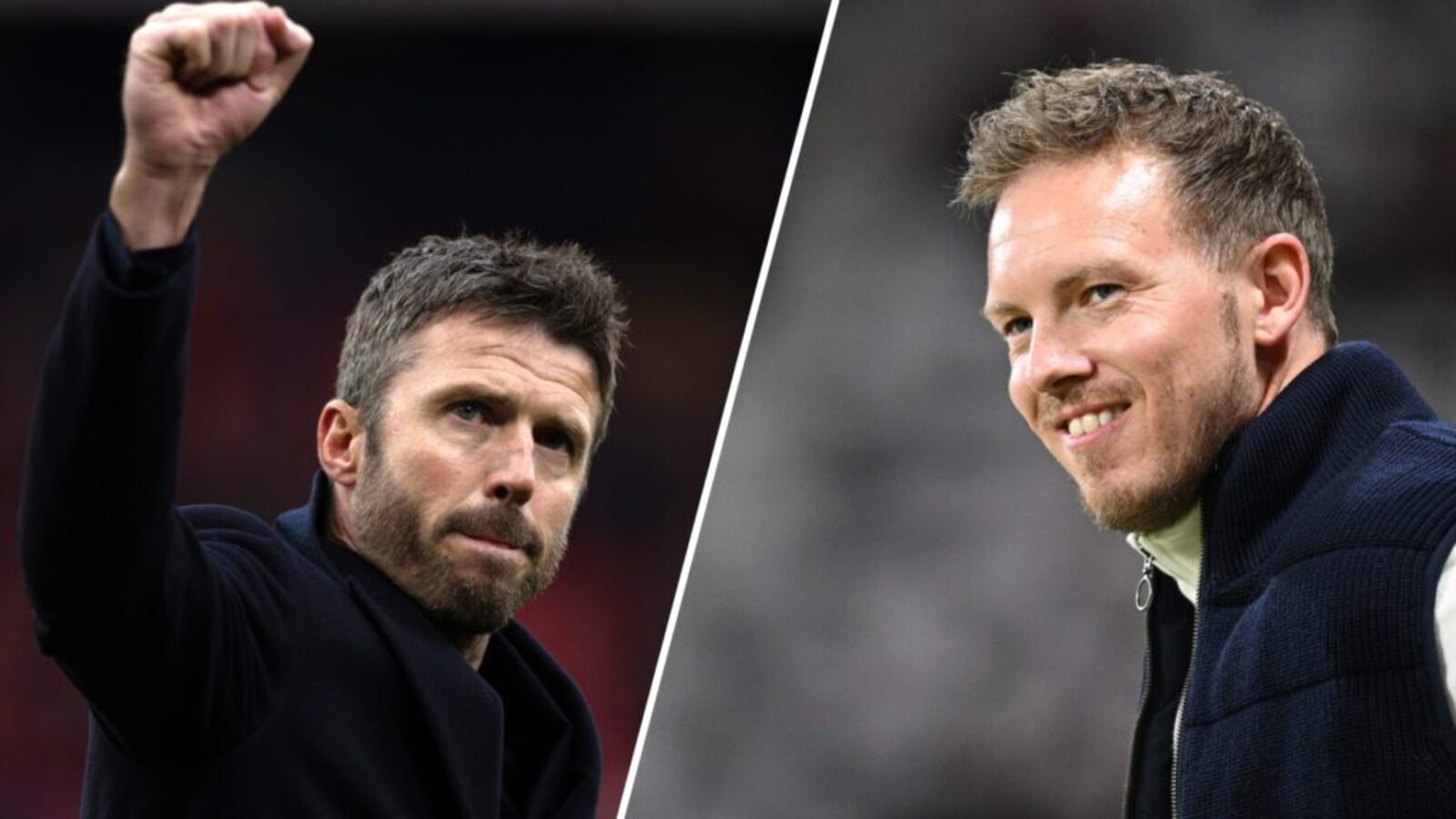
Manchester United is at a crucial crossroads as they consider their next permanent manager, with Michael Carrick and Julian Nagelsmann emerging as the leading candidates. Carrick stepped into the interim role in November 2023 following the departure of Erik ten Hag. Although he has managed to stabilize the team, questions are surfacing regarding his suitability for the long-term position.
Since taking over, Carrick has recorded a commendable nine wins, two draws, and two defeats. His style has garnered support from several players, who appreciate his approach and note that he embodies some of the values associated with the legendary Sir Alex Ferguson. Despite this backing, there are factions within the club advocating for a more established managerial figure.
Nagelsmann, who has publicly expressed interest in the Manchester United role, presents a contrasting profile. Following his dismissal from Bayern Munich in March 2023 after a disappointing exit from the Champions League, he has maintained a strong reputation across European football. His managerial experience includes successful stints with Hoffenheim, RB Leipzig, and Bayern Munich, along with his recent appointment as the head coach of the German national team.
Analyzing the Coaching Credentials
A primary concern regarding Carrick’s candidacy is his relative lack of experience compared to Nagelsmann. At just 38 years old, Nagelsmann is six years younger than Carrick but has managed over twice as many matches throughout his career. Carrick’s only full-time managerial experience prior to this role was with Middlesbrough from 2022 to 2025, where he began to build his reputation.
In contrast, Nagelsmann had already established himself as a tactician of note before Carrick took on his managerial duties. Carrick’s current win rate stands at an impressive 75% after winning six of his first eight matches as interim coach. However, over their careers, Nagelsmann edges out Carrick with a win percentage of 54% compared to Carrick’s 48%.
Carrick has implemented a traditional 4-4-2 formation at Manchester United, emphasizing classic wide play with Bruno Fernandes supporting a central striker. His approach has highlighted counter-attacking football and a flexible attacking front, which has resonated with fans and players alike.
On the other hand, Nagelsmann has preferred a 4-2-3-1 formation but has also demonstrated versatility by employing a 3-4-3 system in previous roles, prioritizing ball possession and tactical flexibility.
As Manchester United deliberates its next steps, the decision between Carrick and Nagelsmann will hinge on balancing the desire for continuity and the need for proven success. What remains clear is that both candidates bring unique strengths to the table, and the outcome could significantly shape the future of the club.