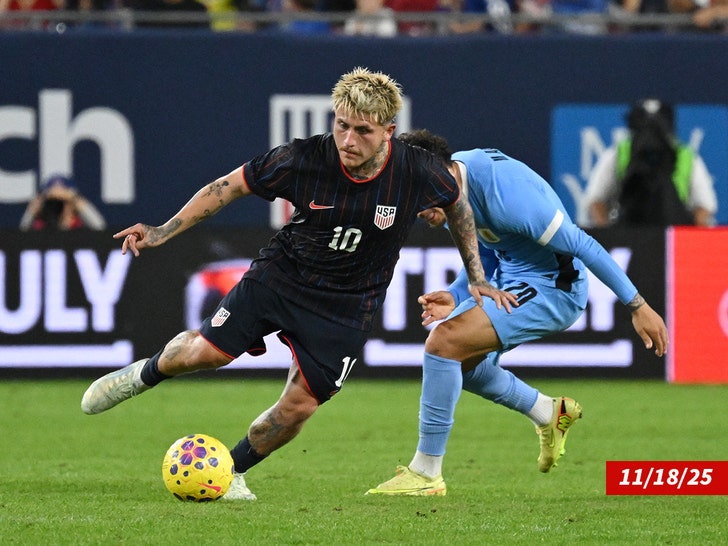
As the countdown to the FIFA World Cup in 2026 begins, excitement is building across North America, especially in the United States, which will host the majority of the tournament’s matches. Diego Luna, a key member of the U.S. Men’s National Team (USMNT), recently expressed his enthusiasm for what he describes as a pivotal moment for soccer in the country. Speaking with TMZ Sports at Los Angeles International Airport, Luna referred to the event as a “once-in-a-lifetime opportunity.”
Luna emphasized the significance of the World Cup in reshaping soccer’s landscape in the U.S. “I think for the country itself, it’s a once-in-a-lifetime opportunity,” he said. “The soccer is built here so much and to now have the World Cup come here. I think this is the biggest opportunity to kind of take that big step into making soccer a super popular sport here.”
Future Events Set to Elevate Soccer’s Popularity
The World Cup is not the only major event poised to elevate soccer’s profile in the United States. In addition to the World Cup, Los Angeles is set to host the 2028 Olympics, further spotlighting the sport. This dual opportunity presents a unique chance for the country to engage with both fans and aspiring players.
Luna reflected on the growing talent within the USMNT as they approach these critical years. “I think we have a lot of different guys, a lot of different attributes that guys bring to the team, which is very different,” he noted. “This isn’t your original U.S. Soccer Team. We got a lot of guys that bring different things to the team, different quality of players, and I think all together with the right mindset, it leads to a really good team and performances like we just had.”
Mental Health and Athlete Advocacy
In addition to discussing the upcoming tournaments, Luna also touched on the importance of mental health awareness in sports. He highlighted the “Love, Your Mind” campaign, which encourages athletes to speak openly about their mental health challenges. This initiative is part of a broader movement within the sports community, aiming to foster an environment where mental well-being is prioritized alongside physical performance.
Luna’s insights underscore an optimistic outlook not only for soccer in the United States but also for the athletes who are increasingly finding their voices beyond the pitch. As the World Cup approaches, anticipation is building for a transformative era in American soccer, one marked by increased visibility, talent, and a commitment to mental health advocacy.