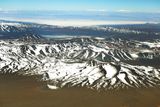
A rare snowfall in the Atacama Desert, one of the driest places on Earth, has forced the shutdown of the Atacama Large Millimeter/submillimeter Array (ALMA) observatory. Located in Northern Chile, this advanced telescope facility was impacted by an unusual snowstorm that occurred in late June and early July of 2025. The storm prompted ALMA’s research team to implement emergency procedures, temporarily halting observations as they repositioned the telescope’s dishes to prevent snow accumulation.
The Atacama Desert spans about 40,000 square miles and is renowned for its dry climate, receiving an average of just 0.5 millimeters of rain annually. Its unique conditions have made it an ideal location for astronomical observations, with minimal atmospheric interference allowing telescopes to capture faint signals from distant corners of the universe. The Chajnantor plateau, where ALMA is situated, is renowned for its altitude of approximately 13,123 feet (4,000 meters), making it one of the sunniest locations on the planet, as noted in a study published in the Bulletin of the American Meteorological Society.
Impact of Extreme Weather on Observations
The recent snowstorm was localized, sparing the nearby Southern Astrophysical Research (SOAR) Telescope and the Vera C. Rubin Observatory, which are located a few hundred miles southwest of ALMA. The intense solar radiation characteristic of the Atacama quickly melted away much of the snow, which had largely disappeared within a month. Some of the snow may have undergone sublimation, a process where solid ice turns directly into gas, driven by the region’s arid atmosphere and strong sunlight, according to NASA Earth Observatory.
While ALMA has faced temporary disruptions due to the snowstorm, this event raises questions about changing weather patterns in the Atacama. Historically, the region experienced no rainfall from October 1903 to January 1918. However, recent years have seen sporadic snowfall, with notable instances occurring in 2011, 2013, and 2021. The presence of hardy microbes and plants beneath the surface highlights the desert’s hidden life, which can thrive during unseasonal rains.
Climate Change and Future Challenges
The Atacama’s climate may be shifting, resulting in both positive and negative impacts on the ecosystem. Unseasonal rains last year sparked vibrant blooms of desert flowers, showcasing the region’s resilience. Contrastingly, severe weather events have also demonstrated the potential for destructive consequences. In March 2015, heavy rainfall led to catastrophic flooding in the coastal city of Chañaral, with the Salado River reaching depths of approximately 14.76 feet (4.5 meters). This event resulted in extensive damage to infrastructure and tragically claimed the lives of 31 individuals.
Such instances illustrate the broader implications of climate change, suggesting that the Atacama Desert may face an increase in unusual weather patterns. As the environment evolves, snow in the desert could become a recurring challenge for ALMA and other observatories in the region. The anthropogenic climate crisis is increasingly evident, altering landscapes and ecosystems around the globe. The scientific community will continue to monitor these developments closely, with the hope of understanding and adapting to the new climate realities faced by this extraordinary region.