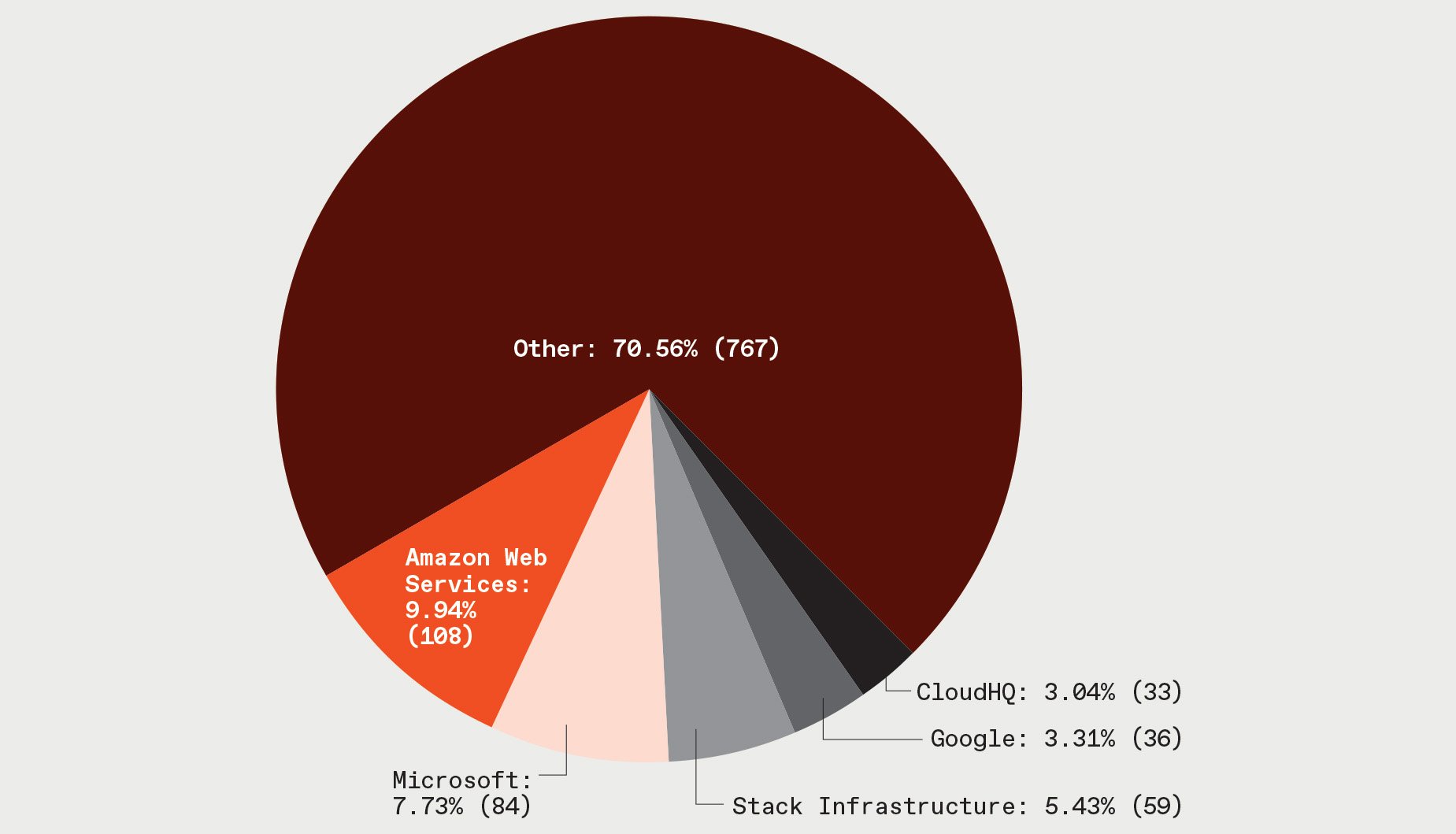
Recent analysis reveals that more than half of all upcoming global data centers will be established in the United States. This includes sites for data centers that are either under construction or have publicly announced plans. The significant concentration of data center development in the U.S. raises questions about the capacity of the country’s power grid to accommodate this rapid growth.
According to research by the Electric Power Research Institute, the size and power usage of data centers vary widely. Factors such as land availability and whether the facility will provide mixed-use services play a critical role. Tom Wilson, an energy systems expert, notes, “Data centers in the U.S. are much larger on average than data centers in other countries.”
Despite the impressive numbers, Wilson cautions that the dataset compiled by Data Center Map may undervalue the number of new data centers in China. He explains that many Chinese data center plans are not publicly announced, resulting in incomplete data. If up-to-date information were available, Wilson anticipates that the United States would still lead, followed by China, with other nations lagging behind.
Power Grid Concerns Amid Rapid Growth
One pressing issue is whether the U.S. power grid can sustain the increasing energy demands of these facilities. Wilson emphasizes that the country has experienced flat electricity demand for nearly two decades. He expresses concern over the viability of scaling the power system to support new data centers, saying, “It’s a big system to grow.”
To address potential challenges, Wilson suggests that data centers could adopt more flexible power usage strategies. This could involve scheduling complex computations during off-peak hours or utilizing on-site battery systems, thereby reducing stress on the power grid. The effectiveness of these measures in meeting future demand remains uncertain.
As the data center boom continues, stakeholders must consider the implications of such rapid expansion. Balancing the growth of digital infrastructure with sustainable energy practices will be crucial for the future of data management in the United States and beyond. The ongoing developments in this sector will require careful monitoring and planning to ensure that the power grid can keep pace with demand.