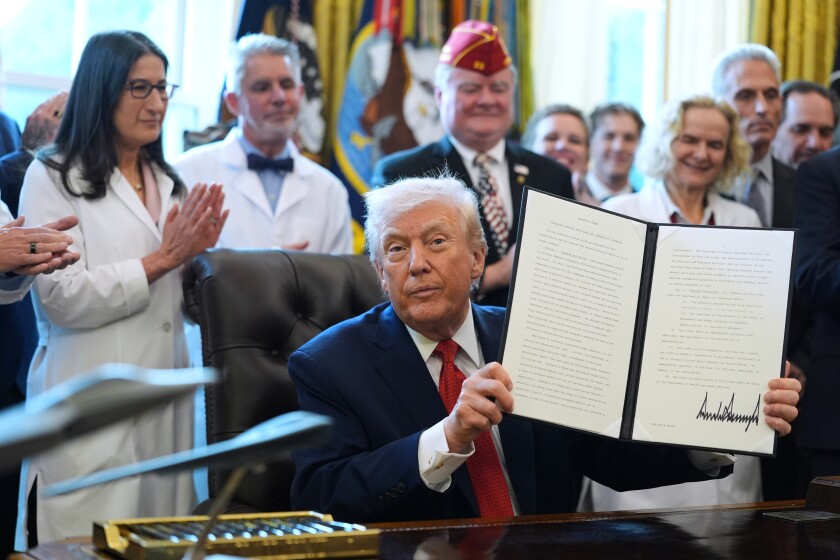
President Donald Trump has directed an “expeditious” reclassification of marijuana, moving it from Schedule I to Schedule III under the Controlled Substances Act. This change, announced recently, acknowledges the longstanding arguments made by advocates regarding the medical benefits of marijuana and is expected to facilitate research into its therapeutic uses.
For nearly fifty years, marijuana has been classified as a Schedule I substance, alongside drugs deemed to have high potential for abuse and no accepted medical applications, such as heroin and LSD. This classification has faced criticism, particularly following a 1988 ruling by Francis Young, then chief administrative law judge at the Drug Enforcement Administration (DEA). Young concluded that marijuana was “one of the safest therapeutically active substances known to man,” and had accepted medical uses for conditions like nausea from chemotherapy and spasticity related to multiple sclerosis.
Despite Young’s findings, the DEA maintained marijuana’s Schedule I status until a review prompted by President Joe Biden in 2023. The U.S. Department of Health and Human Services (HHS) found “credible scientific support” for marijuana’s effectiveness in treating pain, nausea, and appetite loss associated with medical conditions. HHS concluded that the potential dangers of marijuana did not warrant its continued classification as a Schedule I drug.
In May 2024, Attorney General Merrick Garland accepted HHS’s recommendation for reclassification. Trump has positioned this shift as beneficial for “American patients suffering from extreme pain, incurable diseases, aggressive cancers, seizure disorders, neurological problems and more.”
While moving marijuana to Schedule III provides some recognition of its medicinal properties, it does not legalize its medical use outright. Medical cannabis products must still receive approval from the Food and Drug Administration (FDA) to be prescribed legally. Furthermore, marijuana businesses, despite operating under state law, remain illegal federally. However, the reclassification could ease the burden on these businesses by allowing them to access standard tax deductions, addressing the high effective tax rates they currently face.
This change comes amid a growing trend across the United States, where 40 states have legalized marijuana for medical purposes, and 24 states have also authorized recreational use. This situation has led to a significant clash between state and federal laws, with public sentiment increasingly favoring reforms to federal marijuana prohibition.
Trump has emphasized that his order “doesn’t legalize marijuana in any way, shape or form.” While accurate, this statement underscores the ongoing complexities surrounding marijuana policy in the U.S. As the landscape continues to evolve, advocates remain hopeful that this reclassification will mark a step toward broader acceptance and research into cannabis as a therapeutic option.