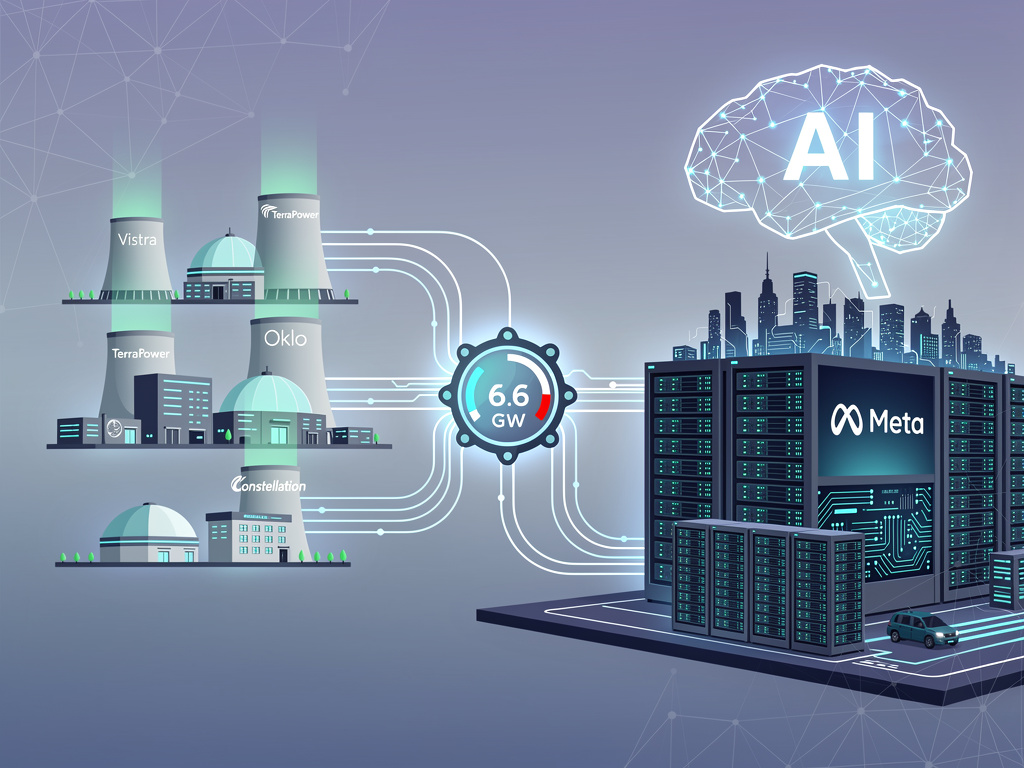
The demand for artificial intelligence (AI) is pushing technology companies to consider innovative solutions, including the establishment of data centers in space. With AI requiring increasing amounts of computational power and energy, these celestial centers could provide a means to alleviate the growing pressure on Earth’s resources.
Tech giants such as Amazon, Google, OpenAI, and Elon Musk’s xAI are exploring the possibility of orbital data centers that utilize solar energy. These centers would reduce the need for cooling systems, addressing some of the environmental concerns associated with traditional data centers.
Addressing Growing Power Needs
According to a report from Scientific American, data centers are projected to account for nearly half of the United States’ electricity demand growth between now and 2030. The global power requirements for these facilities could potentially double by the end of the decade as companies work to train larger AI models. As noted by The Verge, the limitations of physical infrastructure on Earth are prompting tech companies to seek alternatives.
The concept of orbital data centers is appealing because they could take advantage of continuous solar energy. Benjamin Lee, a computer architect at the University of Pennsylvania, stated that these centers could help resolve long-standing challenges in powering data centers in a carbon-efficient manner. The sun’s rays would be available uninterrupted, free from clouds or nighttime interruptions, leading to significant reductions in cooling demands due to the vacuum of space.
Baiju Bhatt, founder and CEO of Aetherflux, emphasized the urgency of the situation, stating, “The race for artificial general intelligence is fundamentally a race for compute capacity and, by extension, energy.” He noted that current energy plans may not be sufficient to meet future demands.
Challenges Ahead for Space-Based Computing
While the prospect of space-based data centers holds promise for reducing environmental impacts, significant challenges remain. Sundar Pichai, CEO of Alphabet, acknowledged that, like any ambitious project, establishing these centers will require overcoming complex engineering hurdles.
Despite decreasing launch costs over recent years, the expenses involved in deploying and operating data centers in space remain high. Scientific American has pointed out that space-based computing will only become cost-effective if rocket launch costs decline significantly.
There are also potential ecological consequences to consider. Experts warn that space data centers may exacerbate existing environmental and climate issues. For instance, having data centers visible in the night sky could interfere with astronomical observations, as some researchers rely on twilight to track near-Earth asteroids. Furthermore, increasing launches could contribute to the growing problem of space debris, as more hardware is sent into orbit and fragments fall back to Earth.
The exploration of data centers in space encapsulates both the innovative spirit of the tech industry and the pressing need for sustainable solutions as AI technology continues to evolve and expand. As companies push forward, careful consideration of the associated environmental impacts will be essential in shaping the future of computing.