A recent study published in Ecology Letters has highlighted the crucial role of plant-associated microorganisms, specifically foliar endophytic fungi (FEF), in promoting seedling survival and maintaining biodiversity in subtropical forests. Conducted by researchers led by Prof. Liang Yu from the Chinese Academy of Sciences, the study reveals the intricate mechanisms of species coexistence and the essential contributions of these often-overlooked fungal allies.
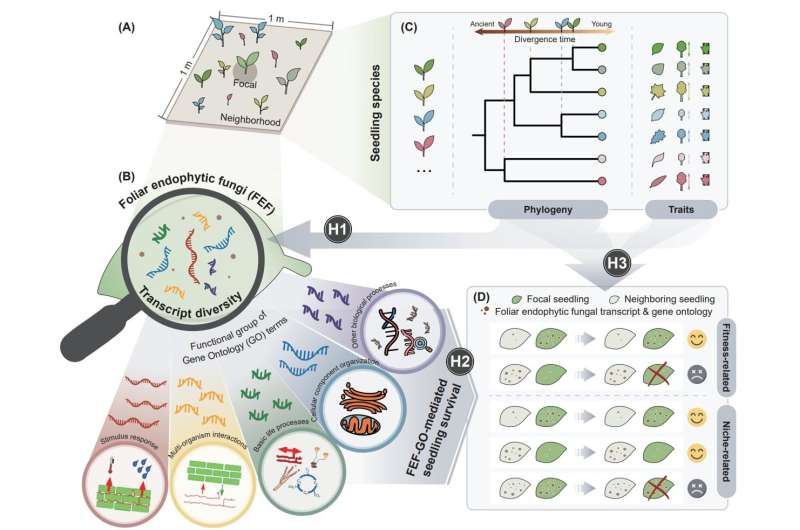
The research team analyzed transcriptomic data from seedlings of 103 woody species in the Gutianshan forest plot, incorporating species-level functional traits and long-term monitoring data. By extracting and functionally annotating transcripts from FEF, the study connects microbial functional genomics with contemporary coexistence theory, providing insights into how these fungi influence host fitness, niche differentiation, and ultimately, seedling survival.
Key Findings on Microbial Contributions
The analysis indicated that the diversity of FEF transcripts is significantly influenced by the phylogenetic divergence time of their host plants as well as the maximum height of the trees. Importantly, the functions of FEF were found to enhance seedling survival through processes related to fitness and niche adaptation. The research identified 118 Gene Ontology (GO) terms that are significantly linked to seedling survival, revealing a dual regulatory mechanism at play.
Specifically, GO terms that show high dependence on host phylogeny enhance survival through fitness differences stemming from interactions among multiple organisms. Conversely, those with high host-trait dependence support survival through niche differentiation related to fundamental life processes. These findings underscore the complex relationships between microbial symbionts and plant species in forests.
The implications of this research extend beyond academic inquiry. While traditional ecological theories have primarily focused on interactions between plants, this study emphasizes the critical importance of microbial partners in sustaining ecosystem functions. Ignoring the roles of microbes in ecological restoration and conservation efforts could jeopardize long-term biodiversity outcomes.
Significance for Biodiversity Conservation
As efforts to conserve forest biodiversity intensify, understanding the role of microbial communities becomes increasingly vital. The findings from this study suggest that integrating microbial management strategies could enhance conservation initiatives, ensuring more robust ecosystems.
The research, conducted by Baocai Han and colleagues, highlights the need for a paradigm shift in how we approach biodiversity conservation, advocating for a more holistic view that includes the often-unseen contributions of fungi and other microorganisms.
For those interested in further details, the complete study can be accessed in the Ecology Letters journal under the title “Molecular Functional Diversity of Foliar Endophytic Fungi and Their Contributions to Seedling Survival in a Subtropical Forest.” The study’s findings provide a deeper understanding of the intricate web of life that sustains forests and emphasizes the importance of considering microbial interactions in ecological management.