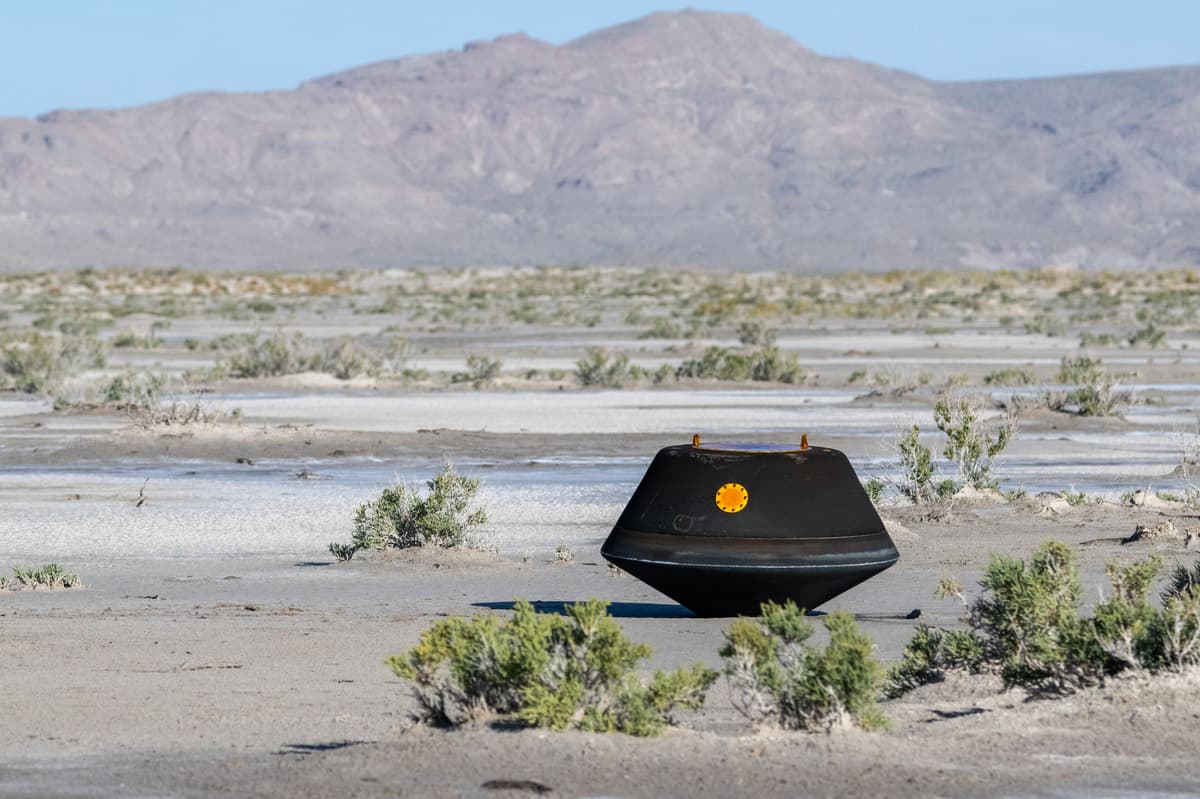
Scientists have confirmed the discovery of vital ingredients for life in samples collected from the asteroid Bennu. This significant finding supports the theory that asteroids may have played a crucial role in delivering the essential components necessary for life on Earth and potentially other celestial bodies. The samples were returned to Earth by NASA’s OSIRIS-REx mission in 2023.
Analysis of these pristine asteroid fragments revealed the presence of several sugars essential for biological processes, including ribose, a fundamental building block of RNA. This discovery completes the inventory of key life-forming compounds previously identified in the Bennu samples. Earlier investigations had already confirmed the existence of water, carbon, amino acids, and phosphates, crucial for life as we know it. Significantly, all five nucleobases that constitute DNA and RNA were detected in earlier studies. However, the critical sugar component required to form the backbone of these genetic molecules was previously unaccounted for—until now.
Yoshihiro Furukawa, the lead researcher from Tohoku University in Japan, stated, “These sugars complete the inventory of ingredients crucial to life.” He added that the findings bolster the idea that asteroids could have delivered all the necessary components for life not only to Earth but also to other bodies in the solar system, such as Mars.
The research team analyzed a small portion of the Bennu samples, identifying not just ribose but also other important sugars such as glucose, vital for the metabolism of nearly all life forms on Earth. The prevailing scientific theory suggests these sugars originated from chemical reactions in briny water on Bennu’s much larger parent asteroid over 4.5 billion years ago.
The samples collected by the OSIRIS-REx spacecraft were sealed in space, ensuring they remain uncontaminated by Earth’s environment. This unique circumstance has given scientists an unprecedented opportunity to study pristine extraterrestrial chemistry. While similar compounds have been identified in meteorites that have landed on Earth, there has always been concern regarding potential earthly contamination. “This finding in the Bennu sample guarantees that these results were true,” Furukawa explained, with the team’s findings published in the journal Nature Geoscience.
The implications of this discovery for understanding the origin of life are profound. The presence of ribose, without 2-deoxyribose (the sugar found in DNA), strongly supports the “RNA world” hypothesis. This concept suggests that the earliest life forms on Earth were based on RNA, which could store genetic information and replicate, with DNA evolving later.
Astrobiologist Danny Glavin at NASA’s Goddard Space Flight Center and a co-investigator on the OSIRIS-REx mission expressed optimism about the findings. He stated that if these materials were widespread throughout the early solar system, then locations such as Mars or Europa, an icy moon of Jupiter, may also have been seeded with these essential ingredients. “I’m becoming much more optimistic that we may be able to find life beyond Earth, even in our own solar system,” Glavin said in a video released by NASA.
As research continues, the findings from the Bennu samples will further inform our understanding of life’s origins and the potential for life elsewhere in the universe.