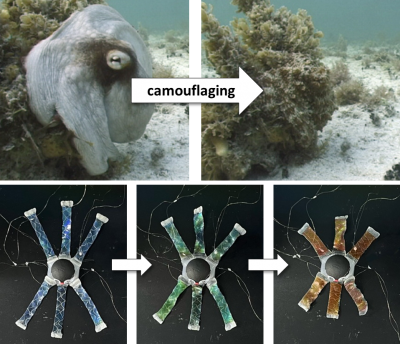
A research team at the Korea Institute of Science and Technology (KIST) has developed an innovative soft robot named ‘OCTOID’ that can change color and shape, mimicking the remarkable abilities of octopuses. Led by Dr. Dae-Yoon Kim from the Functional Composite Materials Research Center, this groundbreaking technology showcases a unique combination of color adaptation and mobility, responding to electrical stimuli.
The OCTOID represents a significant advancement in soft robotics. Unlike traditional robots that primarily bend or stretch, this device can alter its appearance and movement to blend with its environment. By imitating octopus behavior, which is known for its exceptional camouflage and dexterity, the OCTOID can grasp objects and adjust its shape according to surrounding conditions.
Innovative Features of OCTOID
The development of the OCTOID is a remarkable step forward, as it integrates various functionalities into a single platform. The robot changes its color in real-time through electrical stimulation, allowing it to adapt visually to different settings. This feature not only enhances its camouflage abilities but also expands its potential applications in various fields, including search and rescue operations, environmental monitoring, and human-robot interaction.
According to Dr. Kim, the inspiration behind OCTOID stems from the octopus’s natural capabilities. “Octopuses possess a unique ability to change their skin color and texture, which allows them to hide from predators,” he said. “Our goal was to replicate this fascinating feature in a soft robotic format.”
The team’s research emphasizes the importance of flexibility and adaptability in robotic design. The OCTOID’s ability to grasp objects and manipulate its shape can open new avenues in robotics, particularly in scenarios where delicate handling is required.
Future Implications and Applications
The implications of the OCTOID technology extend beyond mere aesthetics. By combining movement, color change, and soft robotics, this innovation could revolutionize how robots are deployed in dynamic environments. Potential applications range from advanced prosthetics to interactive educational tools, enhancing user engagement and functionality.
As the research progresses, the team at KIST aims to refine the technology further, focusing on improving the responsiveness and efficiency of the color-changing mechanism. With continued development, the OCTOID could play a crucial role in enhancing human-robot collaboration in a variety of settings.
In summary, the introduction of the OCTOID soft robot marks a significant milestone in robotics, showcasing the potential for machines to adapt and respond in ways that were previously thought to be unique to living creatures. The work of Dr. Dae-Yoon Kim and his team at KIST illustrates the ongoing convergence of technology and nature, promising exciting advancements in the field of robotics.