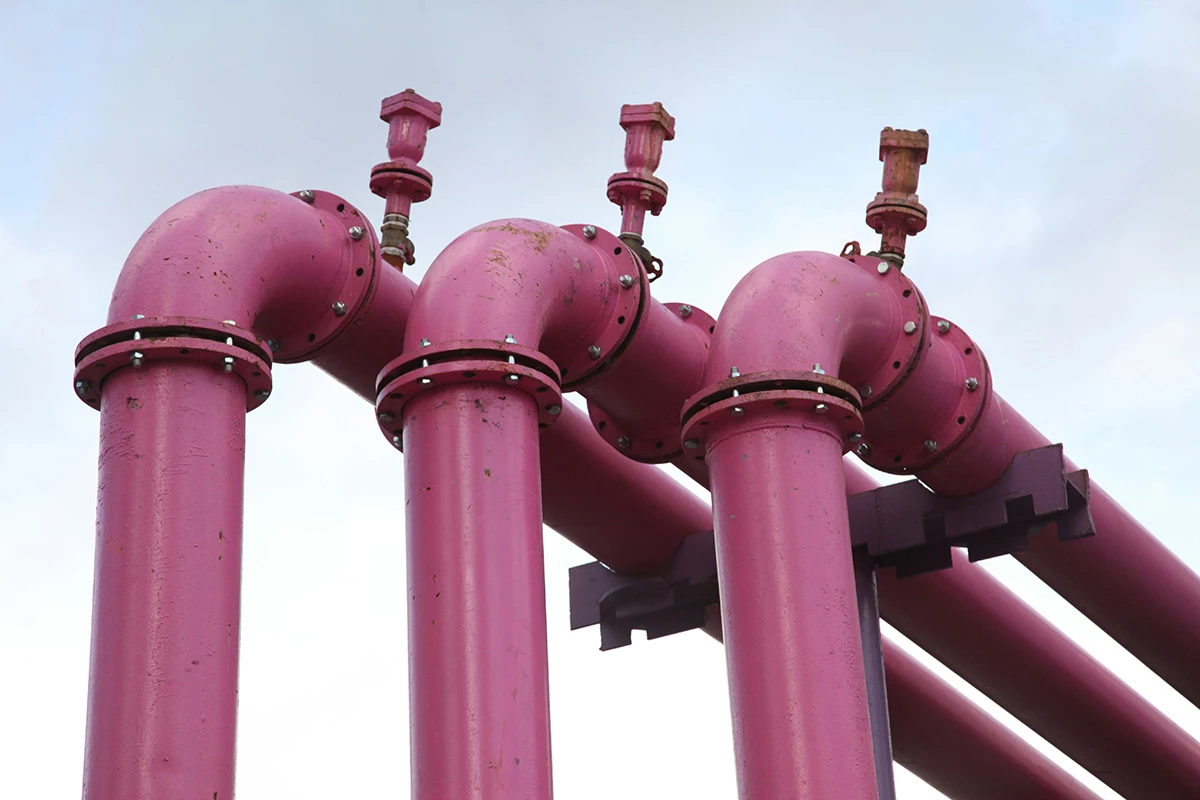
Industrial pipes used for transporting water and chemicals often face issues with scale buildup, which can impair flow and damage equipment. This not only leads to increased maintenance costs but also disrupts operational efficiency. Traditional methods, such as water softeners and chemical-based inhibitors, have limitations that prompted researchers at Rice University in Houston, Texas, to explore an innovative solution: coatings made from lab-grown diamonds.
By utilizing coatings comprised of synthetic diamonds, the research team aims to provide a more effective barrier against mineral accumulation. Their findings indicate that these diamond films can remain clean without the need for regular maintenance. This breakthrough builds on earlier studies demonstrating that diamond is not only extremely hard and chemically stable but also capable of inhibiting bacterial growth.
To create the diamond films, the researchers employed a technique known as microwave plasma chemical vapor deposition (MPCVD), a widely adopted method for producing synthetic diamonds. In this process, methane and hydrogen gases were introduced into a reactor chamber containing silicon wafers that had been spin-coated with a nanodiamond solution. Through high-power microwave radiation, the gases were energized into a plasma state, allowing carbon atoms to settle on the wafers and crystallize into diamond structures over several hours.
Testing and Results
The team then conducted experiments to analyze the effectiveness of these diamond films against scale formation. They submerged samples in a supersaturated calcium sulfate solution at room temperature for 20 hours. The results were telling: the nitrogen-terminated diamond film demonstrated more than an order of magnitude less scale accumulation compared to films terminated with oxygen, hydrogen, or fluorine. Not only was the scale buildup significantly reduced, but it also appeared in scattered crystal clusters rather than the dense layers typical of other coatings.
In further tests involving boron-doped diamond electrodes, the buildup of scale was found to be approximately seven times lower than that on untreated electrodes. These results suggest that the new diamond coating could serve as a long-lasting solution to the pervasive problem of mineral buildup across various industries.
Pulickel Ajayan, a professor of materials science and nanoengineering at Rice University and co-author of the study published in ACS Nano earlier this month, highlighted the significance of these findings. “These findings identify vapor-grown, cost-effective, polycrystalline diamond films as a powerful, long-lasting anti-scaling material with broad potential across water desalination, energy systems, and other industries where mineral buildup is a problem,” he stated.
The implications of this research extend beyond merely improving the longevity of industrial pipes. The potential applications of diamond coatings could revolutionize water desalination processes, enhance oil and gas production, and improve the efficiency of power generation equipment.
As the research progresses, the introduction of lab-grown diamond coatings could pave the way for more sustainable and cost-effective operational practices in industries that frequently contend with scale buildup. The innovative approach not only represents a significant leap in material science but also offers a practical solution to a long-standing challenge in various industrial sectors.