Recent research from the Chinese Academy of Sciences has revealed a significant connection between humic substances derived from crop residues and antibiotic resistance in soil ecosystems. The study, published in the journal Agricultural Ecology and Environment on December 5, 2025, highlights how humic substances formed through thermal treatments can influence microbial metabolism and the accumulation of antibiotic resistance genes (ARGs).
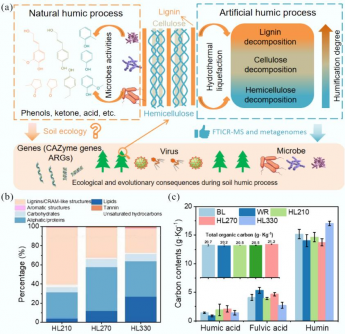
Researchers simulated the natural process of humification by applying controlled thermal treatments to rice straw at temperatures of 210, 270, and 330 °C. This approach allowed them to create artificial humic substances that mimic the progressive decomposition of lignocellulosic biomass. Each year, billions of tons of such biomass enter soils worldwide, playing a crucial role in soil fertility, carbon sequestration, and microbial homeostasis.
The study’s findings indicate that humic substances formed at higher temperatures serve as accessible carbon sources for microbes, stimulating carbohydrate metabolism. Notably, the accumulation of ARGs was unexpectedly promoted, demonstrating a complex interaction between soil organic matter and microbial communities.
Key Findings on Microbial Metabolism and Antibiotic Resistance
The composition of organic matter is critical in determining how microbes access carbon and energy. Previous research has shown that organic inputs can affect microbial stress responses and antibiotic resistance. However, the specific role of lignocellulose-derived humic substances, particularly phenolic compounds released from lignin, remained largely unexplored until this study.
The researchers characterized the resulting humic substances—designated as HL210, HL270, and HL330—using advanced techniques such as excitation-emission matrix fluorescence spectroscopy, gas chromatography-mass spectrometry, and electrospray ionization Fourier-transform ion cyclotron resonance mass spectrometry. By adding these substances to paddy soils at equal total organic carbon concentrations, they aimed to isolate compositional effects on soil microbes.
The results showed a clear shift in microbial carbon metabolism in relation to the temperature of humification. The study found that carbohydrate-active enzymes (CAZymes) accounted for 97.8% of total CAZymes, with the relative abundance of glycoside hydrolases increasing significantly from approximately 61% to 84% as temperatures rose from HL210 to HL330. This shift indicates enhanced microbial degradation of various carbohydrates, highlighting the intricate relationship between microbial communities and humic substances.
Implications for Soil Management and Ecological Risks
The study further revealed that the abundance of ARGs increased stepwise with the degree of humification, rising by up to 4.6-fold in soils treated with HL330. These enriched ARGs were primarily linked to antibiotic efflux mechanisms, target protection, and inactivation, predominantly contributed by microbial groups such as Proteobacteria, Acidobacteria, Firmicutes, and Chloroflexi.
The researchers emphasized the ecological trade-off presented by these findings. While humification enhances soil carbon storage and fertility, it may inadvertently create conditions that support the spread of antibiotic resistance within agricultural soils. Understanding this balance is essential for developing sustainable practices in crop residue management and soil amendments.
The comprehensive nature of this research underscores the importance of considering not only the benefits of soil organic matter but also the potential risks associated with its composition. As agricultural practices continue to evolve, the study serves as a crucial reminder that maintaining soil health involves a careful examination of microbial dynamics and their implications for broader ecological systems.
In conclusion, the intricate relationship between humic substances and microbial metabolism presents significant challenges and opportunities for sustainable agriculture. Future strategies aimed at maximizing ecological benefits must account for the potential risks associated with antibiotic resistance, paving the way for responsible soil management practices.