Fungal infections are a growing global health concern, claiming millions of lives annually. Researchers at McMaster University have made a significant breakthrough by identifying a molecule that could enhance treatment for drug-resistant fungal infections. The compound, named butyrolactol A, specifically targets the dangerous pathogen Cryptococcus neoformans, known for its resilience against conventional antifungal therapies.
Cryptococcus infections can lead to severe respiratory symptoms and predominantly affect individuals with weakened immune systems, such as those battling cancer or living with HIV. Alongside this pathogen, other fungi like Candida auris and Aspergillus fumigatus have also been classified as priority pathogens by the World Health Organization. Despite the persistent threat, treatment options remain severely limited, with only three primary antifungal drug classes available.
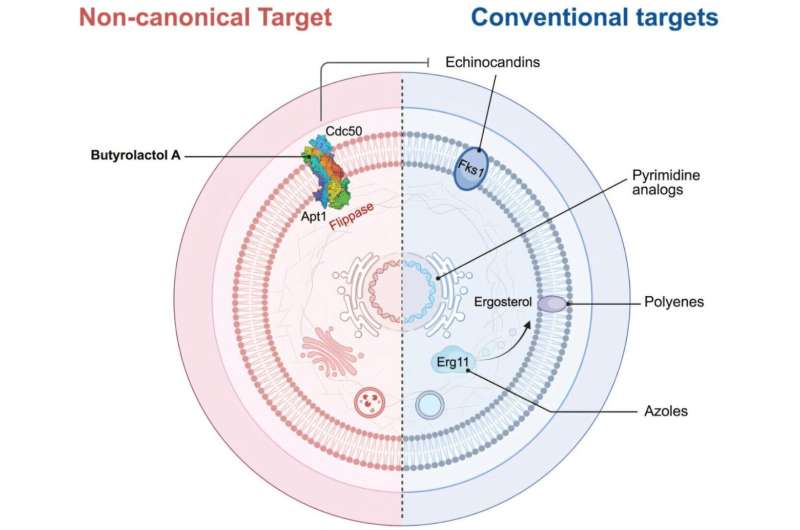
The leading treatment, amphotericin, often carries the label “amphoterrible” due to its severe side effects. According to Gerry Wright, a professor in McMaster’s Department of Biochemistry and Biomedical Sciences, the similarity between fungal and human cells often results in toxic reactions to effective medications. The remaining options, azoles and echinocandins, are notably less effective against Cryptococcus infections, with azoles merely inhibiting growth rather than eliminating the fungus and echinocandins proving ineffective due to widespread resistance.
Exploring New Avenues with Adjuvants
Amid the stagnation in antifungal drug development, researchers are now focusing on the potential of “adjuvants” to enhance existing treatments. Adjuvants are helper molecules that do not kill pathogens directly but instead increase their susceptibility to existing medications. Wright, a member of the Michael G. DeGroote Institute for Infectious Disease Research, explained that his team sought adjuvants to sensitize Cryptococcus to current antifungal drugs.
In their search, the researchers stumbled upon butyrolactol A, a molecule previously known but largely overlooked. Produced by specific Streptomyces bacteria, this compound showed promise in enhancing the effectiveness of echinocandin drugs against otherwise resistant fungi. Initially hesitant about the relevance of butyrolactol A, Wright changed his mind thanks to the persistence of postdoctoral fellow Xuefei Chen.
Chen’s enthusiasm for the molecule’s potential led the research team to investigate its mechanism. After extensive research spanning several years, they discovered that butyrolactol A acts as a plug, obstructing a vital protein complex within Cryptococcus. This disruption leaves the fungus vulnerable to antifungal medications that it previously resisted.
Promising Implications for Broad Clinical Use
Collaborating with researchers from the laboratory of Brian Coombes, another member of the IIDR, the team confirmed that butyrolactol A exhibits similar effects on Candida auris. This broadens the clinical potential of the discovery beyond just Cryptococcus infections.
Wright highlighted the significance of their findings, recently published in the journal Cell. He noted that the journey to identify this drug candidate has been over a decade in the making, with the initial screening occurring in 2014. The identification of butyrolactol A not only marks the second antifungal compound discovered by Wright’s lab in the past year but also represents a new target for future drug development.
As the fight against drug-resistant fungal infections continues, the discovery of butyrolactol A presents a glimmer of hope. Researchers believe that with further exploration, this molecule could play a crucial role in revitalizing antifungal therapies, ultimately saving lives and combating a pressing global health issue.