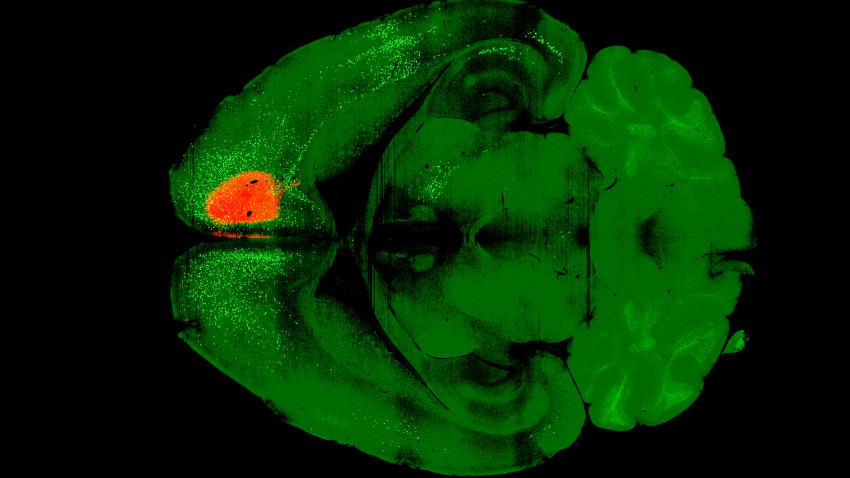
A recent study led by researchers at Cornell University has unveiled how a combination of psilocybin and the rabies virus can elucidate the mechanisms by which this psychedelic compound alters brain connectivity. Published on December 5, 2023, in the journal Cell, the findings suggest a significant breakthrough in understanding how psilocybin may contribute to treating depression.
The research team demonstrated that psilocybin weakens cortico-cortical feedback loops that often entrap individuals in negative thought patterns. At the same time, it enhances connections to subcortical regions that facilitate sensory-motor responses. This dual action may provide insights into psilocybin’s therapeutic potential, particularly for individuals suffering from depression.
Quan Jiang, a postdoctoral researcher and lead author of the study, emphasized the importance of understanding where and how psilocybin rewires neural circuits. The project builds on previous work by Alex Kwan, Ph.D., a professor of biomedical engineering at Cornell, who has focused on the effects of psychiatric drugs like psilocybin, ketamine, and 5-MeO-DMT on brain structure.
Previous studies by Kwan’s lab revealed that a single dose of psilocybin can induce structural plasticity in the brain, meaning it can reshape its own neural connections. Kwan noted, “A lot of people were excited about the earlier study, because psychedelics are promising therapeutics, but we don’t know why they work. Our study showed that the rewiring in the brain lasts a long time.”
To map the connections altered by psilocybin, the researchers employed a novel approach that utilized the rabies virus, engineered by collaborators at the Allen Institute for Brain Science in Seattle. This virus effectively traces the brain’s complex wiring, akin to mapping streets in a neighborhood. Kwan explained, “With psilocybin, it’s like we’re adding all these roads to the brain, but we don’t know where the roads go.”
The experimental process involved injecting a single dose of psilocybin into the frontal cortical pyramidal neurons of mice. Following this, a variant of the rabies virus was introduced to label the connected neurons with fluorescent proteins. After a week, imaging revealed that psilocybin had weakened certain recurrent connections within the cortex, which may explain the tendency for individuals with depression to fixate on negative thoughts.
Kwan stated, “Rumination is one of the main points for depression, where people have this unhealthy focus and they keep dwelling on the same negative thoughts. By reducing some of these feedback loops, our findings suggest that psilocybin may rewire the brain to break, or at least weaken, that cycle.”
Unexpectedly, the study found that psilocybin’s effects were not limited to isolated brain regions but involved widespread changes across the entire brain. Kwan remarked, “This is really looking at brain-wide changes. That’s a scale that we have not worked at before.”
The mapping also indicated that the level of firing activity in the brain could influence how psilocybin rewires neural circuits. This led researchers to explore the possibility of manipulating neural activity to enhance positive plasticity while mitigating negative effects. Kwan asserted, “That opens up many possibilities for therapeutics, how you maybe avoid some of the plasticity that’s negative and then enhance specifically those that are positive.”
The collaborative effort included co-authors such as postdoctoral researcher Ling-Xiao Shao, doctoral student Amelia D. Gilbert, and several others from Yale University, University of California, Irvine, and the Chinese University of Hong Kong. The project received funding support from One Mind and the National Institutes of Health.
This innovative research not only contributes to the understanding of psilocybin’s effects on the brain but also opens avenues for developing targeted treatments for depression, potentially changing the landscape of mental health therapies.