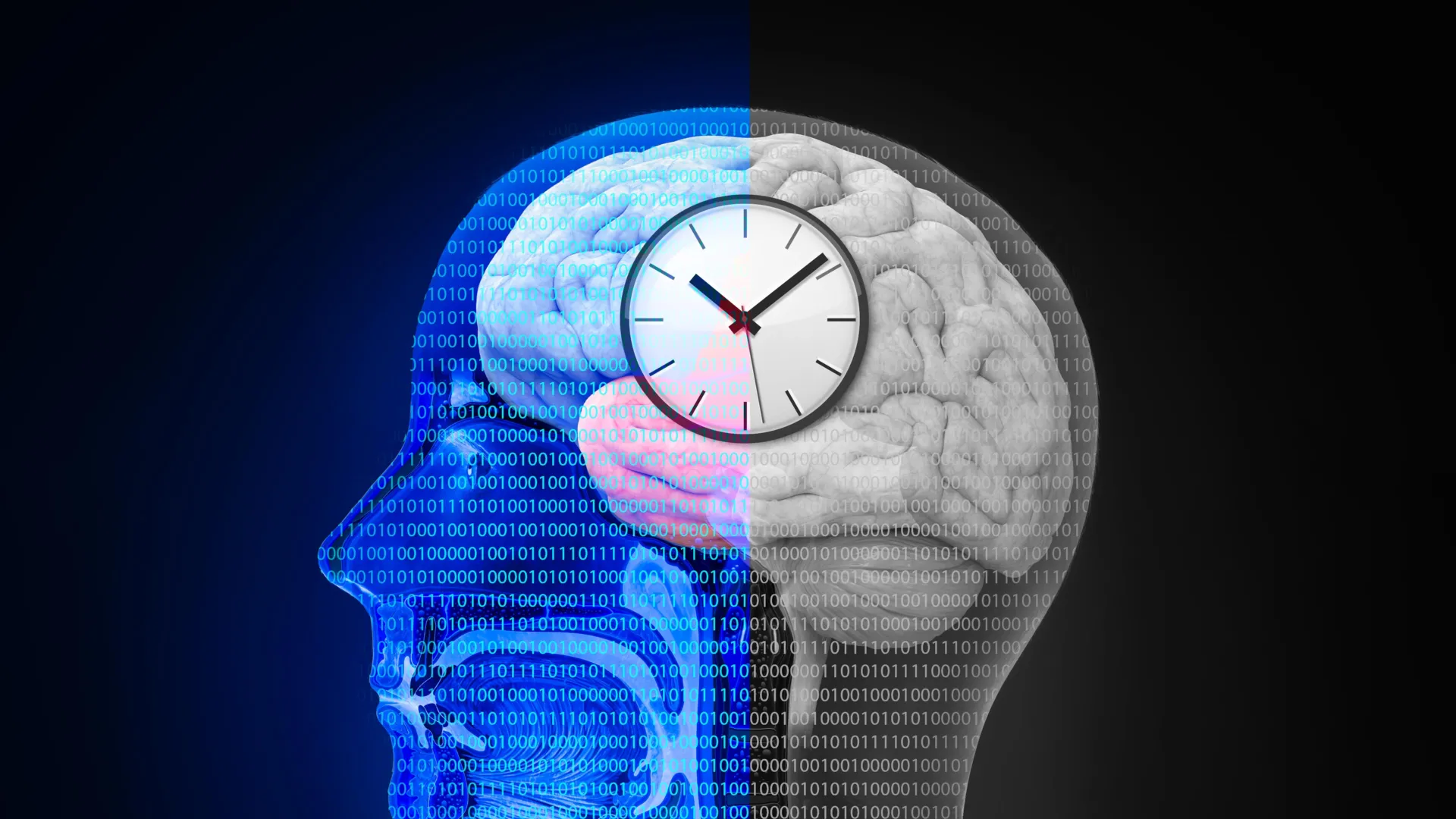
Research from Rutgers University has unveiled a complex internal timing system within the brain that plays a crucial role in shaping thought processes. Published in Nature Communications, the study outlines how various regions of the brain operate on different internal clocks, allowing for a blend of rapid responses and slower, more deliberate processing.
The brain constantly manages information arriving at different speeds. Some signals require immediate reactions to environmental changes, while others demand a slower interpretation of meaning and context. This new research sheds light on how the brain integrates these fast and slow signals, with a focus on the role of white matter connections in facilitating communication between different regions.
Understanding Brain Connectivity and Timing
Each brain region has a unique processing pace, characterized by intrinsic neural timescales (INTs). These timescales determine how long a specific area retains information before responding to the next signal. According to Linden Parkes, assistant professor of Psychiatry at Rutgers Health and senior author of the study, “To affect our environment through action, our brains must combine information processed over different timescales.” The effective integration of these timescales is essential for human behavior.
To explore how this integration occurs, Parkes and his team analyzed brain imaging data from 960 individuals, creating detailed maps of each person’s brain connections, known as connectomes. They employed mathematical models to investigate how information flows through these complex networks. Parkes stated, “Our work probes the mechanisms underlying this process in humans by directly modeling regions’ INTs from their connectivity.”
Impact on Cognitive Abilities
The findings reveal that the arrangement of neural timescales across the cerebral cortex significantly influences how efficiently the brain transitions between different patterns of activity associated with behavior. This timing organization varies among individuals. Parkes noted, “We found that differences in how the brain processes information at different speeds help explain why people vary in their cognitive abilities.”
Moreover, the study identified connections between these timing patterns and genetic, molecular, and cellular characteristics of brain tissue. Interestingly, similar mechanisms were observed in mouse brains, suggesting that these processes may be consistent across species. “Our work highlights a fundamental link between the brain’s white matter connectivity and its local computational properties,” said Parkes. Those whose brain wiring aligns better with the processing speeds of different regions tend to exhibit higher cognitive capacity.
The implications of this research extend beyond cognitive science. The research team is now applying their findings to neuropsychiatric conditions such as schizophrenia, bipolar disorder, and depression. By understanding how changes in brain connectivity may disrupt temporal processing of information, they aim to develop insights into these complex disorders.
This collaborative study also involved contributions from Avram Holmes, associate professor of psychiatry at Rutgers, as well as postdoctoral researchers Ahmad Beyh and Amber Howell, along with Jason Z. Kim from Cornell University.
These findings not only enhance our understanding of cognitive function but also pave the way for future research in mental health, potentially leading to improved treatments for various cognitive and emotional disorders.