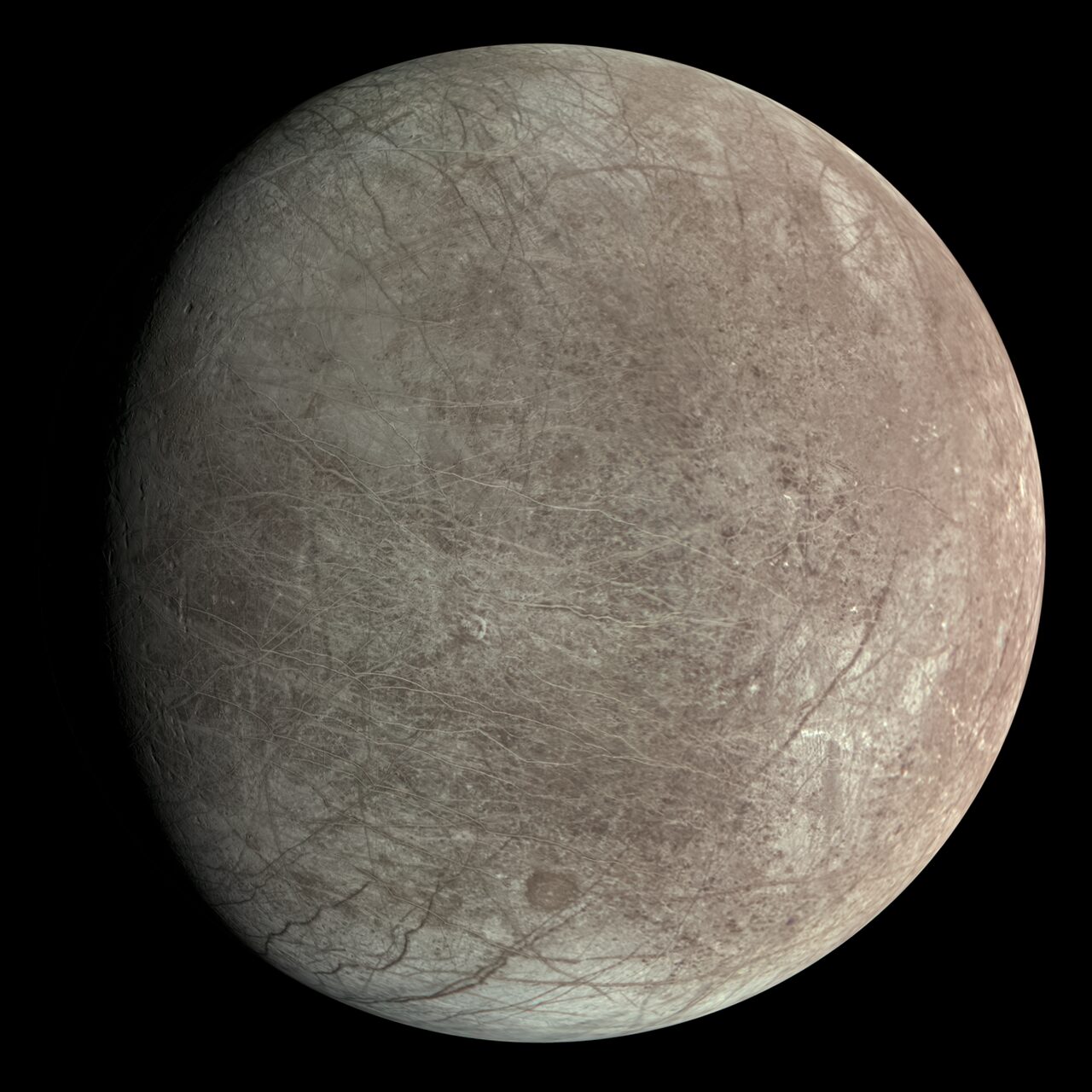
Recent observations from the James Webb Space Telescope have revealed significant insights into the surface of Europa, one of Jupiter’s icy moons. This new research, led by Gideon Yoffe and his team, indicates that the moon’s surface is shaped by dynamic processes linked to a vast liquid ocean beneath its frozen exterior. The implications of these findings could have profound effects on our understanding of astrobiology.
The study utilized a technique known as spectral decomposition to analyze the leading hemisphere of Europa. This method functions like chemical fingerprinting, allowing researchers to detect and map the unique signatures of various molecules based on their absorption and reflection of light at specific wavelengths. The team focused on nine spectral bands that cover water ice, carbon dioxide, and other compounds, enabling them to identify distinct chemical layers on the moon’s surface.
One of the significant discoveries was the concentration of carbon dioxide in a geologically active region known as Tara Regio. This area appears to have experienced significant disruption, indicating that material from beneath the surface has been brought up and frozen again. Previously, scientists believed that this carbon dioxide presence was localized. However, the new analysis suggests a much wider distribution, extending across multiple regions characterized by chaotic terrain.
The surface texture in areas with high carbon dioxide concentrations also exhibits unusual properties, suggesting that the ice has been reworked from below. This finding points to a more complex interaction between the subsurface ocean and the surface than previously understood. The researchers propose that the distribution of volatiles, such as carbon dioxide, reflects not only where materials are deposited but also indicates that the ice’s microstructure plays a critical role in the retention of these elements.
Carbon dioxide is vital for life as we know it, comprising one of the six essential elements. If the deposits on Europa’s surface originate from its subsurface ocean, as indicated by the concentration in geologically young chaotic terrains, it implies that the ocean contains carbon and is in chemical communication with the surface. This interaction may involve the exchange of materials through the ice, a process that scientists are just beginning to explore.
Looking ahead, NASA’s Europa Clipper mission is set to commence close flybys of the moon in 2031. The chemical map produced through the recent analysis will guide the spacecraft in identifying key areas for further investigation. As our understanding of Europa deepens, the prospect of finding conditions suitable for life continues to intrigue scientists and researchers worldwide.
In summary, this groundbreaking study underscores the dynamic nature of Europa and its potential as a habitat for life, highlighting the importance of ongoing research and exploration of this enigmatic moon.