A recent analysis focusing on quasar time delays has provided new insights into the expansion rate of the universe, intensifying the ongoing debate known as the Hubble tension. This research suggests that the universe is expanding at a faster rate than predicted by early-universe models, raising questions about our understanding of cosmic physics.
The study, published in March 2024, examines light from distant quasars, which are incredibly luminous objects powered by supermassive black holes at the centers of galaxies. By measuring variations in the timing of this light, scientists can refine calculations related to the universe’s expansion. The findings indicate an expansion rate of approximately 73 kilometers per second per megaparsec, compared to earlier estimates of around 67 kilometers per second per megaparsec based on observations of cosmic microwave background radiation.
Understanding the Hubble Tension
The Hubble tension refers to the significant discrepancy between two measurements of the universe’s expansion rate. On one hand, measurements derived from the Hubble Space Telescope and other observatories suggest a higher rate of expansion. On the other hand, calculations based on the cosmic microwave background radiation, a remnant from the Big Bang, indicate a lower rate. This contradiction poses a challenge to established cosmological models and suggests the possibility that new physics may be at play.
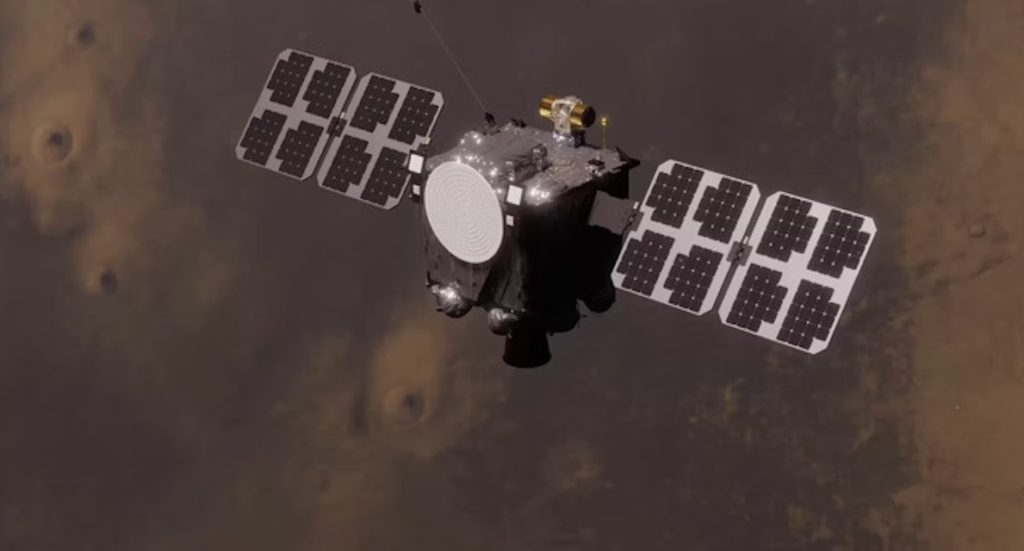
According to researchers from the European Space Agency (ESA) and the National Aeronautics and Space Administration (NASA), resolving this tension is critical for advancing our understanding of the universe’s structure and evolution. The observed differences may imply the existence of unknown forms of energy or matter that have yet to be accounted for in current theories.
Implications for Future Research
The implications of these findings extend beyond mere numbers. As researchers delve deeper into the phenomenon of cosmic lensing—the bending of light from distant objects due to gravity—they may uncover new insights that challenge existing paradigms. The results from the recent quasar study highlight the importance of ongoing observations and the need for a comprehensive approach to cosmology that incorporates data from multiple sources.
The scientific community is now tasked with addressing these findings through further research and observations. Upcoming missions, such as the James Webb Space Telescope, are expected to provide additional data that could either support or challenge these new conclusions about the universe’s expansion.
In summary, the recent analysis of quasar time delays marks a significant step in understanding the complexities of the universe. As scientists continue to grapple with the implications of a faster-expanding universe, the Hubble tension remains a focal point for ongoing research, potentially leading to groundbreaking revelations in the realm of cosmology.