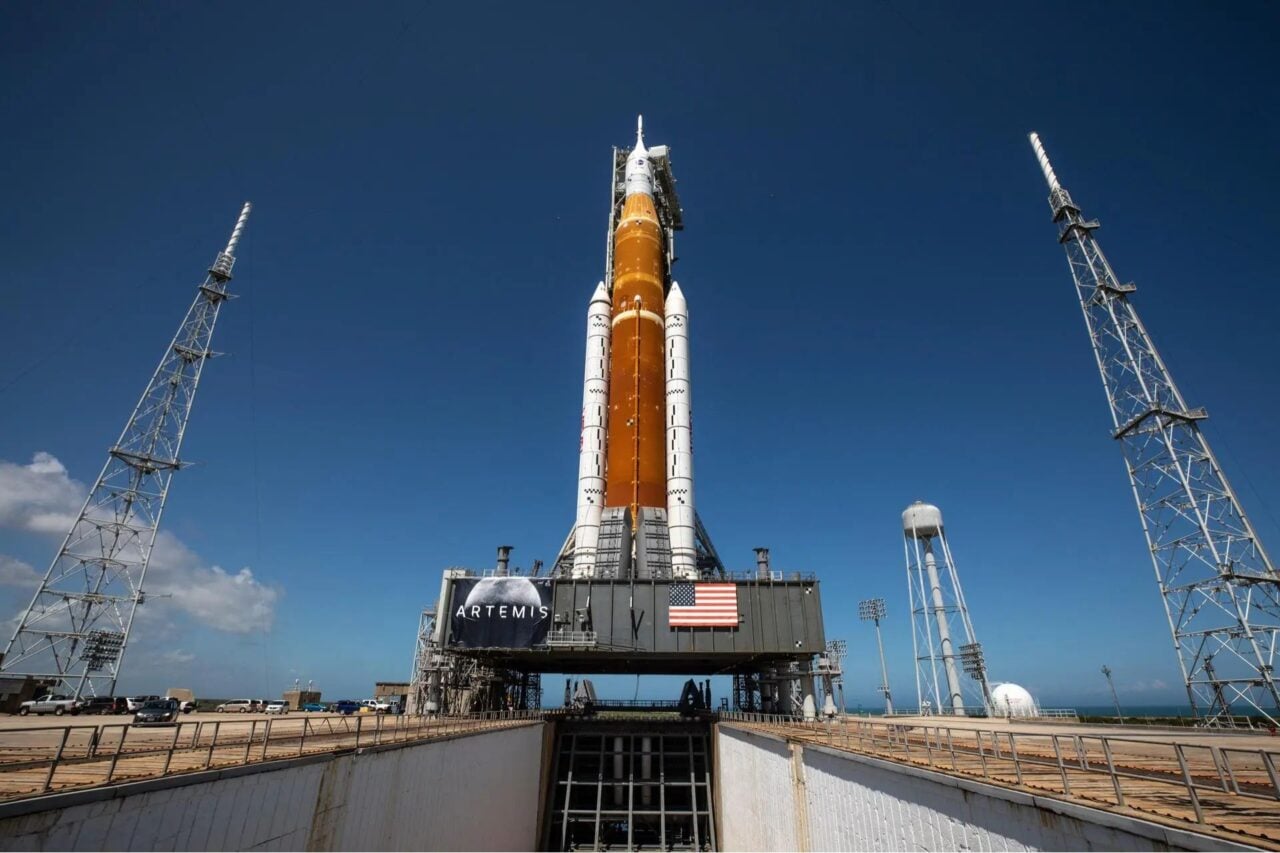
NASA is poised to roll out its Artemis 2 Moon rocket to the launch pad, marking a significant step in the agency’s lunar exploration efforts. Scheduled for January 17, 2024, the rollout of the Space Launch System (SLS) rocket and its stacked Orion spacecraft will begin at 7 a.m. ET. The journey from the Vehicle Assembly Building (VAB) to Launch Pad 39B at Kennedy Space Center is expected to take approximately 8 to 10 hours.
During a briefing on Friday, NASA officials expressed their eagerness as they detailed the final preparations for this historic mission. Charlie Blackwell-Thompson, launch director for NASA’s Exploration Ground Systems Program, highlighted the significance of the event. He noted, “About an hour after we get that first motion, you’ll begin to see this beautiful vehicle cross over the threshold of the VAB and come outside for the world to have a look.”
Live coverage of the rollout will be available on NASA’s YouTube channel, starting at 7 a.m. ET. This will be followed by a media event at 9 a.m. ET, featuring NASA Administrator Jared Isaacman and the Artemis 2 astronauts, who will discuss their preparations for the mission.
Final Preparations for Launch
Once the SLS rocket begins its journey outside the VAB, engineers will temporarily pause to retract the mobile launcher’s crew access arm, a process that is expected to take around 45 minutes. The vehicle will then proceed towards the launch pad at a speed of just under 1 mile per hour (1.6 km/h). After the rocket is secured on the pad, teams will establish connections to ground support equipment and conduct checks to ensure everything is functioning correctly.
The Artemis 2 crew, which includes NASA astronauts Reid Wiseman, Victor Glover, Christina Koch, and Canadian Space Agency astronaut Jeremy Hansen, will perform a final inspection of the emergency egress system at the launch pad. If everything goes as planned, NASA aims to conduct a wet dress rehearsal on February 2, 2024. This crucial test will involve powering up both the SLS and Orion spacecraft and loading the rocket with propellant.
Blackwell-Thompson acknowledged the challenges of this process, stating, “We need to see what lessons that we learn as a result of that, and that will ultimately lay out our path toward launch.”
Launch Timeline and Challenges Ahead
The targeted launch date for Artemis 2 is currently set for February 6, 2024. However, if the mission is not ready by this date, there are additional launch windows available on February 7, 8, 10, and 11. Further opportunities will arise in March and April, ensuring flexibility in the launch schedule.
Blackwell-Thompson emphasized that crew safety remains NASA’s top priority, and the agency is not rushing the mission. Nonetheless, there is significant pressure to launch Artemis 2 expediently as it represents the first crewed mission in NASA’s lunar exploration program, paving the way for the Artemis 3 Moon landing.
As the United States strives to maintain its leadership in space exploration, Artemis 2 will enable astronauts to travel farther into space than any human has previously ventured. They will explore lunar regions that have remained unseen by human eyes, demonstrating that humanity is prepared for deeper space exploration. This mission is not just a test flight; it is a crucial step toward future endeavors, including potential missions to Mars.