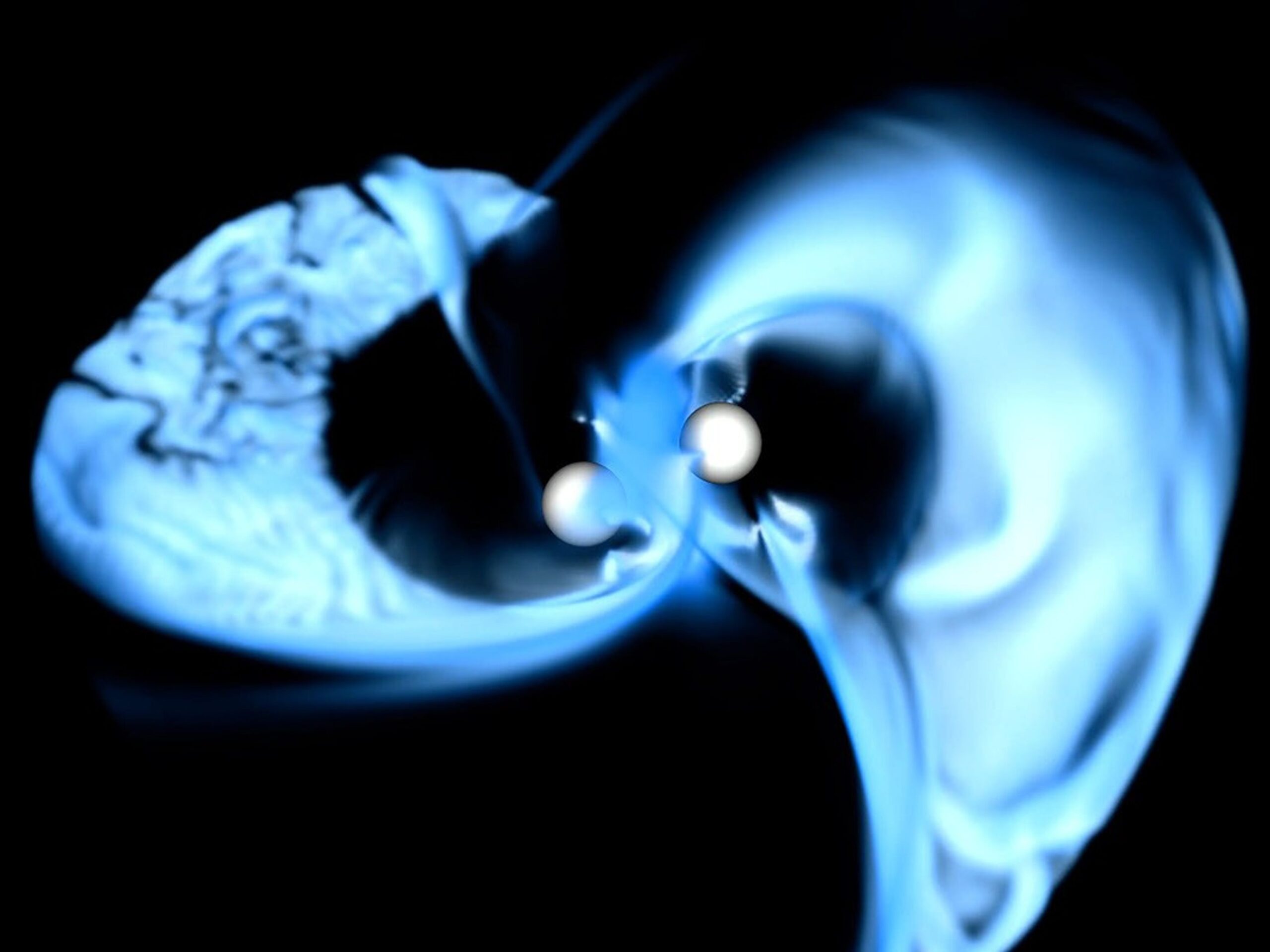
NASA has made significant strides in understanding the events that occur just milliseconds before neutron stars collide. This groundbreaking revelation, published in The Astrophysical Journal, sheds light on the complex dynamics of these celestial bodies and their interactions.
Neutron stars, which are the remnants of massive stars that have undergone supernova explosions, are incredibly dense and possess strong gravitational fields. When two of these stars orbit each other closely, they emit gravitational waves, rippling through the fabric of space-time. The recent research from NASA focuses on the precise timing and behavior of these waves in the moments leading up to a collision.
The study utilized data from various observatories and simulations to analyze the interactions of neutron stars. Researchers examined how the gravitational waves produced during the final milliseconds before a collision can provide vital insights into the nature of these cosmic events. According to the findings, the waves intensify as the stars spiral towards each other, creating a unique signature that could help scientists better understand the physics involved.
Understanding the Implications of Neutron Star Collisions
The implications of this research extend beyond mere academic interest. Neutron star collisions are known to produce heavy elements such as gold and platinum, contributing to the universe’s chemical diversity. By decoding the gravitational wave signals emitted during these events, scientists hope to gain a clearer picture of how elements are formed and distributed across the cosmos.
This research aligns with NASA’s ongoing mission to deepen our understanding of the universe. The agency emphasizes that the ability to interpret gravitational waves has opened a new window into astrophysical phenomena that were previously obscured from view. The findings represent a significant advancement in the field of astrophysics, offering potential applications for future studies on black holes and other cosmic events.
The study’s lead researcher expressed optimism about the potential applications of these findings. The results may not only enhance our understanding of neutron stars but also refine our methods for detecting and analyzing gravitational waves. This could pave the way for new discoveries in astrophysics, particularly in relation to the origins of the universe and the formation of astronomical bodies.
NASA’s research underscores the importance of collaboration in scientific endeavors. The study involved contributions from various institutions and scientists worldwide, highlighting the global effort to unravel the mysteries of the universe. As researchers continue to analyze data and refine their models, the findings from this study are expected to influence future explorations and observations.
In summary, NASA’s recent findings regarding the milliseconds before neutron star collisions provide valuable insights into the dynamics of these extraordinary celestial events. As scientists continue to build on this research, the understanding of gravitational waves and the processes that govern the universe will undoubtedly deepen, revealing more about the fundamental nature of existence itself.