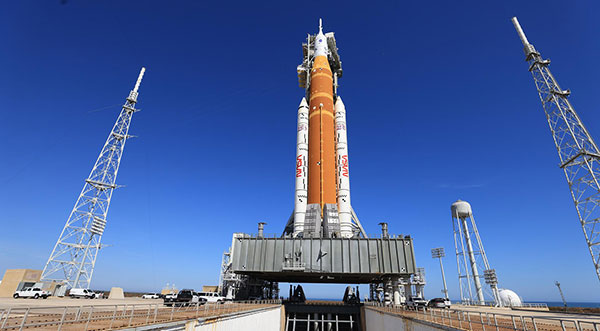
NASA is taking significant steps to address a helium flow issue affecting the Artemis II rocket and its Orion spacecraft, potentially leading to a rollback to the Vehicle Assembly Building (VAB) at the Kennedy Space Center in Florida. The decision comes after engineers detected an interrupted helium supply to the Space Launch System (SLS) rocket’s interim cryogenic propulsion stage during observations on February 21, 2024.
In light of this situation, teams are actively reviewing the data and preparing for a rollback. This contingency would prevent a launch during the planned March window. The technical teams are also making arrangements to remove access platforms at Launch Pad B, which are subject to high wind constraints. The forecast predicts windy conditions tomorrow, further complicating the situation.
The interim cryogenic propulsion stage relies on helium to maintain optimal conditions for its engines and to pressurize the liquid hydrogen and liquid oxygen propellant tanks. Although the systems functioned correctly during the Artemis II wet dress rehearsals, the helium flow was not properly established during later operations following the rehearsal that concluded on February 19, 2024.
As the situation develops, operators have implemented a backup method to sustain the environmental conditions critical for the upper stage’s engines, ensuring the rocket remains in a safe configuration. Investigations are underway to identify the root causes of the helium flow issue. Potential culprits include the interface between ground and rocket lines, a valve within the upper stage, and a filter that connects the ground and rocket systems.
Furthermore, teams are reviewing data from the Artemis I mission, where troubleshooting was necessary for helium-related pressurization before launch.
If a rollback occurs, it would mean that NASA would not launch Artemis II in March. Nevertheless, preparations are being made to allow for the possibility of preserving an April launch window, contingent on the findings from ongoing data analysis and repair efforts. The agency is committed to ensuring that the timeline for future missions remains intact while addressing the current technical challenges.