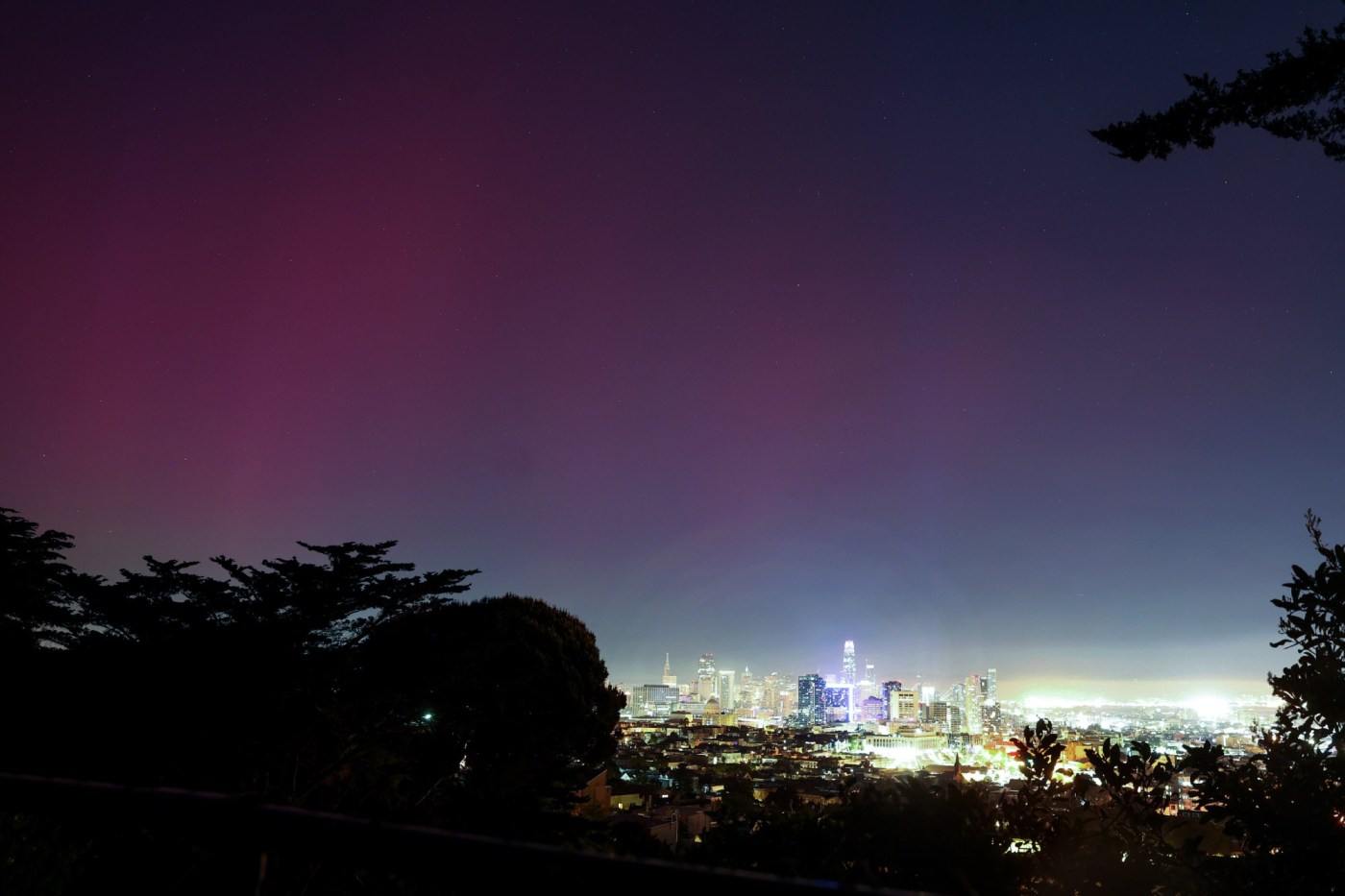
A recent project led by Jason Press, a graduate of Marin Catholic High School, is leveraging artificial intelligence to improve the understanding of the aurora borealis. Currently a senior at Pepperdine University in Malibu, Press aims to enhance data collection on this spectacular natural phenomenon, which is frequently obscured by cloud cover.
Press and his research team have developed a model that can analyze satellite imagery of the aurora borealis, effectively filtering out cloud interference. “There are very few clear-sky nights with aurora data,” Press explained. “When clouds roll in, that data is usually lost. My job was to build a model that could see through the clouds.”
The team achieved significant progress last summer, successfully processing 90 minutes of satellite video footage of the northern lights. Their findings garnered attention, leading to an invitation to present at the American Geophysical Union conference in December.
Research Impact and Academic Support
Press’s work has received praise from his academic mentors. Fabien Scalzo, Press’s computer science professor, expressed enthusiasm for the project, stating, “I’m thrilled by the work Jason has done. His curiosity and hard work at the intersection of computer vision and AI are opening vast areas of research in the analysis of auroras.”
The aurora borealis, created by the interaction of solar particles with the Earth’s magnetic field, has been monitored by satellites for over a decade. However, Press noted that at least half of the collected data was rendered unusable due to cloud cover. By refining the data analysis techniques, Press and his colleagues aim to recover valuable scientific insights that were previously discarded.
Professor Gerard Fasel, who has been studying the aurora since 1995, highlighted the potential implications of this research. He noted that improved data accuracy could aid scientists in predicting severe solar events, which can have significant impacts on technology and infrastructure on Earth. For instance, a solar wind event in 1859 caused widespread disruption to telegraph systems, while a less severe solar storm in 1989 led to power outages in Quebec.
“By being able to see more of the aurora, and to couple that with spacecraft data, it will give us a better understanding of the solar-terrestrial interaction,” Fasel explained. This research could inform strategies to safeguard technology during solar storms, allowing spacecraft operators to power down systems to prevent damage.
A Community Legacy of Achievement
Press, who hails from Mill Valley, California, is part of a family known for its academic excellence and community involvement. The middle child of five, he and his siblings were all top students at Marin Catholic High School. Principal Chris Valdez remarked on the Press family’s commitment to both academics and extracurricular activities, stating, “Creative endeavor is a family characteristic. It is no surprise that Jason is using his intellectual gifts and curiosity to not only explore this data recovery project, but that he is also using his creative ingenuity to develop tools to aid in the process.”
As Press continues his research at Pepperdine University, his work stands as a testament to the innovative potential of combining artificial intelligence with scientific inquiry. With the ability to recover and enhance past aurora data, he is contributing to a deeper understanding of a natural phenomenon that has captivated observers for generations.