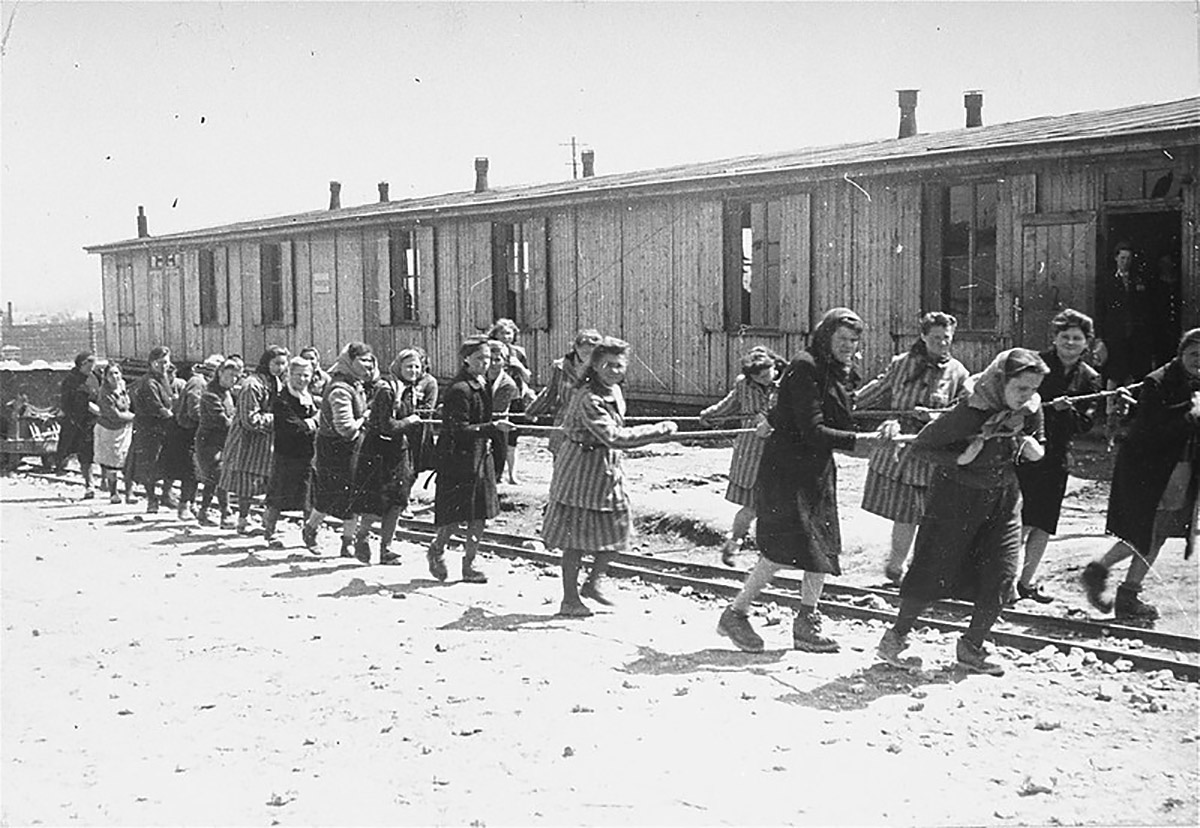
The Johns Hopkins University Press has partnered with the United States Holocaust Memorial Museum to create the first searchable digital database of Nazi camps and ghettos. This initiative aims to document the extensive network of locations where millions were persecuted and murdered during the Holocaust, expanding the understanding of this dark chapter in history.
More than 78 years after the end of World War II, historians have recognized that the Nazi regime’s system of terror was more extensive than previously understood. While major sites such as Auschwitz, Dachau, and Buchenwald have long been documented, the museum’s efforts since 1999 have revealed thousands of smaller and often overlooked sites across Europe and North Africa.
The new database, titled the Encyclopedia of Camps and Ghettos, 1933-1945, is accessible through Project MUSE, an online resource that houses scholarly materials. It currently features information on approximately 3,500 locations, with an additional 2,500 expected to be added by 2026. Users can navigate an interactive map that details the locations and histories of these sites, searchable by country, camp type, and other criteria.
Alexandra Lohse, who leads the applied research team at the museum’s Mandel Center for Advanced Holocaust Studies, highlighted the extensive collaboration behind this project. “It took a long time and a lot of dedicated people to put it together,” she said, noting the contributions of over 700 researchers from around the globe.
This comprehensive resource captures both the vast scale of the Nazi regime’s atrocities and the intricate details of its operations. The initiative aims not only to educate but also to combat the rising tide of misinformation surrounding Holocaust history.
The Holocaust resulted in the systemic murder of approximately 6 million Jews, along with millions of others including Romani people, disabled individuals, and LGBTQ individuals, bringing the total number of victims to at least 11 million. Despite extensive documentation, recent studies indicate a troubling trend in Holocaust awareness, with many individuals underestimating the death toll and the scale of the persecution.
To address these concerns, the museum initially published a four-volume set of printed books before transitioning to an e-book format. However, officials recognized that these formats limited users’ ability to search for specific information effectively. This led to the collaboration with Project MUSE, which has made the Encyclopedia freely accessible to the public, eliminating any cost barriers.
The impact of this accessibility is evident. Between May 2024 and April 2025, the previous PDF content generated about 80,000 requests, but in the first five months since the launch of the searchable encyclopedia, there have been over 700,000 requests. This surge indicates a significant interest in Holocaust education and awareness.
Laura Foster, the museum’s director of academic publishing, emphasized the importance of this resource in the current climate of misinformation. She noted that many people struggle to recognize the enormity of the Holocaust, which underscores the urgency of providing accurate historical information.
The launch of the Encyclopedia comes at a time when awareness of antisemitism is growing. Foster pointed out that the encyclopedia serves as a crucial resource for historians, educators, and the public alike in countering these disturbing trends.
In light of recent studies revealing that more than 30% of Americans and 41% of American millennials believe fewer than 2 million Jews were killed during the Holocaust, the importance of accessible, reliable information cannot be overstated.
Martha Weiman, a Holocaust survivor and community leader, expressed her concerns about the lack of awareness among younger generations. “Every day takes us further from the Shoah and the murder of the Jewish people,” she stated. “We’re trying to get people not to forget.”
With this new searchable database, the Johns Hopkins University Press and the United States Holocaust Memorial Museum hope to foster a deeper understanding of the Holocaust and ensure that the memory of the victims endures.