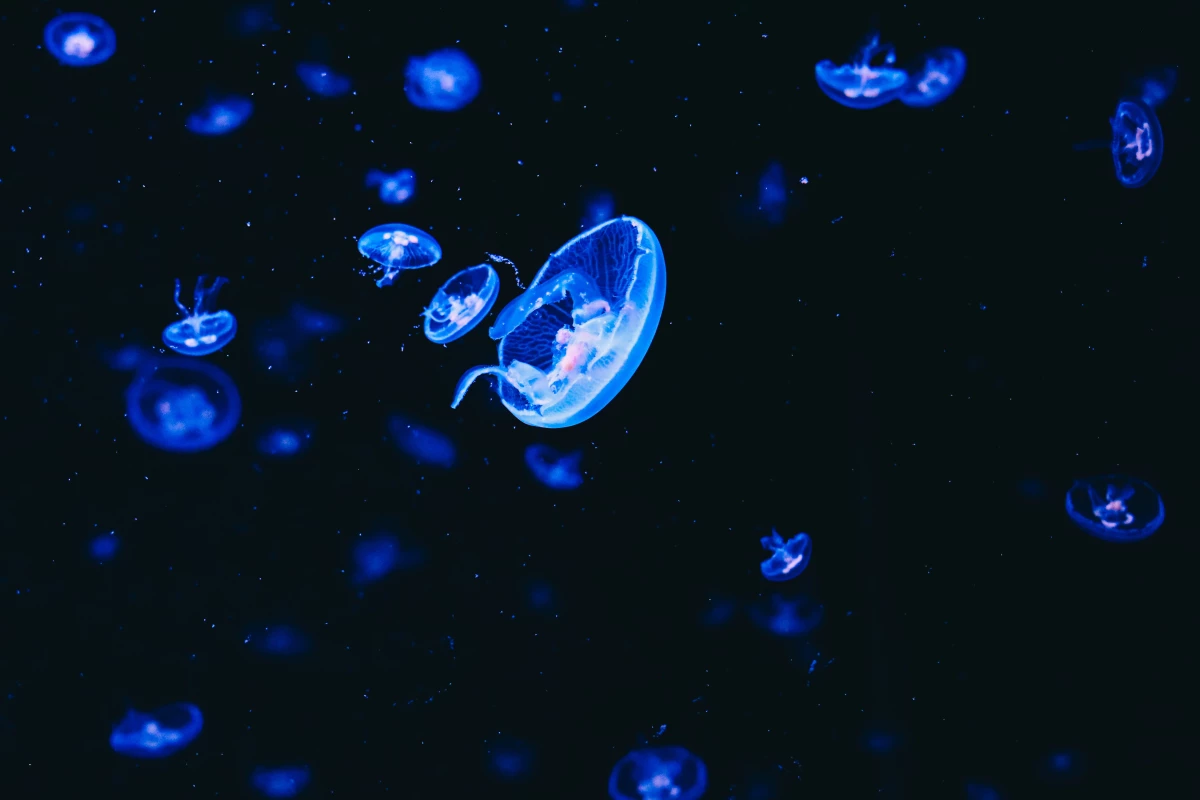
Research has revealed that jellyfish and sea anemones exhibit sleep patterns similar to humans, spending approximately one-third of their day in a sleep-like state. A study published in the journal Nature Communications highlights how these ancient creatures, which possess a nervous system but lack a brain, rely on sleep for cellular maintenance and recovery from stress.
Neurobiologist Lior Appelbaum from Bar-Ilan University led the research, which found that jellyfish, specifically the upside-down jellyfish (Cassiopea andromeda), and the starlet sea anemone (Nematostella vectensis), follow distinct sleeping routines. Appelbaum noted that the existence of sleep in these animals was not entirely understood prior to this study. “Sleep is important even for animals without a brain. It helps them recover from cellular stress and carry out cellular maintenance,” he explained.
The research team sought to investigate the evolutionary origins of sleep by observing these cnidarians in a controlled environment that mimicked a natural 24-hour cycle, consisting of 12 hours of light and 12 hours of darkness. Their findings revealed that jellyfish are primarily active during the day and sleep mainly at night, even taking midday naps, akin to human behavior. Conversely, the sea anemones were more active at night, resting predominantly in the early morning hours.
To confirm that the animals were genuinely sleeping rather than simply resting, the researchers measured their responsiveness to stimuli, such as light or food, during periods of inactivity. Appelbaum defined a sleep-like state in jellyfish as pulsing fewer than 37 times per minute for over three minutes, while sea anemones exhibited stillness for eight minutes or more.
The study also uncovered that both jellyfish and sea anemones sleep for approximately eight hours each day, paralleling the human sleep duration of one-third of our lives. “What was surprising was that both animals sleep approximately eight hours, which is interesting because we also sleep approximately one-third of our lives,” Appelbaum remarked.
In addition to observing sleep patterns, the research team explored the underlying mechanisms that drive sleep. Previous studies have indicated that an increase in DNA damage within nerve cells prompts sleep in zebrafish. Building on this concept, the researchers exposed jellyfish and sea anemones to ultraviolet (UV) radiation and specific chemicals known to induce DNA damage. They also simulated sleep deprivation through gentle water pulses.
The findings indicated that DNA damage increased during wakeful periods and diminished during sleep, suggesting that sleep is vital for cellular repair. Appelbaum stated, “Sleep evolved way before the brain – it’s essential for cells, cellular maintenance, and neurons.”
This groundbreaking research not only enhances our understanding of sleep in simple organisms but also raises intriguing questions about the evolutionary significance of sleep across the animal kingdom. As scientists continue to unravel the mysteries of sleep, this study marks a significant step in understanding why so many species, including those without complex brains, require this essential state of rest.