First-year biomedical Ph.D. students across the United States are grappling with significant challenges related to funding, impacting their ability to secure placements in research labs. These difficulties have been exacerbated by a tightening funding environment that is causing many to question their career prospects in academic research.
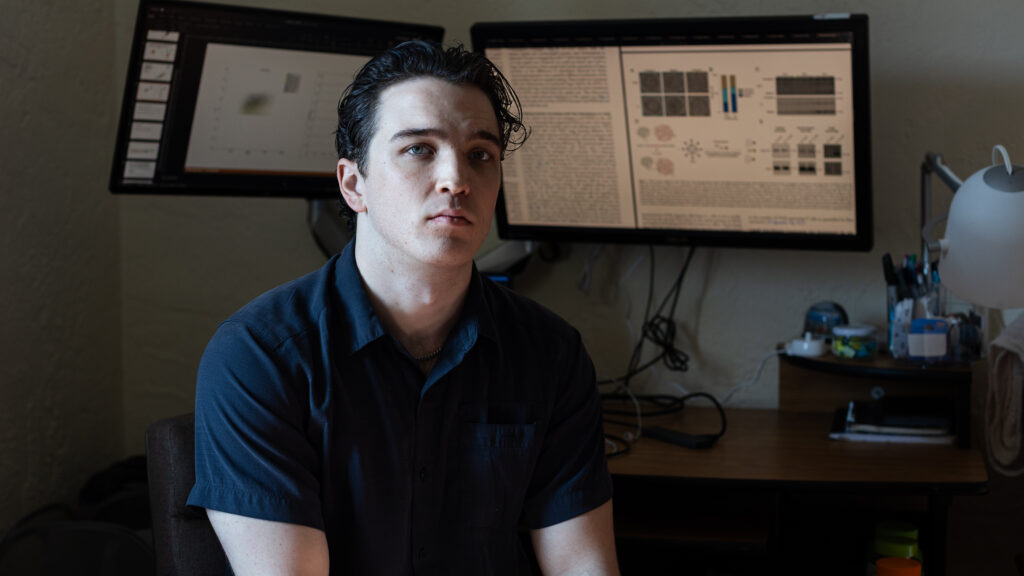
One such student, Alex Sathler, was elated when he learned last summer that he had received a prestigious National Science Foundation (NSF) Graduate Research Fellowship. The award, which grants an annual stipend of $37,000 for three years, was a major milestone for Sathler, who had pursued his education from community college in Portland, Oregon, to Oregon State University, where he developed a passion for research. However, this funding did not guarantee him a spot in one of his desired research labs at the joint program between the University of California, Berkeley, and UC San Francisco.
Despite his accomplishments, Sathler faced rejection from two labs that cited budget constraints as the reason for not accepting new students. He remarked, “Everyone in my program deserves to be in their dream lab. The real sense that I get is that there aren’t enough labs with funding to give everyone their best fit.” His experience reflects a larger trend affecting many first-year biomedical graduate students.
Funding Cuts and Increased Competition
Students nationwide are voicing similar concerns. Reports indicate that the National Institutes of Health (NIH) funded fewer projects last year and is projected to do the same in 2026. This shift has intensified competition for limited positions in well-funded labs, leaving some students feeling disillusioned when faculty members, who initially expressed interest, withdraw offers.
The president of the Council of Graduate Schools, Chevelle Newsome, expressed concern about the widespread nature of these challenges. “The strain that you’re hearing is real. It’s not an isolated case. It’s actually across the board,” she noted, emphasizing the broader implications for students navigating their academic paths in this environment.
Some Ph.D. programs anticipated these funding challenges and proactively reduced incoming class sizes by a third or more. Despite these adjustments, data show that overall enrollment in biomedical graduate programs rose slightly last fall, suggesting that demand remains high even amidst funding uncertainties.
As part of their first year, life science Ph.D. students typically engage in lab rotations, akin to scientific speed dating, where they can explore various research environments. Hannah Barsouk, a biochemistry student at Stanford University, shared her experience of reaching out to 30 to 40 labs, with six to ten indicating they lack the necessary funding to accept new students. Barsouk maintains a detailed list to track her interactions, which has contributed to a “cloud of general anxiety” during her initial year.
Shifts in Admission Processes
Some institutions have altered their admission processes in response to funding concerns. At Georgia Tech and Emory University, for example, applicants to their joint bioengineering program must now secure a lab willing to take them prior to admission, a significant shift from traditional practices. While this approach is more common in Europe, it places additional pressure on students to make informed decisions based solely on discussions rather than firsthand experience.
Stanford has not yet implemented such drastic measures but has reduced independent funding for its bioscience graduate students from four years to two. This means that after the initial funding period, advisors must cover stipends from their research grants unless students secure alternative funding. This shift has led to increased scrutiny from faculty regarding which students they choose to support.
A biology student, who chose to remain anonymous, recounted her disappointment when a professor, who had initially assured her of a spot in their lab, changed their stance mid-rotation. She felt betrayed when the professor indicated that her NSF fellowship was crucial for joining their group, highlighting the precarious nature of academic commitments in this climate.
Sathler’s journey reflects the broader challenges faced by first-year students. He has encountered labs that expressed interest but ultimately declined due to funding concerns. Despite these setbacks, he remains hopeful, as most first-year students have until the beginning of their second year to secure a lab placement. There are signs that funding may improve, with congressional committees recently endorsing a slight budget increase for the NIH. However, the overarching uncertainty surrounding federal support for research continues to loom over students’ futures.
One biology student, facing limited options in her current program, applied to other graduate schools, only to find her efforts unsuccessful. She is now contemplating her future in academia and whether her aspiration to run her own lab is realistic in the current funding landscape. “I try to avoid looking further ahead because it just gets bleak,” she admitted, reflecting the sentiments of many in her situation.
As funding issues persist, the academic landscape for aspiring biomedical researchers appears increasingly challenging. The ramifications of these changes extend beyond immediate lab placements, raising concerns about the future of scientific inquiry and innovation.
STAT’s coverage of the federal government’s impact on the biomedical workforce is supported by a grant from the Dana Foundation and the Boston Foundation. Our financial supporters are not involved in any decisions about our journalism.