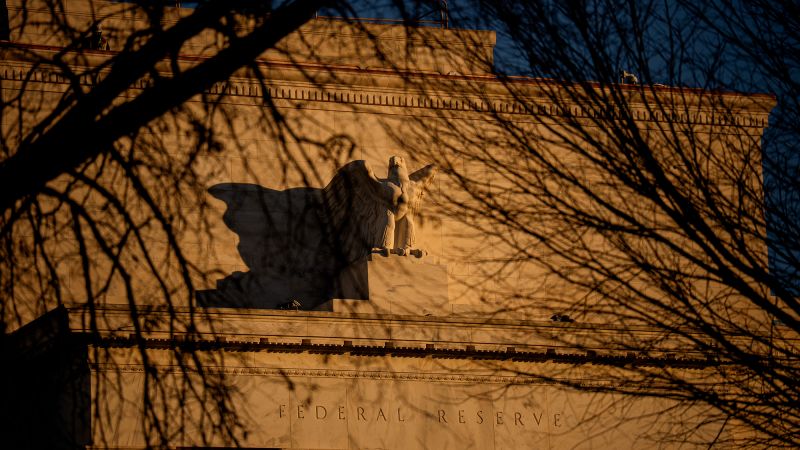
The Federal Reserve is confronting a significant challenge as it meets this week to address potential impacts from the worst global oil crisis in decades. Heightened tensions following President Donald Trump‘s actions against Iran have propelled oil prices, with West Texas Intermediate (WTI) crude briefly reaching $120 per barrel last week. This surge threatens to elevate costs for consumers and businesses alike, potentially stalling economic growth and exacerbating inflation.
Policymakers are now faced with the dual threat of rising prices and a softening job market. The situation is further complicated by the Senate confirmation process for Kevin Warsh, Trump’s nominee to lead the Federal Reserve. This comes at a precarious moment, as advocating for lower interest rates could be politically untenable. The current oil crisis echoes past shocks, yet the economic landscape has evolved significantly since the last major oil crisis triggered by the 1973 Arab-Israeli War.
Comparing Current Crisis with Past Oil Shocks
In the 1970s, the United States was heavily reliant on imported oil, making it particularly vulnerable to supply disruptions. Today, the U.S. stands as the world’s largest oil producer, reducing its dependency on foreign crude. Despite this, experts warn that the current disruption is more profound. According to Nicholas Mulder, a history professor at Cornell University, the volume of Gulf oil production compromised by the ongoing conflict is significantly larger now, with figures suggesting 20 million barrels affected compared to 4.5 million in 1973.
The historical context reveals that during the Arab-Israeli War, Arab members of the Organization of Petroleum Exporting Countries (OPEC) imposed an oil embargo on Western nations, which severely impacted the U.S. economy. Under the leadership of then-Fed Chair Arthur Burns, the Federal Reserve was hesitant to raise interest rates, attributing inflationary pressures to factors beyond its control. This “stop and go” approach to monetary policy ultimately allowed inflation to become entrenched, hampering economic growth.
Current Economic Indicators and Consumer Impact
As the conflict continues to unfold, Americans are already feeling the repercussions at the gas pump. A recent consumer survey by the University of Michigan indicated a two percent decline in sentiment, with many respondents pointing to the war as a significant concern influencing their views on inflation. The economic landscape is further complicated by labor market challenges, as the Bureau of Labor Statistics reported a reduction of 92,000 jobs in February, with the unemployment rate rising to 4.4%.
Despite some job openings increasing by 400,000 in January, the overall number of unemployed individuals remains higher than available positions. Tani Fukui, senior director of economic and market strategy at MetLife Investment Management, emphasized the certainty of inflationary effects stemming from the ongoing crisis, though the magnitude of these effects remains uncertain.
In navigating this complex economic environment, the Federal Reserve must consider whether lessons from history can guide their decisions. With facilities facing damage from Iranian attacks, the potential for prolonged disruptions to oil supply could complicate efforts to stabilize the economy. As the Fed deliberates its next steps, the focus remains on balancing inflation control with the need for sustained economic growth.