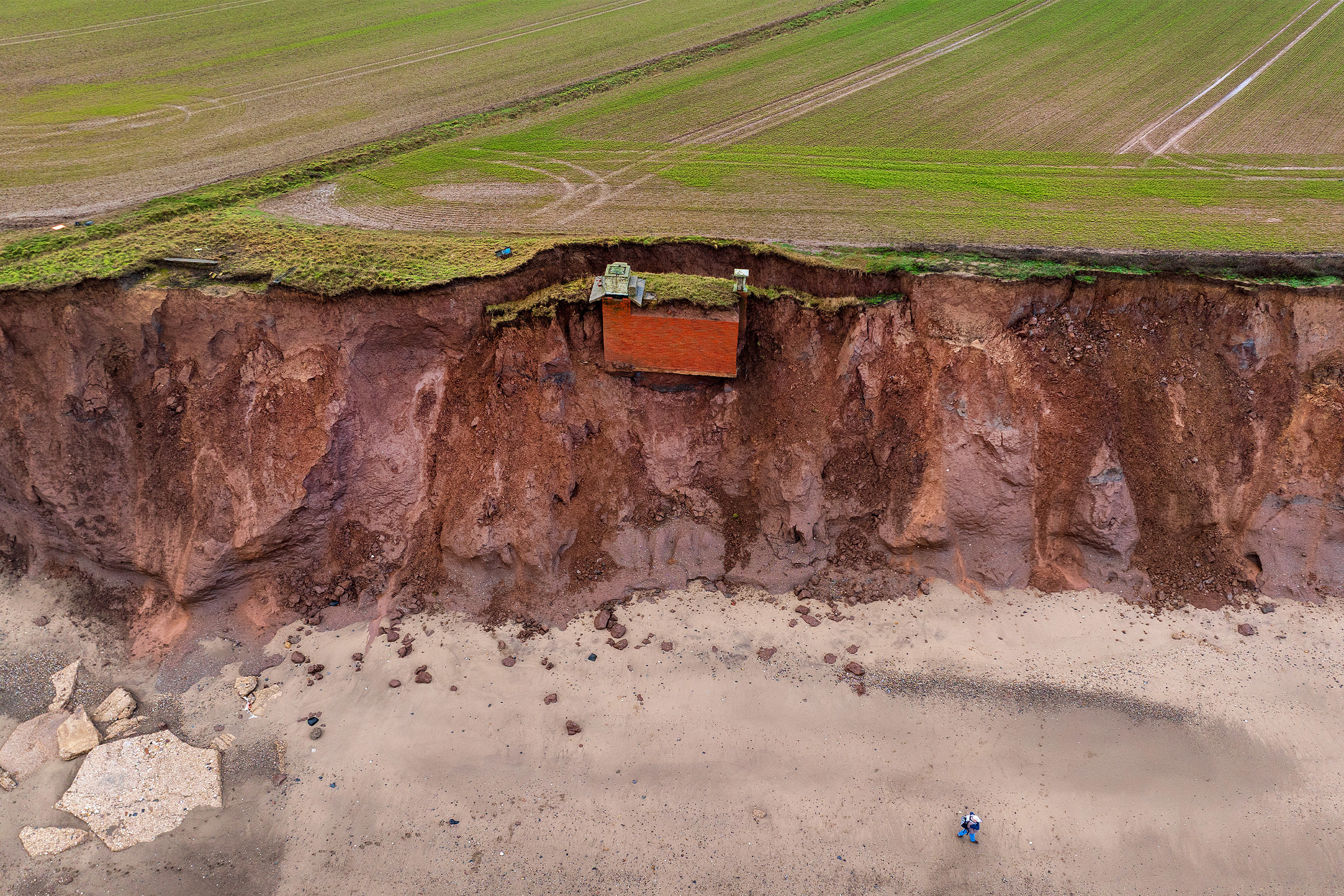
A nuclear bunker near Tunstall on the East Yorkshire coast is on the verge of collapse, with coastal erosion threatening to send it tumbling into the sea. Originally built in 1959 as a lookout post during the Cold War, the bunker is now just days away from being lost to the elements, according to the BBC. The East Riding of Yorkshire Council has urged residents to stay clear of the area surrounding the bunker due to its unstable condition.
The site, known as the Tunstall Royal Observer Corps Post, has attracted attention from local historian Davey Robinson. He has been documenting the bunker’s final moments, stating, “We live on one of the most eroded coastlines in Europe and this bunker hasn’t got long left, perhaps just a few days.” Robinson and his partner have visited the site daily for over a week, sharing their footage on YouTube, which has garnered interest from around the globe.
Historical Significance and Current Impact
Designed as a shelter for monitoring nuclear explosions, the bunker symbolizes a bygone era of Cold War anxiety. As Robinson explained, it was intended to serve as a refuge where individuals could wait for an alert of nuclear activity, allowing them to communicate with other observers across the country. Today, its precarious positioning serves as a stark reminder of the ongoing issue of coastal erosion.
Coastal erosion, while a natural phenomenon, is reportedly accelerating due to rising sea levels attributed to climate change. Currently, approximately 17 percent of the UK’s coastline, which spans over 10,000 miles, is experiencing erosion, with communities like Tunstall feeling the effects intensely.
“The whole area is eroding at a rapid rate,” Robinson noted. “To see an actual physical thing moving just shows what’s happening really.” The disintegration of the bunker highlights not only the fragility of coastal structures but also the broader implications of environmental change.
A Broader Environmental Challenge
The situation at Tunstall is indicative of larger environmental challenges facing coastal regions worldwide. As global temperatures rise and ice caps melt, the threat of erosion increases, impacting both natural landscapes and human settlements. The Tunstall bunker, once a symbol of security during a tense historical period, now stands as a testament to the ongoing battle against climate change.
As the bunker edges closer to the sea, the East Riding of Yorkshire Council continues to monitor the situation, prioritizing public safety. The impending collapse serves as a poignant reminder of the delicate balance between human structures and the power of nature, urging communities to consider the broader implications of environmental degradation.
With the world watching, Robinson’s recordings of the bunker’s demise not only document a physical structure but also encapsulate the urgent reality of climate change and its impact on our history and future.