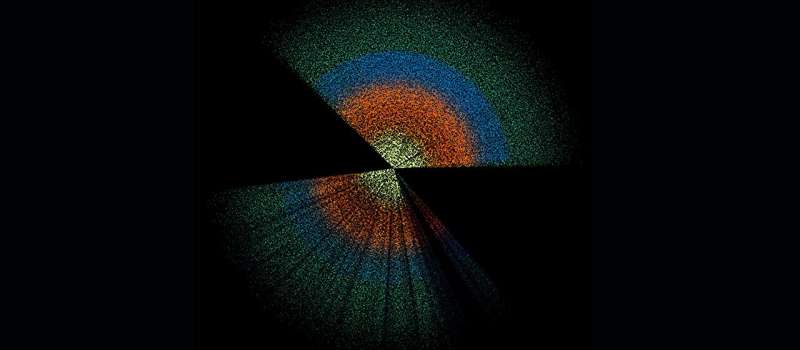
The analysis of samples collected from asteroid Ryugu has provided significant insights into the magnetic history of the early solar system. Researchers have discovered that materials from the ancient solar nebula interacted with a weak magnetic field, which played a crucial role in the formation and evolution of planetary bodies. This research sheds light on the conditions that existed in the protoplanetary disk more than 4.5 billion years ago.
Understanding the evolution of the solar system involves examining the complex interactions between the materials present in the solar nebula. These materials were subject to a weak but pervasive magnetic field, generated by ionized gas within the disk. As these materials formed or altered, their magnetization became locked in place, a process known as natural remanent magnetization (NRM). This phenomenon enables scientists to glean information about the spatial and temporal evolution of the solar system.
Significance of Natural Remanent Magnetization
NRM measurements of primordial astromaterials are crucial in reconstructing the conditions of the early solar system. According to the research team involved in the study, the findings from the Japan Aerospace Exploration Agency (JAXA) mission have illuminated how magnetism influenced the formation of planets and other celestial bodies. The samples retrieved from Ryugu have provided unprecedented access to these ancient materials, allowing scientists to analyze their magnetic properties in detail.
The implications of this research extend beyond mere academic interest. Understanding the magnetic history of our solar system can inform models of planetary formation and the conditions necessary for life. The study of NRM can also help determine how such materials were distributed throughout the solar system, providing a clearer picture of its early dynamics.
Future Research Directions
As scientists continue to analyze the Ryugu samples, they aim to deepen their understanding of the solar system’s formation processes. The data collected will contribute to ongoing research efforts focused on planetary magnetism and its role in shaping celestial environments. The findings are expected to facilitate further investigations into how magnetic fields influence the evolution of planetary atmospheres and surfaces.
This research underscores the importance of asteroid missions in expanding our knowledge of the solar system. The successful retrieval of samples from Ryugu not only highlights the capabilities of modern space exploration but also opens new avenues for scientific inquiry into the origins of our cosmic neighborhood.
In summary, the study of asteroid Ryugu’s samples has provided vital insights into the magnetic influences present during the early formation of the solar system. By unlocking the secrets of natural remanent magnetization, researchers are gaining a clearer understanding of how celestial bodies evolved and the conditions that may have supported the emergence of life.