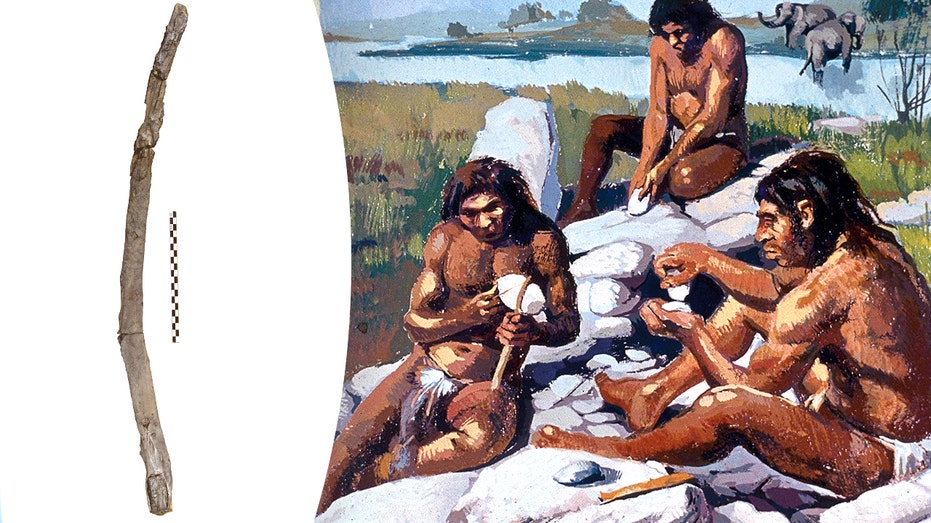
Archaeologists have announced a groundbreaking discovery in the Megalopolis basin of southern Greece. They believe they have found what could be the oldest known handheld wooden tools, dating back approximately 430,000 years. This revelation, detailed in a recent study published in the Proceedings of the National Academy of Sciences, challenges previous understandings of early tool use by human ancestors.
The tools were unearthed in an area that was once covered by wetlands and lakes, which played a crucial role in their preservation. Among the artifacts are two significant pieces: a stick measuring around 2.5 feet in length, likely used for digging in mud, and a smaller piece that may have served to shape stone tools. These findings are particularly remarkable because wooden tools typically decompose quickly, leaving few examples for researchers to study.
Katerina Harvati and Dimitris Michailidis, who contributed to the study, emphasize the importance of these discoveries. They highlight how the tools represent a new category of handheld implements and underscore the necessity of systematic investigations of ancient wood remains, which can provide insights into early human activities.
The implications of these findings are profound, as they suggest that early human ancestors, potentially Neanderthals or other hominids, were crafting and using tools long before the emergence of modern humans. Annemieke Milks, an archaeologist at the University of Reading and author of the study, expressed her excitement about handling these ancient objects, noting the connection to our distant past.
Despite the enthusiasm within the archaeological community, some experts approach the findings with caution. Jarod Hutson from the Smithsonian National Museum of Natural History pointed out that while the discovery is significant, the exact purposes of these tools remain unclear. He remarked, “It’s difficult to get excited about these because they don’t strike you immediately as wooden tools,” highlighting the need for further research to fully understand their functions.
This discovery aligns with other recent archaeological finds that have changed perceptions of prehistoric life. Last month, scientists announced the identification of cave art in Indonesia dating back around 68,000 years, and they also revealed the oldest-known poisoned arrowheads, estimated to be approximately 60,000 years old.
As researchers continue to explore the depths of human history, the tools from the Megalopolis basin offer a tantalizing glimpse into the technological capabilities of our ancient relatives. The study not only sheds light on the tools themselves but also encourages a reevaluation of the timeline of human innovation and adaptation, inviting further exploration of the archaeological record.
This remarkable find underscores the ongoing significance of archaeological research in understanding the complexities of human evolution and the development of tool-making traditions. As more discoveries come to light, they reshape our understanding of the past and human ingenuity.