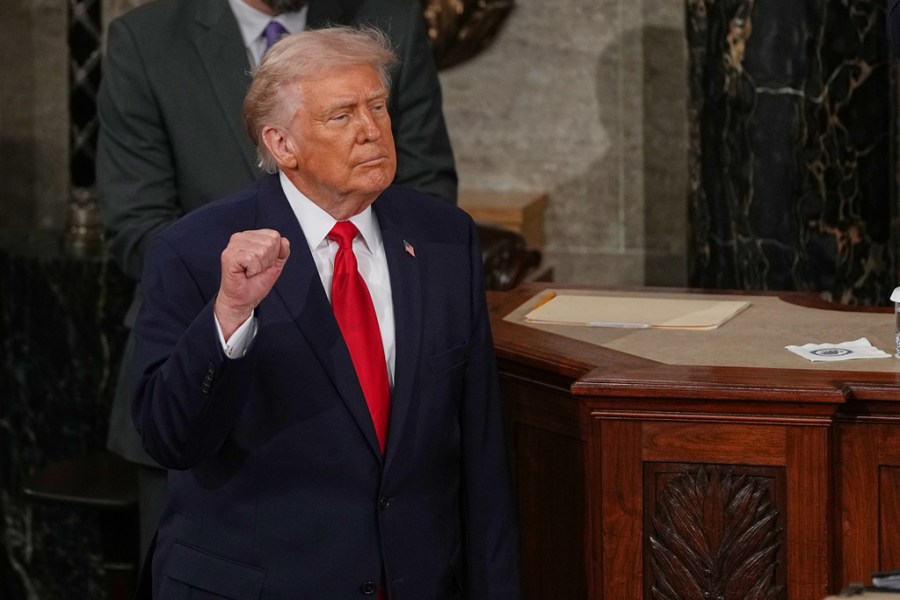
President Donald Trump delivered a contentious State of the Union address on January 30, 2018, at the Capitol in Washington D.C.. The speech was characterized by numerous inaccuracies and personal attacks directed at political opponents. Critics have noted that Trump appeared to evade accountability for his administration’s controversies, projecting blame onto others instead.
The address covered a range of topics, including immigration, national security, and economic achievements. Trump claimed significant progress in various areas, such as job creation and tax reform, yet these assertions have been met with skepticism by some analysts. The President highlighted a reported 2.4 million jobs created since his inauguration, a figure that has been scrutinized for its context and accuracy.
As he spoke, Trump directed sharp criticisms at the Democratic Party and the media. He accused them of fostering division and dishonesty. His remarks included pointed references to various investigations surrounding his administration, which he characterized as politically motivated. This strategy of deflection has raised questions regarding his willingness to address ongoing issues within his own governance.
Democratic lawmakers responded with visible discontent during the address. Many chose to remain seated and did not applaud Trump’s claims, reflecting deep partisan divides. Following the speech, several Democratic leaders issued statements condemning Trump’s approach and rhetoric. They emphasized the need for unity and collaboration rather than the contentious atmosphere that the President seemed to cultivate.
In the aftermath of the address, political analysts have begun to assess its implications for the upcoming midterm elections. Trump’s rhetoric may energize his base, but it also risks alienating moderate voters who may be concerned about the tone and divisiveness of his administration. As discussions unfold, the effectiveness of Trump’s strategy in maintaining support among various voter demographics will be closely monitored.
Contrastingly, Republican lawmakers expressed their backing of the President’s policies. They praised the economic statistics presented and reinforced the narrative of a prosperous nation under Trump’s leadership. The divide between the parties was stark, with each side interpreting the address through the lens of their respective political ideologies.
As Trump prepares for his upcoming engagements, the impact of the State of the Union address looms large. The speech has not only highlighted the existing fractures within American politics but also set the stage for continued debate on the future direction of the country. The discourse surrounding accountability, integrity, and governance is expected to intensify as both parties gear up for the electoral contests ahead.