The Syrian government forces have officially taken control of Raqqa, a significant development that underscores a shift in power dynamics in northern Syria. On January 18, 2026, Syrian troops advanced into Raqqa and the nearby Tabqa Dam, previously held by the Syrian Democratic Forces (SDF). This move has prompted celebrations among some residents, who view this transition as a liberation from SDF rule.
As dawn broke on January 19, military vehicles flooded the area near the Euphrates River, with soldiers posing for photographs, celebrating what they termed a victory. One soldier, identified as Abu Khaled, expressed his sentiment, stating, “The last time I came to Raqqa, it was on a school trip. Today, I’m coming to liberate it.” His words reflect a broader sentiment among many Syrian soldiers mobilized by the government to reclaim territory once administered by the SDF, a Kurdish-led coalition that had been in charge following the defeat of the Islamic State.
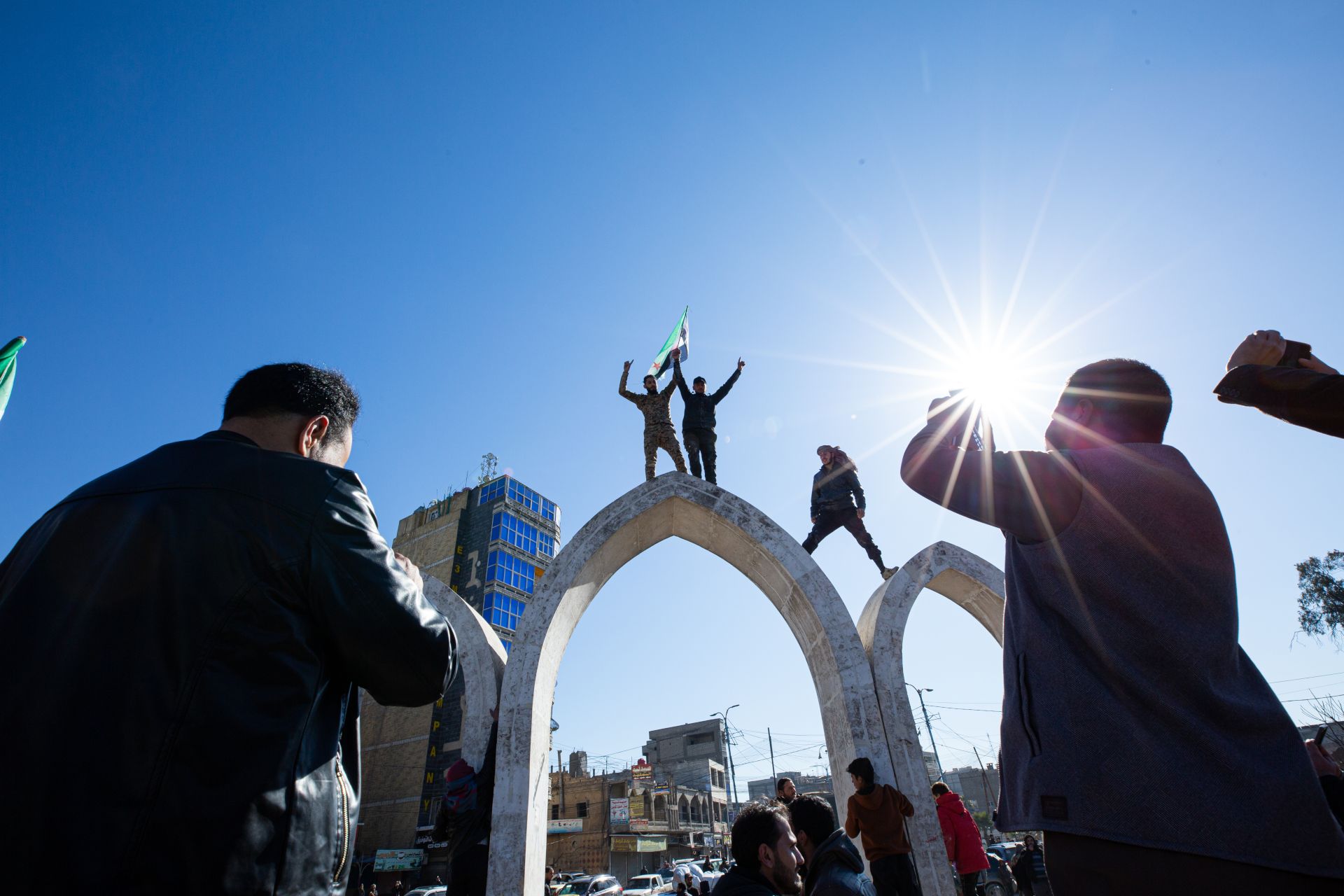
In Raqqa, residents gathered at al-Naim Square to celebrate their perception of liberation. Gunfire echoed in the air as people waved Syrian flags and danced the traditional dabke, marking a stark contrast to the restrictions imposed by the SDF, which had previously banned similar celebrations. Ahmed al-Boch, a 33-year-old local, recalled his arrest during a previous attempt to celebrate the fall of Bashar al-Assad’s regime. “For the first time, I feel like I belong to this country,” he said, reflecting the emotion of a city that has experienced significant turmoil.
A palpable sense of joy was evident among many, yet underlying tensions remain. Abdulmajid Tuma, a 45-year-old resident, remarked on the discrimination he felt under SDF governance. “Raqqa is 95% Arab, yet we had no power,” he stated, pointing to systemic inequalities that marginalized the local population. Many residents voiced their grievances about lack of representation and resources while celebrating the return of government control.
Despite the festive atmosphere, the humanitarian situation around Raqqa requires attention. Ongoing clashes have damaged infrastructure, with one bridge across the Euphrates bombed during the recent military advance. Abu Hussein, a local fisherman, now ferries people across the river as the old bridge remains unusable. He expressed feeling discriminated against during SDF rule and shared the experience of his cousin, who was detained for a year on unsubstantiated accusations.
The Kurdish community in Raqqa has been significantly impacted, as many have fled the area in light of the recent changes. A Kurdish resident noted the removal of Kurdish symbols from public spaces, highlighting the community’s fears and anxieties following the regime’s return. The atmosphere is tense, with military checkpoints established to control movement and a general sense of insecurity among those who remain.
In the background of the celebrations, a Kurdish notable spoke anonymously about the recent upheaval, expressing sorrow over the political shift. He described the dismantling of symbols of Kurdish self-rule and the potential for further violence against Kurdish civilians. “What happened in Sweida or along the coast could happen again elsewhere,” he cautioned, referring to previous sectarian violence.
Negotiations between the Syrian government and the SDF have resulted in a ceasefire agreement that outlines the transfer of Raqqa and Deir ez-Zor provinces back to Syrian state control. This agreement includes provisions for the integration of Kurdish forces into state institutions and the retention of limited local autonomy for the Kurdish-majority city of Kobane. The deal, however, does not provide constitutional recognition for Kurdish rights.
On January 20, Abdulrahman Salameh, the newly appointed mayor of Raqqa, addressed the public, emphasizing the need for equal treatment for all residents. “Kurdish rights must be respected,” he stated, as the city grapples with its new reality.
While celebrations continue in Raqqa, the Kurdish stronghold of Hasakah remains apprehensive. Residents express uncertainty about the future as the Syrian government’s control expands. Patricia, a 22-year-old Armenian media worker, described the city as holding its breath amidst rising tensions and reports of violence.
Despite ongoing celebrations, the region’s complex political landscape suggests that the situation remains fragile. The shift in control may not signify a resolution but rather the beginning of new challenges for all communities in the area. As Raqqa embraces a new chapter, the Kurdish population watches closely, uncertain of what lies ahead.