South Korea and European nations are advancing their security cooperation in response to evolving global threats. Over the last two decades, South Korea has shifted from being a regional security partner to a significant player in global security, a change driven by increasing interconnections between the Indo-Pacific and Euro-Atlantic regions. As tensions escalate due to Russia’s aggression in Ukraine, supported by North Korea and China, the need for collaborative security strategies has never been more urgent.
This evolving security landscape has highlighted shared values between South Korea and European nations. Both regions are committed to democracy, human rights, free trade, and the rule of law, while prioritizing sovereignty and territorial integrity. These commonalities form a robust foundation for enhanced security cooperation, emphasizing the need for increased intelligence sharing, collaborative programs, and expanded defense industrial partnerships.
Intelligence Sharing as a Priority
The necessity for deeper intelligence sharing between South Korea and European intelligence services is underscored by North Korea’s military actions. Since the fall of 2022, North Korea has been supplying artillery shells and ballistic missiles to Russia, facilitating attacks on Ukraine that have devastated civilian infrastructure. To counter this threat, it is critical for Seoul and European nations to collaboratively monitor North Korea’s military transfers and technology supply chains.
Beyond arms transfers, both regions can benefit from sharing insights on military performance, cyber defense, and hybrid warfare. Such cooperation will enhance preparedness and resilience against emerging threats in both Europe and Asia.
Strengthening Existing Collaborations
In recent years, South Korea has made significant progress in institutionalizing partnerships with NATO and European allies. The Individually Tailored Partnership Program with NATO is a structured framework that enhances collaboration in areas such as cyber defense and emerging technologies. Additionally, South Korea’s involvement in dialogues with the Indo-Pacific Four (IP4)—comprising Australia, Japan, New Zealand, and South Korea—positions it as a vital link between the two regions.
A logical next step for these partnerships is conducting ballistic missile defense exercises involving the United States, South Korea, and NATO. Such exercises would test interoperability among allied systems, improve situational awareness regarding North Korean threats, and potentially extend participation to other partners like Japan and Australia.
Expanding Defense Industrial Cooperation
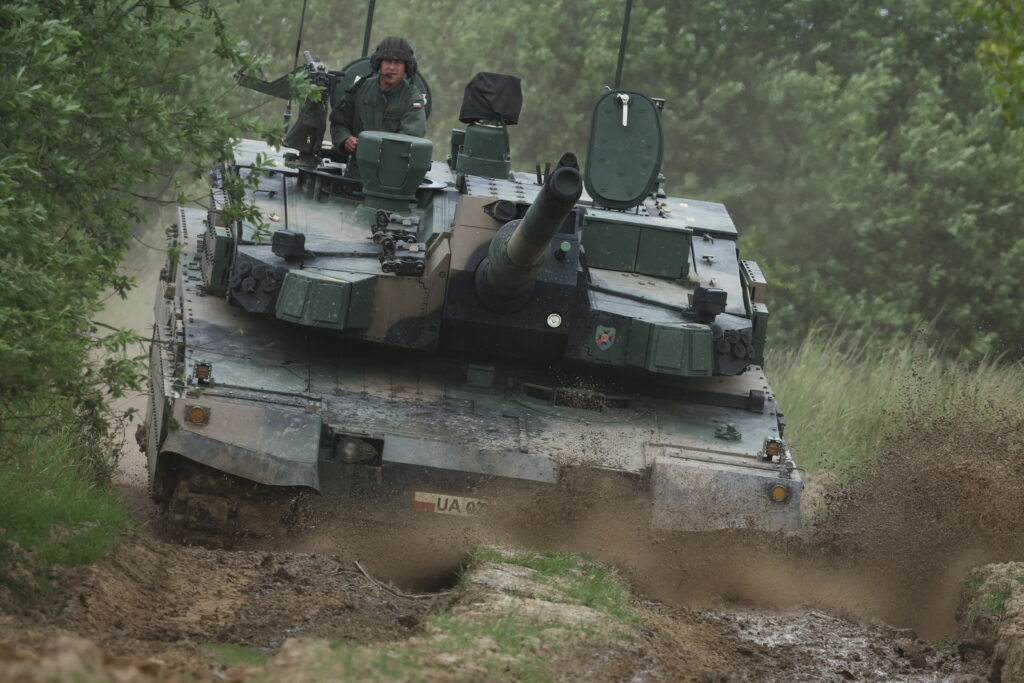
The growth of South Korea’s defense partnerships with European nations is evident in major contracts with NATO members. Notably, Poland has signed contracts for approximately 180 K2 main battle tanks, over 200 K9 self-propelled howitzers, and 48 FA-50 fighter jets, totaling more than $12 billion. These agreements include technology transfer and localized production, marking a shift towards genuine industrial collaboration rather than one-way exports.
In September 2025, Norway further strengthened its defense ties with South Korea by signing a contract for 24 additional K9 howitzers. Such developments reflect a broader alignment between Europe’s urgent need to enhance its military capabilities and South Korea’s capacity to deliver modern, interoperable systems efficiently.
Future opportunities for collaboration include:
1. **Munitions and Artillery Replenishment**: As NATO faces challenges in replenishing artillery and air-defense munitions due to the ongoing conflict in Ukraine, South Korea’s defense industry is well-positioned to assist. Coordinated efforts between South Korean manufacturers and European governments can help rapidly meet battlefield needs and enhance long-term industrial resilience.
2. **Air and Missile Defense Collaboration**: With NATO investing in integrated air and missile defense systems, South Korea’s experience defending against North Korean missile threats can contribute valuable insights. Joint exercises and co-development of air defense systems can improve interoperability and readiness across the alliance.
3. **Co-development of Advanced Technologies**: Both South Korea and Europe are investing in emerging defense technologies like robotics and artificial intelligence. By fostering partnerships between research institutions and defense firms, innovation can be accelerated, ensuring that new technologies enhance operational advantages for allied forces.
4. **Strengthening Defense Supply Chains**: The vulnerability of global supply chains has become evident, particularly in critical sectors such as semiconductors. South Korea’s leadership in advanced chip manufacturing complements European capabilities in propulsion and materials engineering. Collaborative efforts can build a more resilient industrial base, reducing dependence on unreliable suppliers.
The initiatives outlined here are essential for strengthening deterrence and promoting strategic diversification. By leveraging these opportunities, South Korea and European nations can reduce reliance on single suppliers and reinforce the resilience of their defense networks.
The burgeoning partnership between South Korea and NATO represents a significant shift in the global security landscape. It reflects a mutual understanding that modern deterrence is inherently global, where technology and industrial capacity are as crucial as troop deployments.
To transform this momentum into a structured alliance, practical cooperative activities must be institutionalized, defense industrial planning coordinated, and political engagement sustained. By doing so, the partnership can serve as a model for cross-regional alignment, demonstrating how democracies can unite their strengths to maintain stability and deter aggression.
In conclusion, South Korea’s increasing role in European security is not merely an opportunity; it is a strategic necessity for both regions. As they work together to fortify their defenses, the interconnectedness of the Euro-Atlantic and Indo-Pacific security communities will enhance global stability.