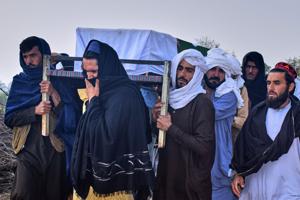
Pakistan’s military has reported a significant escalation in its operations against Afghan military forces, claiming that its airstrikes have resulted in the deaths of more than 300 Afghan troops. The strikes, which took place over several days, targeted military installations deep within Afghanistan. This development has raised concerns among international observers regarding the increasing tensions along the border.
The airstrikes reportedly commenced on October 10, 2023, and have been described by Pakistani officials as a necessary response to ongoing border clashes. According to statements from the Pakistani military, these operations aimed to dismantle what they termed “terrorist threats” emanating from Afghan territory. The military has emphasized that their actions were conducted in self-defense and intended to ensure national security.
Afghan officials have yet to confirm the exact number of casualties but have condemned the airstrikes as a violation of sovereignty. The Afghan government has called for immediate international intervention, urging the global community to address the increasing violence in the region. As the situation unfolds, there is a palpable sense of urgency among diplomats and international peacekeeping organizations concerned about the implications of this conflict.
International Reactions to the Escalation
The airstrikes have drawn mixed reactions from various international actors. Some nations have expressed solidarity with Afghanistan, emphasizing the need to uphold its sovereignty. Meanwhile, others have acknowledged Pakistan’s security concerns, highlighting the complex dynamics of the region.
The United Nations has called for restraint from both sides, urging a return to dialogue to prevent further escalation. A spokesperson for the UN remarked, “It is vital that all parties prioritize peace and stability in the region.” The international community is closely monitoring the conflict, as further violence could have dire humanitarian consequences for civilians caught in the crossfire.
Background of the Conflict
Tensions between Pakistan and Afghanistan have a long history, often fueled by issues such as cross-border militancy and territorial disputes. The recent military actions are part of a broader pattern of conflict that has seen periodic flare-ups along the border.
In recent months, both countries have accused each other of harboring militant groups that threaten their respective national security. The situation has been exacerbated by the shifting political landscape in Afghanistan following the withdrawal of international forces and the subsequent takeover by the Taliban in 2021.
As the conflict continues, the potential for regional instability remains a pressing concern. Analysts note that without effective diplomatic engagement, the risk of further military confrontations could increase, affecting not only Pakistan and Afghanistan but also neighboring countries.
The situation in the region remains fluid, and the international community’s response in the coming days will be crucial in determining the trajectory of this conflict.