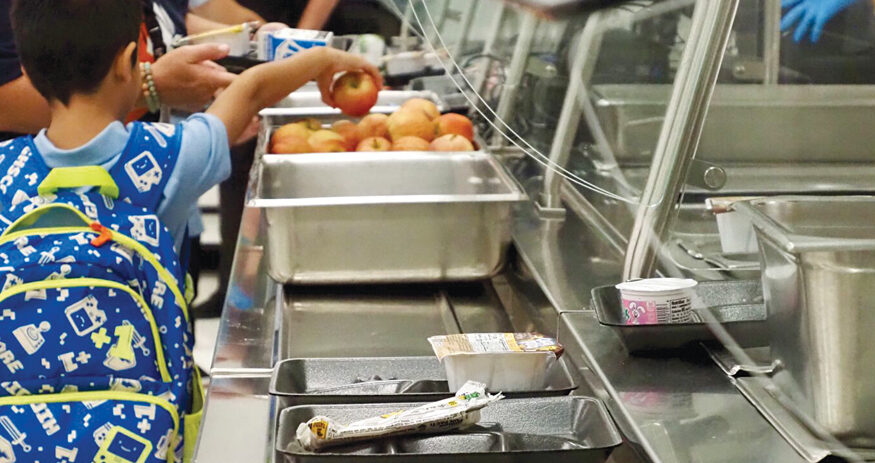
A proposal for public schools in Oklahoma to provide free meals to all students has not gained traction in the state’s GOP-controlled Legislature. Former state Superintendent Ryan Walters issued a directive in July mandating that all school districts eliminate cafeteria fees and offer free breakfasts and lunches. However, this order has been largely ignored by districts and lawmakers alike.
Walters, who resigned from his position in September 2023 to lead a nonprofit organization, argued that public schools had sufficient funds to cover the costs. Despite his claims, Rep. Dick Lowe, chair of the House Common Education Committee, noted that legislators have moved on from Walters’ directive. He expressed concerns about the state’s fiscal situation, stating that providing universal free meals would require significant funding, especially as the state expects a tight budget in the upcoming year.
According to the Oklahoma Office of Management and Enterprise Services, revenue collections in the state’s General Revenue Fund are down compared to the previous year. The nonprofit organization Hunger Free Oklahoma estimates that implementing free meals for all public school students would cost between $80 million and $100 million.
As lawmakers prioritize other issues, particularly enhancing childhood literacy, there appears to be little support for the elimination of cafeteria fees. Sen. David Bullard, a Republican from Durant, emphasized that families who can afford to pay should do so, stating, “Let the parents pay for the meal, and let’s focus on getting kids a high-quality education.”
Democrats in the Legislature are continuing to advocate for the free meals policy. Cyndi Munson, the House Minority Leader, highlighted House Bill 2092 from Rep. Annie Menz and Sen. Carri Hicks, which aims to expand universal free meals to additional districts. This bill will carry over into the 2026 legislative session after failing to receive a committee hearing in 2025. Munson criticized Walters for leaving behind unfulfilled promises, asserting that universal school meals remain a priority for House Democrats.
Currently, students from households at or near the federal poverty line qualify for free or reduced-priced meals in public schools. A report from Hunger Free Oklahoma indicated that nearly 280,000 students were enrolled in schools providing free meals as of 2024. Across the state, 267 districts and 849 schools participate in a federal program known as the Community Eligibility Provision, which offers federal reimbursements based on student poverty levels.
Districts not eligible for this program expressed concerns about the financial viability of Walters’ mandate, even with significant budget cuts. Many district leaders have indicated they will not comply with the order, despite Walters’ threats of sanctions. Furthermore, his directive proposed banning certain food items deemed unhealthy, which the School Nutrition Association of Oklahoma argued would be challenging to implement without additional funding and resources.
Walters’ mandate was issued shortly after the annual deadline for applying for Community Eligibility Provision funding, leading to further dissatisfaction among school officials. Both lawmakers and policy experts have noted that Walters overstepped his authority in issuing such a requirement. Since Walters’ resignation, the newly appointed state Superintendent Lindel Fields has not pursued the enforcement of the mandate.
Fields acknowledged the importance of addressing the issue of student nutrition, stating, “Students learn best when their basic needs are met, including having a full stomach.” He emphasized the need for discussions aimed at finding viable solutions that benefit all students. As the legislative session approaches, the future of universal free meals in Oklahoma remains uncertain.