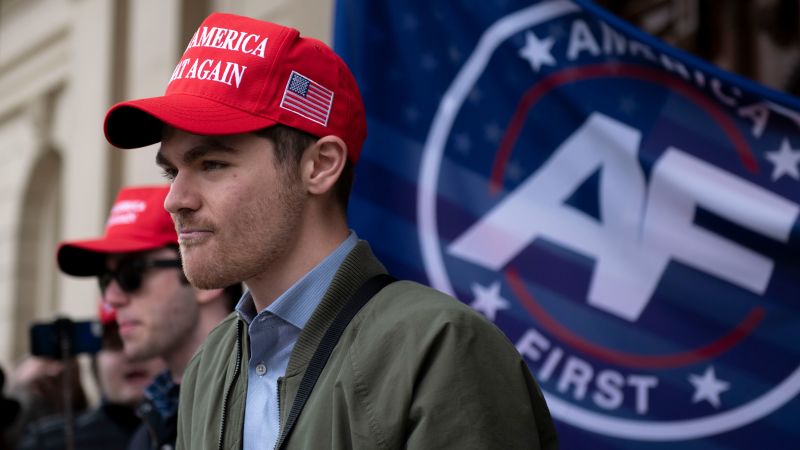
Nick Fuentes, a prominent figure known for his White nationalist beliefs, has ignited significant unrest within the Republican Party and the Heritage Foundation, a leading conservative think tank in Washington, D.C. Following an amicable appearance on Tucker Carlson’s podcast, the political right is experiencing a deep divide. Carlson’s decision to host Fuentes has drawn sharp criticism from various conservatives, including Dinesh D’Souza and Ben Shapiro, who have condemned the promotion of a figure with a history of antisemitic and racist rhetoric.
Much of the backlash centers on Fuentes’ comments regarding Israel and his derisive remarks about Christians who prioritize support for the Jewish state. In a robust defense of Carlson, Heritage Foundation President Kevin Roberts stated that criticism of Carlson and Fuentes undermines the fight against censorship and “cancel culture.” He asserted, “Christians can critique the state of Israel without being antisemitic,” a statement that has gone viral, accumulating over 24 million views on social media platforms.
The response to Roberts’ defense has been swift and severe, sparking unrest within the Heritage Foundation and leading to questions about its future. According to interviews with current and former employees, there is a growing frustration with Roberts’ leadership. One senior staff member described the situation as “an absolute chaos,” while another indicated that “85% are totally disgusted” with the current direction of the organization.
Internal Divisions and Leadership Challenges
The discussions among Heritage staff reveal a workplace rife with dissent, with one employee lamenting the impact of the controversy on the organization’s reputation. Multiple staffers reported that morale has plummeted, with some suggesting that this incident has accelerated donor dissatisfaction and high turnover rates. There appears to be an ongoing identity crisis within Heritage, as traditional policy experts clash with a new wave of political operatives brought in under Roberts’ leadership.
Since assuming the presidency in 2021, Roberts has steered Heritage towards a more hardline stance, exemplified by its role in Project 2025—a sweeping policy initiative that proposes significant changes to federal governance. The controversies surrounding Fuentes have intensified internal disagreements about this strategic direction, with many staff members expressing outrage and confusion about the organization’s current trajectory.
Attempts to reach Fuentes and Carlson for comments were unsuccessful. Nonetheless, Fuentes has openly stated that chaos is integral to his strategy for reshaping the GOP. “We want disruption, we want chaos, we want infighting,” he remarked in a September podcast episode.
Broader Implications for the Republican Party
The growing influence of Fuentes, especially following the recent death of conservative activist Charlie Kirk, highlights a rift within the Republican Party regarding how to handle extremist rhetoric. Prominent figures, including Texas Senator Ted Cruz and Kentucky Senator Mitch McConnell, have criticized Carlson’s approach to Fuentes, further indicating a fracturing within GOP ranks.
In the wake of the controversy, Laura Loomer, a far-right provocateur, warned that the GOP is “imploding” over the implications of Fuentes’ rising prominence. She characterized Carlson as a “poison pill” for the party, predicting significant electoral losses in the upcoming elections if the current trajectory continues.
Fuentes has claimed that recent events reflect his growing sway within the Republican Party, particularly among younger voters. After experiencing bans from multiple social media platforms for his inflammatory statements, Fuentes has seen a resurgence in visibility, with his account on X reinstated and now boasting 1 million followers. He refers to his followers as “groypers,” asserting their pivotal role in what he describes as a “civil war” within the GOP.
In a troubling revelation, Fuentes expressed admiration for historical figures like Joseph Stalin, promoting a vision of governance that aligns with his extremist ideologies. His controversial remarks have compounded the internal divisions within the Republican Party, as party leaders grapple with how to distance the GOP from such rhetoric.
The fallout from the incident continues to unfold at Heritage. Following the uproar, Chief of Staff Ryan Neuhaus resigned, signaling potential leadership instability. The Zionist Organization of America announced its withdrawal from the Heritage Foundation’s Project Esther on Antisemitism unless Roberts issues a public apology and reconsiders his association with Carlson.
During a recent all-staff meeting, Roberts acknowledged the mismanagement of the situation, admitting, “I made a mistake, and I let you down.” Despite the backlash, he affirmed his intention to remain in his position, which has prompted further criticism from both current and former staff members.
As the Heritage Foundation navigates this turbulent period, the implications for its future and the broader conservative movement remain uncertain. The divisions exposed by this controversy may reshape the landscape of conservative politics in the United States, particularly as factions within the GOP continue to vie for influence and direction.