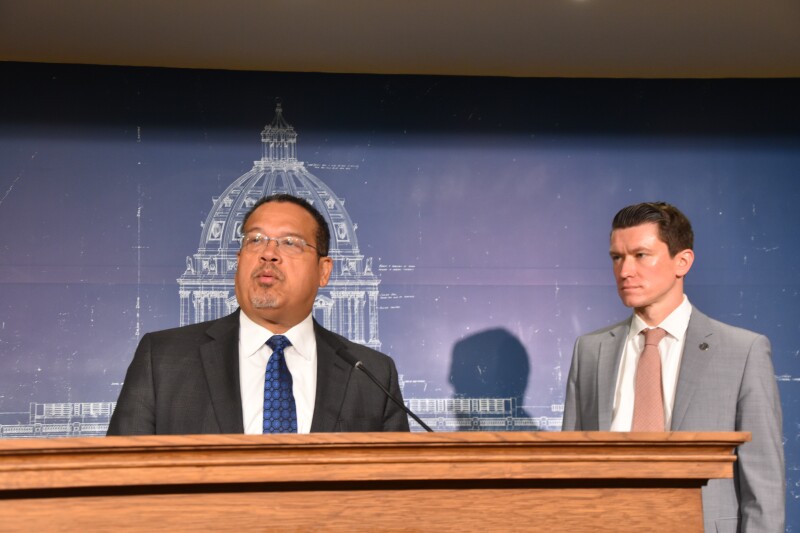
On February 25, 2024, Minnesota Attorney General Keith Ellison and House DFL lawmakers introduced a series of proposals aimed at combating fraud within state programs, particularly within Medicaid. The proposed bill, known as HF2354, seeks to bolster the existing Medicaid Fraud Control Unit (MFCU) by allocating funds for 18 additional staff members, increasing the unit’s total workforce to 52. Additionally, it would grant the MFCU enhanced powers to subpoena financial records.
Ellison emphasized the urgency of this initiative, stating, “Giving this vitally important unit more support is a no-brainer for people on either side of the aisle who are serious about fighting fraud.” The legislation aims to modernize the definition of Medicaid fraud and harmonize penalties for fraud against public and private sectors, addressing a disparity where penalties for defrauding the private sector can be more severe than those for defrauding low-income individuals relying on Medicaid.
Details and Rationale Behind HF2354
The “Medical Assistance Protection” (MAP) Act, as HF2354 is also known, was initially introduced in the previous legislative session but failed to progress beyond committee discussions, despite some bipartisan backing. The bill garnered endorsements from two House Republicans and one Senate Republican, highlighting a degree of cross-party support. The projected annual fiscal impact of the legislation is estimated at $1.2 million.
Ellison noted that the recommendation for additional staff aligns with guidelines from the Federal Department of Health and Human Services. This comes as Minnesota’s Medicaid budget has surged to $20 billion, coinciding with a tripling of referrals to the MFCU from state agencies and managed care organizations. The need for increased capacity is further underscored by recent resignations within the U.S. Attorney’s Office, which has historically prosecuted many significant Medicaid fraud cases.
“Some of them [fraud cases] that we previously believed may be charged by the U.S. Attorney’s Office are a little bit more of an uncertain state,” said Nick Wanka, director of the AG’s MFCU.
Wanka acknowledged that while the U.S. Attorney’s Office has not formally transferred any cases since the recent resignations, his office has ongoing investigations into all 14 high-risk Medicaid programs. He expressed concerns that without additional resources, the MFCU may struggle to handle the increasing volume of cases efficiently.
Broader Legislative Context and Bipartisan Efforts
As discussions around fraud prevention intensify, Governor Tim Walz is also set to unveil his own anti-fraud initiatives. Senate Republicans have introduced their proposals, indicating a widespread legislative focus on this issue. One notable bipartisan proposal is the creation of a statewide Office of Inspector General (OIG), identified as SF856. This bill passed the Senate with a significant majority of 60-7 in the previous session but has faced challenges in House committees this year.
Matt Norris, the bill’s author, explained that the OIG proposal stalled due to a critical amendment concerning the appointment process for the inspector general that was not adopted. He reassured that the bill is “certainly not dead” and that discussions across party lines are ongoing. Following the bill’s second setback, Senator Heather Gustafson urged collaboration, highlighting the ability of lawmakers to work together for the benefit of Minnesotans.
“While I understand the challenges presented by a 67-67 tied House and evenly split committees, Minnesotans have seen that we can all work together across the aisles in a productive manner to prevent fraud,” Gustafson stated.
The push for these anti-fraud measures reflects a growing recognition among Minnesota lawmakers of the need to protect vulnerable populations and ensure the integrity of state programs. As both parties continue to negotiate and refine these proposals, the outcome may significantly impact the state’s approach to fraud prevention and enforcement in the coming months.