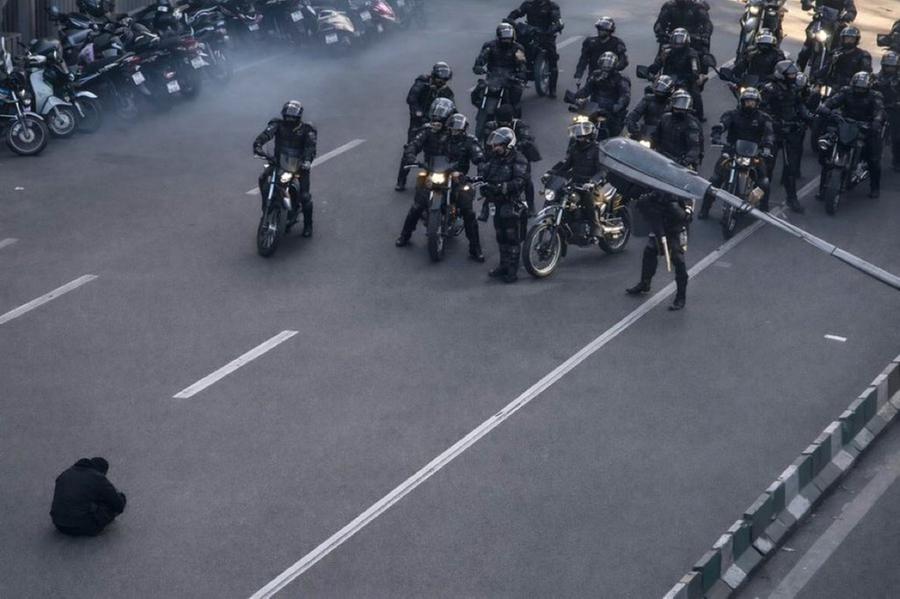
Protests across Iran are escalating as citizens express their discontent, driven by far more than economic hardship. In Tehran, a striking scene unfolded when a lone man sat defiantly in the middle of a street, surrounded by security forces. This act of bravery highlights a growing movement challenging a regime that has maintained control through intimidation and repression. While some media narratives suggest that the unrest is solely due to the tumbling value of the Iranian rial, the reality is vastly more complex and significant.
The demonstrations are not spontaneous reactions to economic conditions. They reflect decades of accumulated frustration against a regime perceived as morally bankrupt. The economic landscape is indeed dire, with inflation exceeding 42 percent and the rial plummeting to record lows. In this context, shopkeepers in Tehran’s Grand Bazaar, a crucial economic hub, closed their stores in protest, signaling both desperation and a refusal to accept the status quo. Nonetheless, framing these protests purely as economic grievances overlooks the larger, systemic issues at play.
Iranians are protesting against a government that has repeatedly failed to provide basic rights and security. They are opposing a culture of violence, arbitrary detention, and lethal responses to dissent. Discrimination against minority groups, including Kurds and Baha’is, has perpetuated an atmosphere of fear and repression. Women are particularly vocal in their demands for autonomy, pushing back against oppressive laws that control their bodies and choices.
The public’s frustration extends beyond social issues. Environmental degradation and mismanagement have left many regions desolate and struggling for water. Despite Iran’s rich cultural and natural heritage, the regime’s focus on funding foreign militias—such as the approximately $1 billion sent to Hezbollah this year—highlights misplaced priorities. Many citizens are left questioning why their government invests heavily in external conflicts while they struggle to afford basic necessities like food and medicine.
As protests erupt in cities including Mashhad, Isfahan, Shiraz, and Hamadan, demonstrators are clear in their demands. Chants of “azadi” (freedom) resonate through the streets, alongside calls for an end to dictatorship. The spirit of resistance is not new; Iran has a history of uprisings, from the student protests of 1999 to the Green Revolution of 2009. The protests following the deaths of Mahsa Jina Amini in 2022 and subsequent labor strikes demonstrate an ongoing struggle for justice and recognition.
Recent geopolitical events have intensified public sentiment against the regime. Following a 12-day conflict with Israel, the Iranian rial lost approximately 60 percent of its value, compounding feelings of national humiliation. The government now faces a critical challenge: maintaining authority over a population that increasingly rejects fear as a means of control.
The world watches as the situation unfolds. Simplifying Iran’s protests to economic statistics allows for a comfortable detachment from the deeper moral implications of the unrest. Yet, the images of protestors standing firm against oppression convey a powerful message.
The people of Iran are not merely seeking intervention; they are demanding recognition of their struggles and aspirations. As the protests continue, it remains to be seen how the regime will respond to this growing tide of dissent and whether the international community will choose to engage meaningfully with the realities on the ground. The urgency of the situation calls for a deeper understanding of the complexities surrounding these protests, which transcend mere economic grievances and speak to the human desire for dignity and freedom.