A recent meeting of the House Business Committee in Boise has drawn significant criticism from civil rights groups after a man in brownface was permitted to testify on a contentious immigration bill. The incident occurred during a public hearing for House Bill 704, which mandates that all private and public employers utilize the E-Verify system to confirm the employment authorization of individuals in the United States.
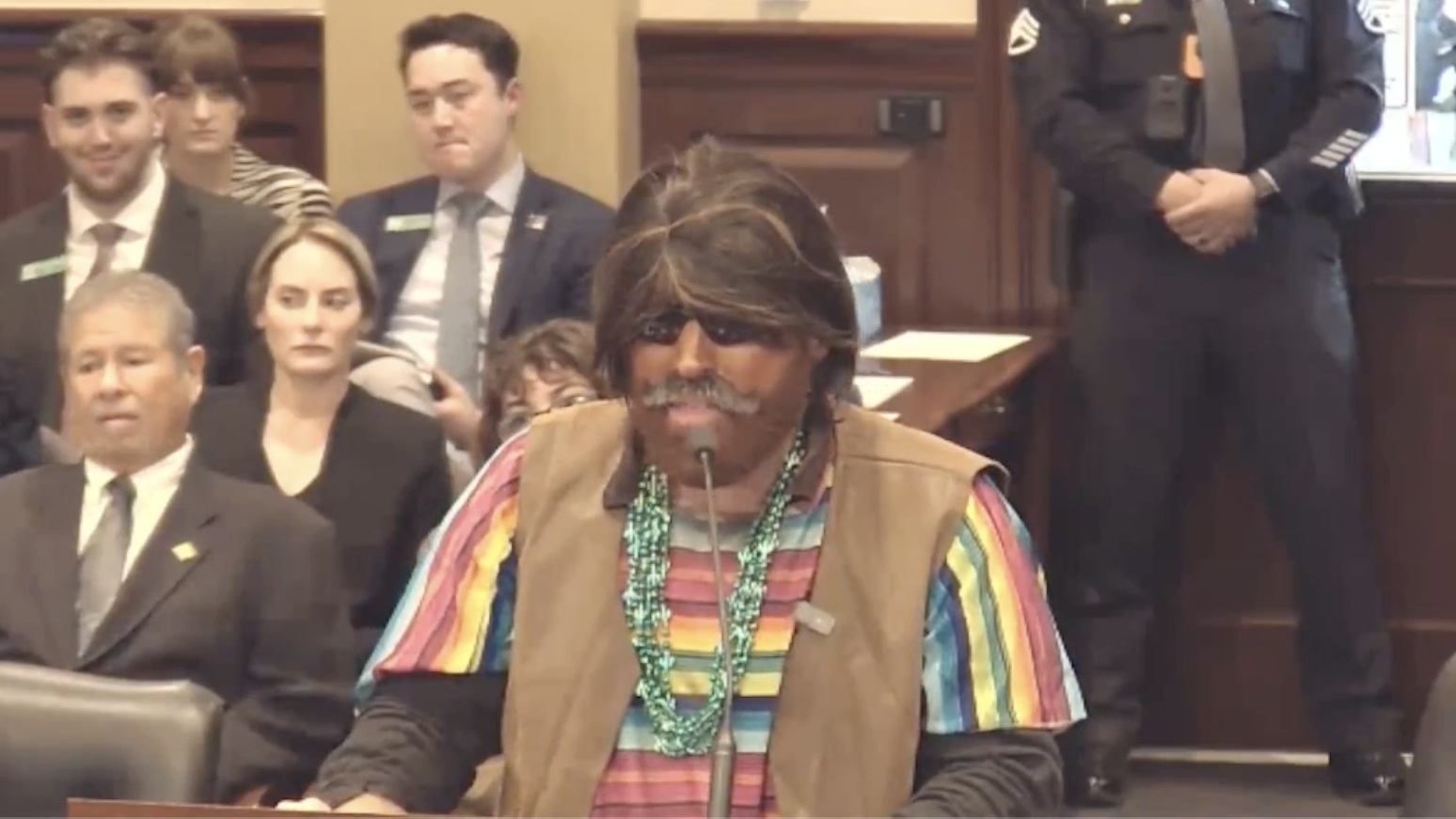
David Pettinger, a far-right activist known for controversial demonstrations, appeared before the committee on March 6, 2023, wearing brownface, a rainbow poncho, a brown wig, and a mustache. He was accompanied by a person he referred to as his “interpreter.” Pettinger began his testimony in broken Spanish, which prompted Rep. Steve Berch, a Democrat from Boise, to request that “straight testimony” be provided. Acting chairman Rep. Josh Wheeler, a Republican from Ammon, agreed with this request, leading to a brief suspension of the hearing.
When the testimony resumed, Pettinger continued without his “interpreter” and delivered his statements in English. His initial intent, he claimed, was to argue against the bill from the perspective of an “illegal alien.” After the theatrics were removed, Pettinger remarked he looked forward to providing “some entertainment,” while expressing concern about not wanting to end up in handcuffs again, referencing a prior arrest during a protest in March 2021.
This prior incident involved Pettinger testifying while wearing a large yellow Star of David and being admonished by the then-chair of the Commerce Committee, James Holtzclaw. Pettinger also gained notoriety for covering the Pride and organ donor flags at Boise City Hall with garbage bags, an act that drew sharp condemnation from the LGBTQ+ community.
The committee’s handling of Pettinger’s testimony has since been criticized by organizations like the American Civil Liberties Union (ACLU) of Idaho. In a press release, the ACLU described Pettinger’s actions as “a clear, obscene mockery of Latinos in Idaho” and highlighted that they violated the committee’s own rules against demonstrations and displays of disrespect.
Ruby Mendez-Mota, the interim advocacy director for the ACLU of Idaho, stated, “We remind lawmakers that they represent all of their constituents, even those with dark skin, even those who don’t speak English as a first language.” She emphasized the necessity for lawmakers to uphold a high standard of conduct or face accountability.
In a similar vein, Mistie DelliCarpini-Tolman, regional political director for Planned Parenthood Alliance Advocates, condemned the decision to allow Pettinger to continue, labeling it as an “openly racist display.” She argued that permitting such behavior in an official hearing undermines the integrity of the legislative process.
Wheeler defended the committee’s decision, stating that Pettinger had previously shown himself to be a “career agitator.” He explained that Pettinger was allowed to proceed with his testimony only after agreeing to provide a straightforward account. Had he continued with the theatrics, Wheeler asserted, he would have been stopped.
Rep. Brent Crane, a Republican from Nampa, noted that he had initially suggested pausing the committee after Pettinger began his testimony to discuss the situation with the chairman. Ultimately, a decision was made to permit Pettinger to testify as long as he refrained from the “sideshow” elements of his presentation.
Crane remarked, “You’re trying to work through a difficult situation and get their First Amendment rights to be recognized, while not turning it into a sideshow or a circus.” He acknowledged that committee chairmen have considerable discretion in managing proceedings, including the authority to halt testimony or reprimand individuals when necessary.
As public criticism mounts, the incident raises important questions about the standards of conduct expected within legislative bodies and the responsibilities of elected officials in representing all constituents. The committee’s website outlines rules against demonstrations, but the latitude given to committee chairmen may lead to varying interpretations of appropriate conduct during hearings.
The fallout from this incident suggests a growing demand for accountability and respect within political discourse, particularly regarding sensitive issues such as immigration and civil rights.