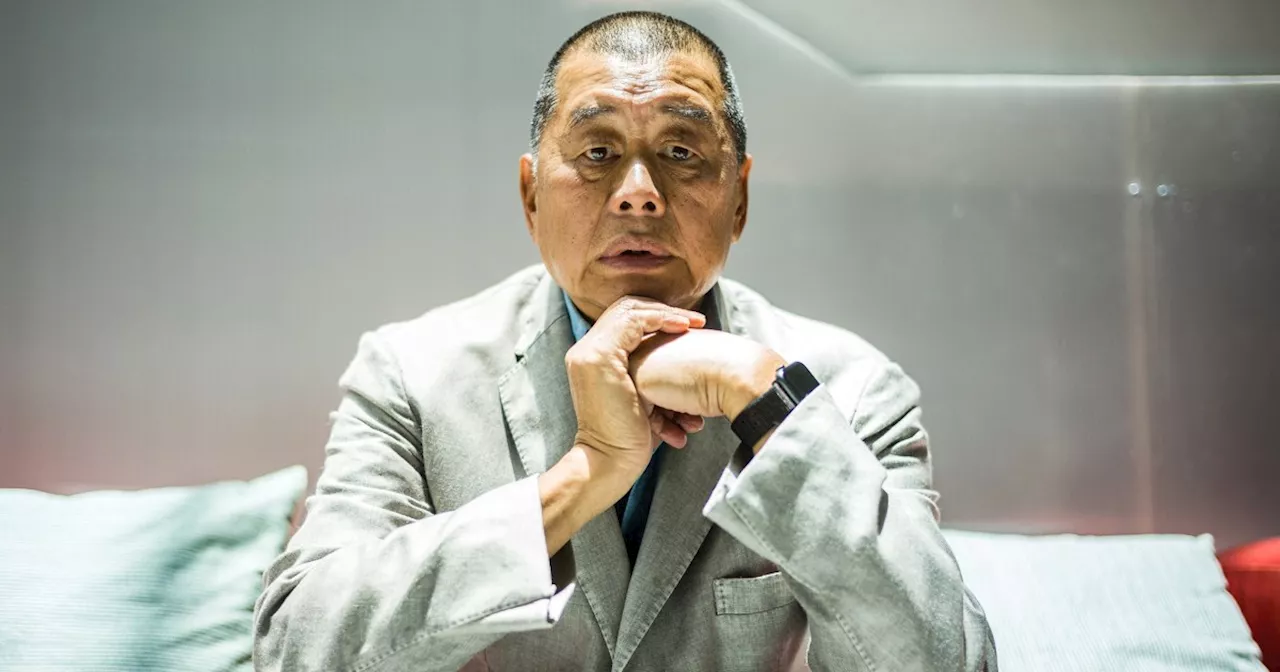
A Hong Kong court is poised to announce its verdict in the high-profile national security trial of Jimmy Lai, a prominent pro-democracy activist and media entrepreneur. The ruling is scheduled for 10 a.m. local time on December 18, 2023, and has attracted significant international attention, symbolizing Beijing’s ongoing efforts to suppress dissent in the region.
Lai has been a vocal critic of the Chinese Communist Party and was arrested in 2020 shortly after the implementation of a stringent national security law aimed at quelling the protests that erupted in Hong Kong throughout 2019. He faces up to life imprisonment if convicted on charges of colluding with foreign forces and conspiracy to publish seditious materials under colonial-era legislation. Lai has pleaded not guilty to these charges.
The trial, which spanned 156 days, has been overseen by a trio of judges specifically selected for national security cases. Critics, including various Western governments and human rights organizations, argue that the trial is politically motivated. Both the United States and the United Kingdom have called for Lai’s release, with former President Donald Trump making public appeals for his freedom. This has drawn warnings from Hong Kong’s Chief Executive John Lee, who has cautioned against external interference in the city’s legal processes.
Lai’s case is viewed as a critical test of judicial independence and press freedom in Hong Kong, a territory that was promised a degree of autonomy and civil liberties upon its return to Chinese sovereignty in 1997. The Hong Kong and Chinese authorities maintain that Lai has received a fair trial, asserting that external criticisms are attempts to undermine the region’s rule of law. A spokesperson for the Chinese Foreign Ministry stated that Beijing firmly supports the Hong Kong government in holding accountable those who jeopardize national security.
Lai has been held in solitary confinement since his arrest, and his health has become a concern for family and supporters. He suffers from diabetes, high blood pressure, and heart palpitations. The Hong Kong government claims that he has received “adequate and comprehensive” medical care while in custody and that his separation from other inmates is for his own safety.
Prosecutors have described Lai as the “mastermind” behind a conspiracy involving various activists who allegedly sought to persuade foreign nations, including the United States, to impose sanctions on China and Hong Kong. They highlighted meetings Lai held with U.S. officials during the peak of the 2019 protests, including discussions with then-Vice President Mike Pence. Furthermore, Lai is accused of using his now-defunct newspaper, Apple Daily, to publish articles that prosecutors claim incited hatred against both the Hong Kong and Chinese governments.
During the trial, Lai spent 52 days testifying, where he denied any intentions to influence foreign policy or to “pollute” the minds of his readers, maintaining that his comments were factual.
The implications of Lai’s trial extend beyond his individual case. John Burns, an emeritus professor at the University of Hong Kong, noted that while this case is significant, other recent convictions of journalists and pro-democracy figures represent “much more significant” threats to human rights and press freedom in the city. The convictions of two journalists from the now-defunct Stand News and the subversion charges against 47 pro-democracy figures underscore the chilling effect of the national security law on dissent in Hong Kong.
As the trial reaches its conclusion, the political landscape in Hong Kong continues to shift. The recent disbandment of the Democratic Party, the city’s last major opposition party, reflects increasing pressure from Chinese authorities. This move, combined with recent electoral reforms that have eliminated meaningful opposition in the legislature, suggests a tightening grip on political dissent.
The outcome of Lai’s trial will be closely monitored not only for its immediate impact but also for its broader implications regarding freedom of expression and the rule of law in Hong Kong.