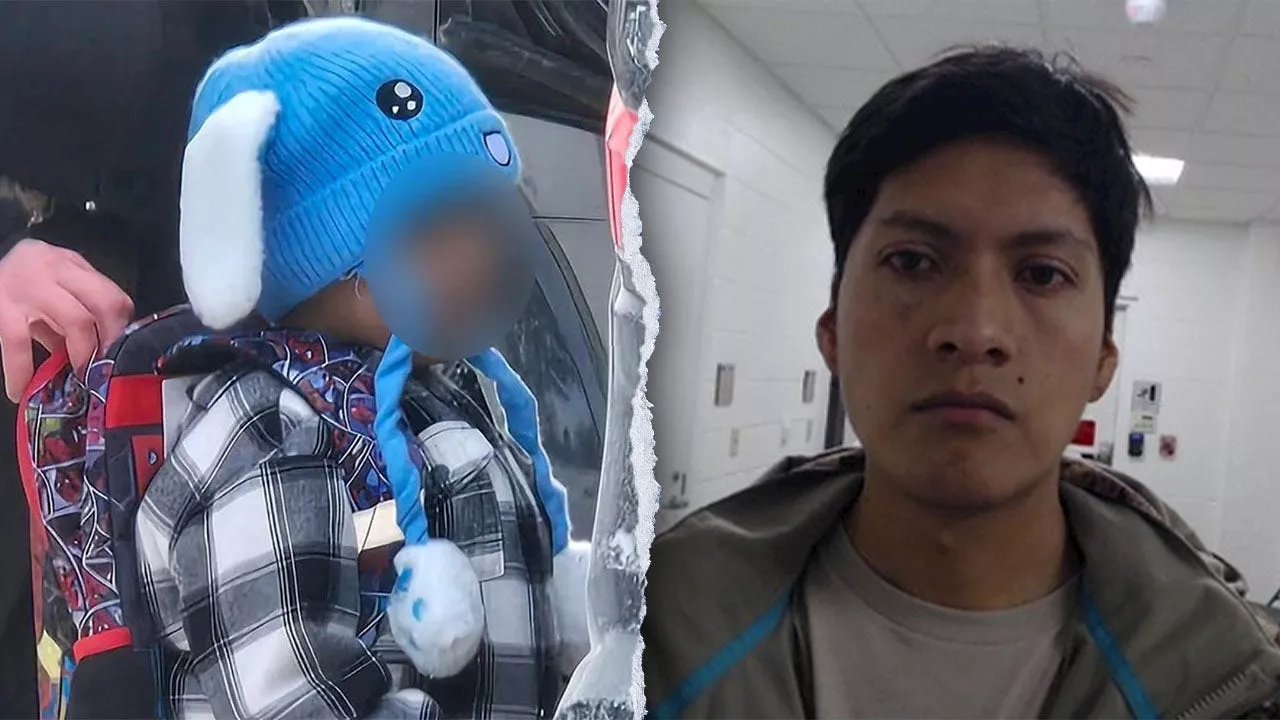
The Department of Homeland Security (DHS) has released an image of Adrian Alexander Conejo Arias, the father of a five-year-old boy who was abandoned while his father fled from federal law enforcement agents. The incident occurred in Minneapolis and has ignited a heated political debate about immigration enforcement tactics.
DHS officials clarified that Conejo Arias was the target of the operation, not his son, Liam Ramos. Following the father’s flight, law enforcement agents remained with the child, ensuring his safety until further arrangements could be made.
During a press briefing, DHS Assistant Secretary Tricia McLaughlin stated, “This little boy was abandoned by his own father. His own father was being approached by ICE agents when he darted, ran, and abandoned the child.” The agency emphasized that, contrary to some claims, the child was not the target of the enforcement action.
The situation has drawn criticism from Democrats, who argued that the child was unfairly treated during the operation. Notably, Rep. Ilhan Omar and Governor Tim Walz of Minnesota shared an image of Liam online, alleging that he had been “kidnapped” by U.S. Immigration and Customs Enforcement (ICE) while returning home from preschool.
According to ICE officials, agents were not pursuing the child but rather focusing on Conejo Arias. Marcos Charles, Executive Assistant Director of Enforcement and Removal Operations, stated, “My officers stayed with the child. They cared for him, took him to get something to eat, and spent hours ensuring he was taken care of.”
The situation escalated when the child’s mother reportedly refused to accept custody of Liam after Conejo Arias fled. McLaughlin noted that attempts were made to reunite the boy with his mother, but she declined to take him in. “Tragically, when we approached the door of his residence, the people inside refused to take him back,” she said.
The child’s father, an Ecuadorean citizen, was in the U.S. illegally and had previously been released into the country under the Biden administration. DHS officials confirmed that there is no record of the family entering the U.S. through the Biden-era CBP One cell phone app, as claimed by the family’s attorney. Instead, Conejo Arias was given the option of voluntary return to leave the U.S. without facing immigration consequences but chose not to do so.
The incident has raised concerns about the treatment of children during immigration enforcement actions. Rep. Jasmine Crockett of Texas expressed her intention to visit the Dilley Detention Center, where both Conejo Arias and Liam are currently detained, to seek answers regarding the child’s welfare. She emphasized the need for transparency, stating, “If it were up to me, we’d be at the Dilley Detention Center RIGHT NOW getting answers.”
As the case continues to unfold, it highlights the complexities surrounding immigration enforcement and the impact on families involved in such operations. The conflicting narratives presented by various parties underscore the challenges in achieving clarity and understanding in these sensitive situations.