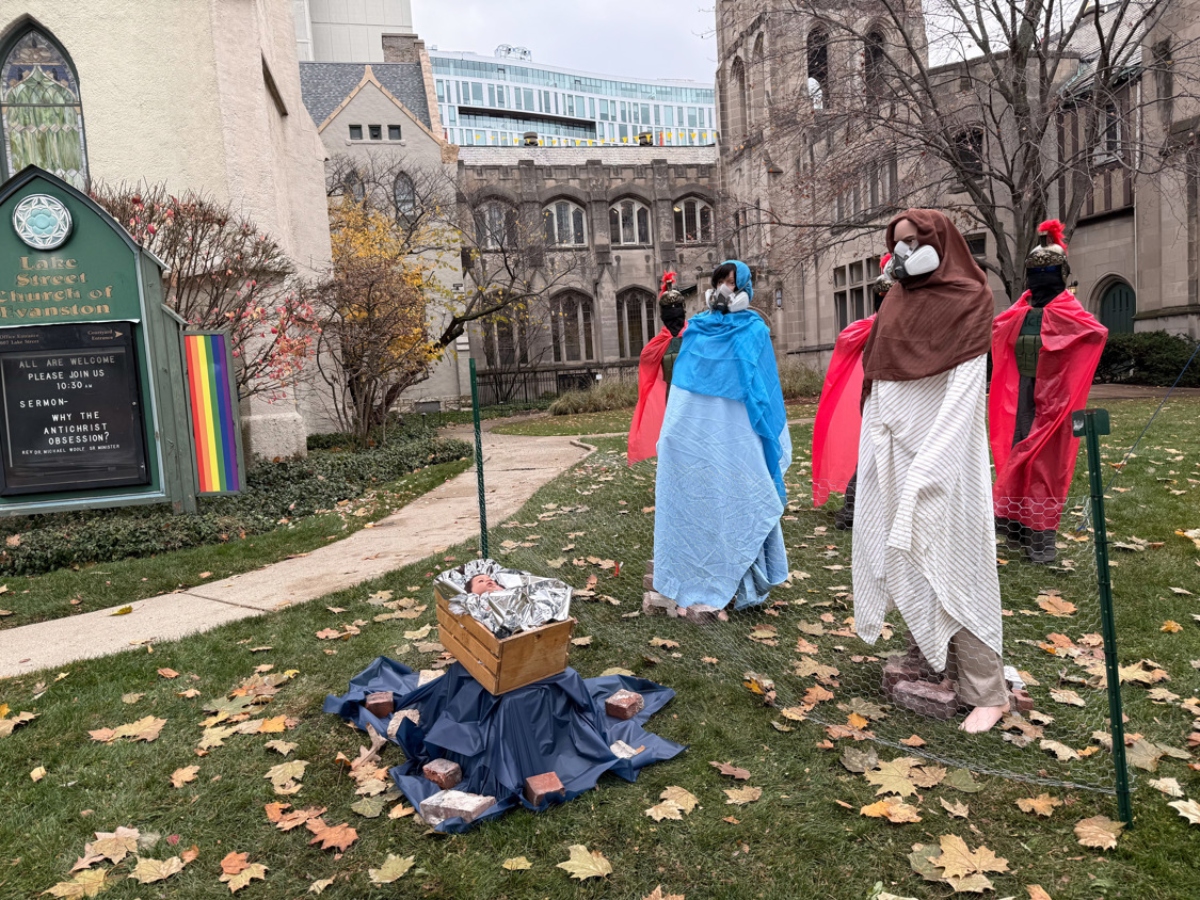
A nativity scene unveiled by the Lake Street Baptist Church in Evanston, Illinois, has ignited significant public backlash due to its provocative portrayal of Baby Jesus in handcuffs, evoking contemporary issues surrounding U.S. migration policy. The installation features Baby Jesus bound and wrapped in foil, resembling the aluminum blankets used in immigration detention facilities, while the Virgin Mary is depicted wearing a tear gas mask.
The church’s leaders aimed to connect the biblical narrative with current realities. Associate minister Jillian Westerfield posed a thought-provoking question: “If Jesus were born in the United States right now, what would his manger look like?” By drawing parallels to the plight of migrant families fleeing persecution, the church seeks to highlight the harsh conditions faced by many today.
Art as a Reflection of Contemporary Issues
The nativity scene starkly contrasts traditional Christmas imagery. Mary and Joseph are shown with masks to protect themselves from tear gas, while nearby, masked figures labeled “ICE” stand guard. The church’s description of the installation references the Trump Administration’s intensified immigration policies, which have included increased detentions and deportations since January 2025.
Westerfield explained that the goal of the nativity was to reimagine it as a scene of forced family separation, akin to the Holy Family’s flight to Egypt to escape King Herod’s persecution. She cited the “Midwest Blitz” operation, which involved aggressive immigration enforcement in Chicago, as an inspiration for the bound Baby Jesus. The minister emphasized that the masks relate to the use of chemical agents by law enforcement, affecting even children participating in local events.
Critics have not been shy in expressing their disapproval. Some have labeled the installation as “heresy” and “blasphemous,” leading to incidents where individuals attempted to remove the mask from Mary and the zip ties from Baby Jesus. The church has since replaced these items, reinforcing its message.
A Moral Call to Action
Despite the controversy, Westerfield maintained that the display’s purpose is not political but rather moral. She argued that the struggles faced by immigrants are not limited to one party or administration but are a longstanding issue that deserves attention. “The mistreatment of immigrants has dragged on for many decades,” she asserted.
Reverend Michael Woolf, the church’s head, expressed hope that the discomfort caused by the nativity scene would encourage reflection on the plight of migrant families who endure separation, detention, and dehumanization. He aims for the conversation sparked by the installation to inspire action, regardless of one’s faith.
The church, which identifies itself as a sanctuary for undocumented immigrants, has a history of creating nativity scenes that challenge societal norms. In 2023, a previous installation depicted Baby Jesus surrounded by rubble, symbolizing the civilians caught in the Gaza war.
As the debate continues, the nativity scene serves as a powerful reminder of the intersection between faith and contemporary social issues, prompting viewers to reconsider their perspectives on migration and human rights.