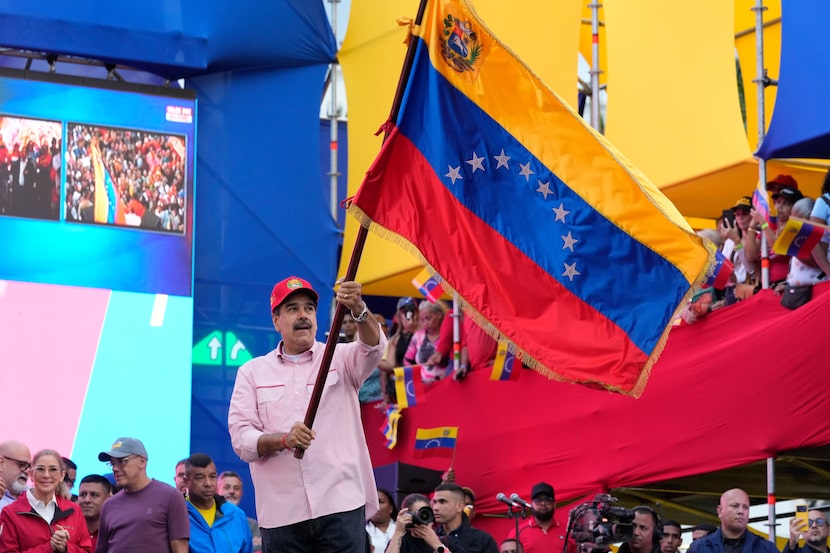
Tensions surrounding U.S. foreign policy and immigration practices have sparked significant public debate. Recent actions by President Donald Trump, including the decision to close Venezuelan airspace, have drawn criticism for potentially escalating conflicts with Nicolas Maduro‘s government. Critics argue that this closure, ostensibly aimed at combating drug trafficking, appears to be a politically motivated move that raises concerns about U.S. intentions in the region.
In a letter to the editor, a concerned reader expressed dismay at Trump’s choice to close airspace over Venezuela, describing it as a “hostile and illegal action.” The letter highlights the paradox of Trump’s stance on drug trafficking; while he seeks to counteract Venezuelan drug cartels, he has also announced intentions to pardon former Honduran president Juan Orlando Hernandez. Hernandez was convicted in a New York federal court on charges of drug trafficking and sentenced to 45 years in prison. The reader questions the consistency of Trump’s policies, suggesting that his actions might lead to further military engagement with Venezuela.
The conversation around immigration practices in the U.S. has also intensified. In response to local violence, some individuals have called for increased actions by Immigration and Customs Enforcement (ICE). A letter to the editor voiced concern over the vetting of immigrants, suggesting that undocumented status should not warrant workplace arrests or family separations. The writer pointed out that evidence indicates undocumented immigrants commit fewer crimes than citizens, raising questions about the effectiveness of ICE’s current strategies.
As the conversation continues, significant incidents, such as mass arrests and the discovery of migrants in refrigerated trailers, underscore a troubling decline in public trust in the immigration system. Kristi Noem, Secretary of the Department of Homeland Security, has made remarks about “remigration,” which have prompted discussions about oversight and constitutional integrity in enforcement practices. A Texas business owner emphasized the need for a humane approach, arguing that immigration policy reflects the character of the nation.
In local news, Dallas city officials, including City Manager Kimberly Bizor Tolbert and Sanitation Director Cliff Gillespie, are actively seeking to change how trash is collected in the city. A recent survey aims to determine whether residents prefer curbside pickup or alley collection. Despite community resistance, officials believe private companies may offer better solutions for waste management, as they typically provide enhanced customer service and operational efficiency.
Sports fans have also expressed their views on unexpected outcomes in college football, particularly with Virginia and Duke set to compete in the Atlantic Coast Conference championship. This situation arose due to Southern Methodist University missing a crucial opportunity in an earlier game.
In cultural developments, an emerging organization, Mormon Women for Ethical Government, has garnered attention for its nonpartisan advocacy. The group is gaining traction and making its presence felt in discussions about ethical governance, reflecting a growing movement among women to influence political discourse.
As these issues unfold, they highlight the complexities of U.S. foreign and domestic policies, impacting lives both at home and abroad. The interplay of public opinion, government actions, and community responses continues to shape the narrative on these critical subjects.