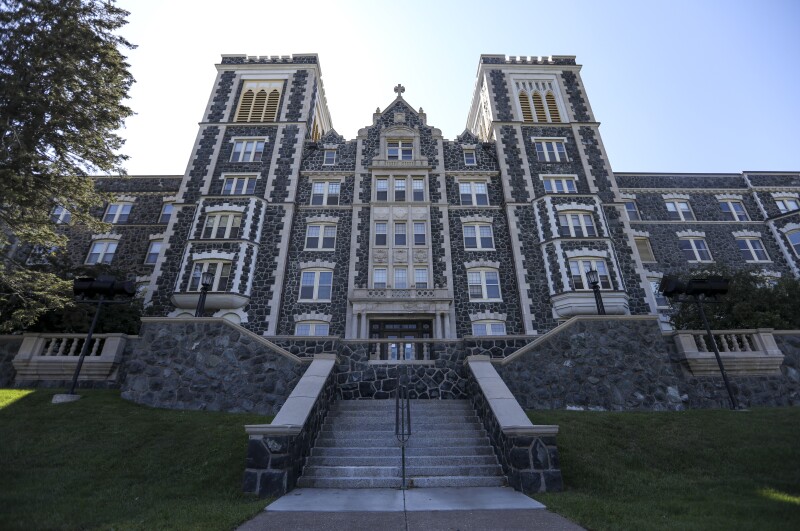
The College of St. Scholastica, located in Duluth, Minnesota, is celebrating its 114th year as a vital educational institution. Under the leadership of President Barbara McDonald, the college is committed to fostering professional growth and community development while upholding its Catholic Benedictine values. With a focus on innovation, the college aims to prepare students to meet the challenges of the future.
In a recent announcement, President McDonald highlighted several key initiatives designed to bolster the college’s contributions to local and regional communities as it looks ahead to 2026. A significant aspect of this commitment is embodied in a comprehensive economic-impact study completed last year. The study revealed that St. Scholastica generates a direct and indirect economic impact of more than $227 million for the Twin Ports area, underscoring the institution’s role as a catalyst for regional prosperity.
Strategic Growth and Educational Innovation
In May, the college’s Board of Trustees approved the “Strategic Plan 2030: Innovating Today for a Dynamic Tomorrow,” which outlines four major pillars: institutional sustainability, student success, academic programming, and lifelong learning. One notable initiative is the upcoming Center for Professional Training and Lifelong Learning, set to launch in January 2025. This center will offer professionals opportunities to enhance their skills through short courses and certificates in critical fields such as artificial intelligence and health care.
The college’s commitment to health care education remains strong, with over 1,100 graduates in 2023. Many of these graduates have gone on to serve vital roles within health care organizations, including Essentia Health and Aspirus St. Luke’s, thereby contributing to a robust health care workforce across the region. To further support this mission, plans are underway for a significant renovation of the Duluth campus’s Science Center, aimed for completion in 2027. This upgrade will create a state-of-the-art advanced practice suite, enhancing training opportunities for nursing and physician-assistant programs.
Students at St. Scholastica benefit from a comprehensive liberal arts education, which includes rich experiences in humanities, arts, sciences, and fine arts. The college promotes significant undergraduate research initiatives, such as the Innovation Scholars Program, enabling students to engage in meaningful projects that prepare them for future challenges.
Leadership Transition and Future Aspirations
In a significant leadership transition, President McDonald announced her retirement, effective July 3, after seven years at the helm and over 35 years in education. While this change is bittersweet, McDonald expressed confidence that the groundwork laid by the college community will ensure a smooth transition for her successor and continued success for the institution.
As the college navigates this pivotal moment, McDonald remains optimistic about the future. She emphasized the importance of “building the future,” a tagline that captures the college’s commitment to fostering pathways to success for its students and the broader community.
The College of St. Scholastica stands poised to continue its legacy and expand its impact in Duluth and beyond, driven by a commitment to education, innovation, and community engagement.