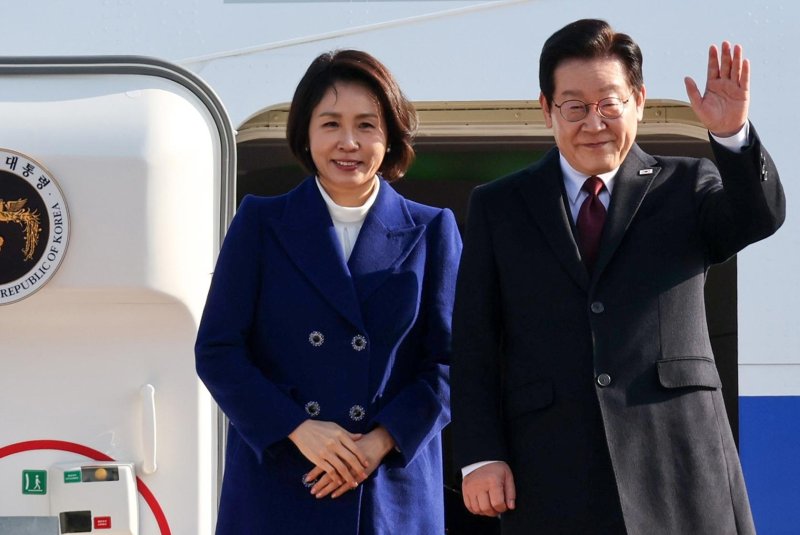
Chinese authorities welcomed South Korean President Lee Jae-myung as he commenced a state visit to Beijing on January 4, 2024. This visit marks the first state trip to China by a South Korean leader in nine years. Observers indicate that the trip aims to mend relations that have been strained due to previous administrations’ policies.
Media coverage in China has been extensive, highlighting the significance of this visit. The country’s state broadcaster, China Central Television, aired an interview with Lee prior to his arrival, showcasing the leader’s intentions to foster goodwill. Analysts suggest that this trip presents a critical opportunity for both countries to reset their diplomatic ties. Zhan Debin, director at the Center for Korean Peninsula Studies at Shanghai University of International Business and Economics, described the visit as a chance to move forward positively.
The backdrop of this visit is essential. The previous South Korean administration adopted policies perceived as confrontational by Beijing. Fang Changping, a political science professor at Renmin University, noted that the prior approach did not align with South Korea’s national interests. In contrast, the current government seems committed to recalibrating its relationship with China.
Focus on Neutrality and Bilateral Relations
During the summit, Beijing is expected to encourage Seoul to adopt a neutral stance between the United States and China. This request comes at a time when Japan, under Prime Minister Sanae Takaichi, is strengthening its ties with Washington, which adds complexity to the regional dynamics. Chinese officials are likely to stress the importance of maintaining a balanced position in light of escalating tensions in the Asia-Pacific region.
The agenda for Lee’s meetings includes discussions on China’s One China policy, which asserts Beijing’s claim over Taiwan. Chinese officials are expected to express concerns regarding any discussions of intervention in a potential Taiwan conflict, emphasizing that such topics could further strain relations.
Additionally, the discussions may address rising anti-China sentiment within South Korea and the ongoing debate about introducing nuclear-powered submarines into the South Korean navy. These topics highlight the delicate balance both nations must navigate in their diplomatic relations.
Lee is scheduled to meet with Xi Jinping on January 5 and Li Qiang the following day. These high-level meetings will likely be pivotal in determining the future trajectory of South Korea-China relations.
As the visit unfolds, both leaders face the challenge of finding common ground in a rapidly evolving geopolitical landscape. The outcome of these discussions could set the tone for future collaborations and tensions in the region.