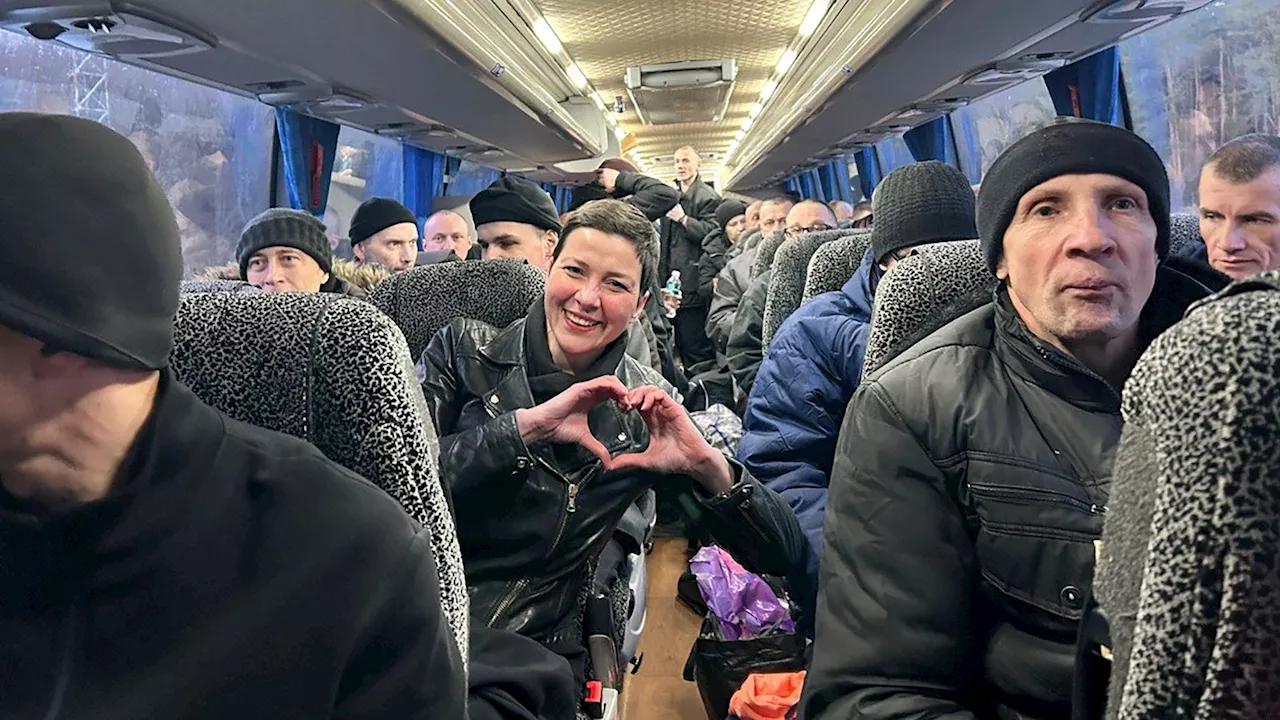
The government of Belarus announced the release of 123 prisoners on December 13, 2025, as part of an agreement with the United States. Among those freed are prominent opposition leader and Nobel Peace Prize winner Ales Bialiatski and fellow activist Maria Kalesnikava. This development follows negotiations aimed at normalizing relations between Belarus and the U.S., which included the lifting of sanctions on the Belarusian potash industry.
Belarusian officials stated that the released individuals had been detained on charges related to “espionage, terrorism, and extremism.” The release, which includes both foreign nationals and Belarusian citizens, signifies a notable shift in the Belarusian government’s approach to its political prisoners, following years of international condemnation for human rights abuses.
Details of the Prisoner Release
Of the 123 detainees, 114 were transferred to Ukraine, while the remaining nine, including Bialiatski, were moved to Lithuania. U.S. Special Envoy for Belarus, John Coale, announced that the U.S. would be lifting sanctions against Belaruskali, a major state-owned potash producer in Belarus, as part of the agreement. Coale emphasized that this move is intended to foster improved relations with Belarus and hinted at the possibility of further sanctions being lifted in the future.
Kalesnikava, who served as the campaign manager for Viktar Babaryka, another opposition leader currently imprisoned, was seen shortly after her release reuniting with Babaryka and another former prisoner, Maxim Znak, at the Ukrainian border. Babaryka had been incarcerated during the controversial 2020 presidential election, where he attempted to challenge President Alexander Lukashenko.
Reactions and Implications
The release of Bialiatski and Kalesnikava has been met with mixed reactions. In a statement to the media from Lithuania, Bialiatski expressed relief, stating, “being released means meeting with family, meeting with friends and continuing my work as a human rights defender.” His release is seen as a significant moment for the Belarusian opposition movement, which has faced severe repression in recent years.
Belarusian opposition leader Sviatlana Tsikhanouskaya welcomed Bialiatski’s return, emphasizing the importance of international solidarity in the fight against authoritarianism in Belarus. The implications of this release extend beyond the individual cases, potentially signaling a shift in Belarus’s diplomatic relations and internal political dynamics.
As the situation continues to unfold, the international community is closely monitoring the impact of these developments on human rights and political freedoms in Belarus. The release of these political prisoners marks a crucial step in addressing the longstanding issues of repression and injustice within the country.