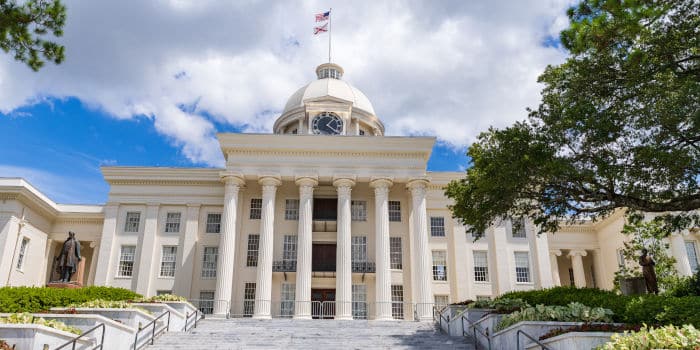
Alabama Representative Phillip Ensler, a Democrat, has officially announced his candidacy for the governorship, aiming to unseat incumbent Kay Ivey. Ensler’s campaign emphasizes innovative solutions for the state, particularly advocating for the introduction of a state lottery and the legalization of sports betting.
Ensler’s Vision for Alabama
As one of the youngest elected officials in Alabama, Ensler has garnered attention for his progressive ideas within the state legislature. He is running alongside former U.S. Senator Doug Jones, also a Democrat, in a bid to reshape the state’s leadership. In his campaign, Ensler has laid out a clear agenda focused on practical issues such as real estate challenges, steering away from divisive topics like diversity, equity, and inclusion (DEI), book bans, and renaming geographic landmarks, which he attributes to a shift in the Republican Party under the influence of former President Donald Trump.
A significant aspect of Ensler’s platform is the proposal to establish a state lottery. He argues that Alabama is among the few states without such a system, and he believes this could lead to substantial financial benefits. “I hear from people all over the state—Democrat, Republican, white, black, poor, more affluent—who say it’s crazy that we don’t have a state lottery,” he stated in an interview with Alabama Political Reporter. Ensler highlighted that residents often travel to neighboring states to purchase lottery tickets, resulting in a loss of potential revenue that could bolster funding for education and healthcare.
Potential Impacts of a State Lottery
Lotteries have historically been used by various states to generate revenue for public services, and they are generally considered to have a low addiction factor. Ensler emphasized that implementing a lottery could help alleviate fiscal shortfalls in Alabama. He believes the financial influx could provide essential funding for education and healthcare initiatives, areas that are critical for the state’s development.
In addition to the lottery, Ensler is also open to discussions about legalizing sports betting. While he has not rushed to propose immediate changes in this area, there is an ongoing dialogue among lawmakers regarding the potential legalization of sports gambling. Any such initiative would likely require a state-wide referendum to amend the state constitution, a process that is complex and time-consuming.
The conversation around expanded gambling in Alabama is not limited to Democrats; even Donald Trump Jr. has weighed in on the issue, indicating a broader interest across the political spectrum. As the campaign progresses, Ensler’s focus on these gaming-related issues may resonate with voters looking for new sources of revenue and economic development.
Ensler’s candidacy represents a significant moment in Alabama politics, as he brings fresh perspectives and a willingness to address pressing fiscal issues. As the election approaches, how voters respond to his proposals will be pivotal in shaping the future of Alabama’s governance.