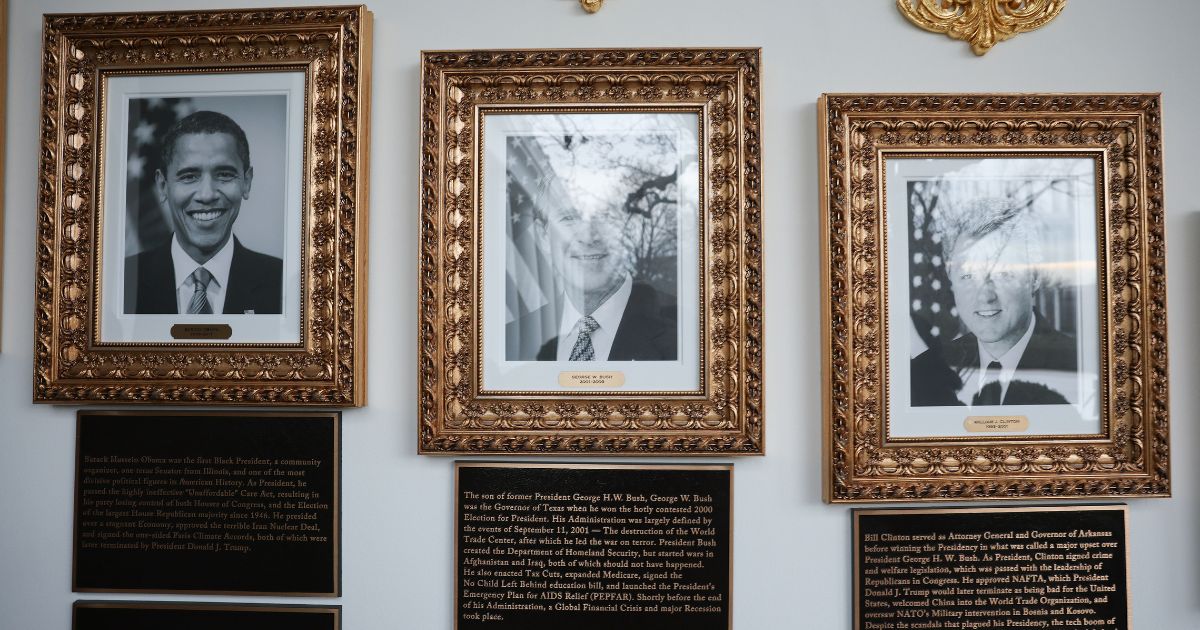
Donald Trump has added a provocative twist to the White House experience with the introduction of new plaques on the Presidential Walk of Fame. These plaques, positioned beneath the portraits of former presidents, feature sharply critical descriptions that reflect Trump’s views. The most notable entry is for former President Bill Clinton, whose plaque’s final line has ignited discussions about its implications.
Located in the White House, the Presidential Walk of Fame serves as a tribute to past leaders. Trump’s recent modifications aim to reshape how these historical figures are portrayed. The plaque for Clinton reads in part, “one of the nicer ones,” while also highlighting Trump’s tendency to critique his predecessors. This change is part of a broader effort by Trump to create an environment in the White House that aligns with his preferences, showcasing a unique political narrative.
Other former presidents have not been spared from this treatment. The plaque for Barack Obama describes him as “one of the most divisive political figures in American History.” This stark characterization has drawn attention for its bluntness, further emphasizing Trump’s political stance. Meanwhile, the plaque for current President Joe Biden, referred to as “Sleepy Joe,” labels him the “worst President in American History” who “oversaw a series of unprecedented disasters.”
Many observers have noted that Trump’s choices reflect his ongoing rivalry with his political opponents. The language used on these plaques suggests a deliberate effort to provoke reactions, particularly from figures like Hillary Clinton, who has been vocal about her disdain for Trump following her loss in the 2016 election. Critics argue that these descriptions are not just historical accounts but serve as political commentary that may resonate with Trump’s base.
The unveiling of these plaques has sparked debate about their appropriateness within the context of a presidential memorial. Supporters of Trump might view this as a refreshing honesty, while opponents see it as a divisive tactic that undermines the dignity of the office. The plaques are positioned facing the Rose Garden, further illustrating their visibility and intended impact.
In the grand scheme, Trump’s alterations to the Presidential Walk of Fame reflect his understanding of the media landscape and his ability to engage his audience. By utilizing sharp language and humor, he aims to reinforce his narrative and maintain a dialogue with his supporters.
As this story unfolds, the implications of Trump’s actions continue to be examined. The decision to highlight these controversial perspectives on former presidents marks a significant shift in how history is commemorated at the White House. The lasting effects of these changes may influence public perception and political discourse in the years to come.