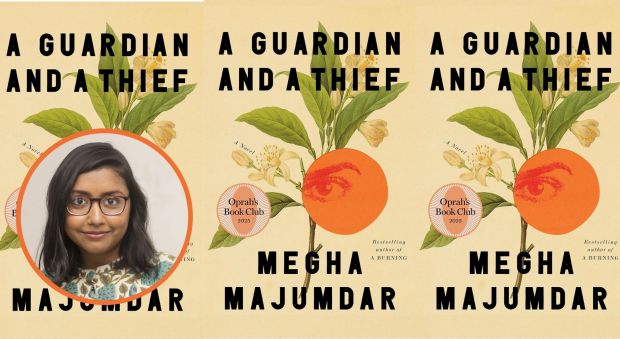
Megha Majumdar’s latest novel, A Guardian and a Thief, delves into the complex choices individuals face during crises. Set in a near-future Kolkata, where climate change has drastically altered daily life, the narrative follows two characters: a mother named Ma and a man named Boomba. Both navigate a world where resources are scarce, and decisions can mean the difference between survival and tragedy.
The title reflects the dual nature of the characters. Ma, a mother who is determined to escape to America with her toddler, embodies the guardian role as she protects her family. Conversely, Boomba, who has left rural India seeking a better life, finds himself in a precarious position where he must also act as a guardian, albeit through morally ambiguous choices. As Majumdar illustrates, both characters engage in acts of theft, whether taking food to feed a family or claiming space and opportunities in a city fraught with desperation.
In this novel, Majumdar weaves a narrative that highlights the human condition in times of crisis. The scarcity of food and water creates a backdrop that forces individuals to confront their morals. For instance, Ma runs a shelter compassionately, yet she resorts to quietly taking from its donations to feed her daughter. This portrayal raises significant questions about how far individuals will go to ensure their family’s survival.
Confronting Ethical Dilemmas in a Climate-Affected World
Majumdar, who was raised in Kolkata before her education at Harvard and Johns Hopkins, emphasizes the impact of global forces like climate change and inequality on personal choices. When asked about the erosion of humanity in her characters, she notes, “What does that do to your humanity and to your soul to have to make those calculations?” This inquiry shapes the core of her narrative, exploring the conflict between survival instincts and ethical considerations.
The novel unfolds over a week, during which Ma’s plans to escape face unforeseen challenges, while Boomba seizes an opportunity to redeem his past mistakes. Their paths are destined to collide, creating a scenario where tragedy looms. Majumdar’s character-driven storytelling invites readers to reflect on the broader systems that constrain individual freedom and the moral dilemmas that arise when societal structures fail.
The author articulates her belief that literature can illuminate how individuals navigate complex systems. “What is free will for a person when they are living in a network which is much bigger than them?” she asks, highlighting the struggle for autonomy in a fractured world.
A Reflection on Reality and Human Nature
Majumdar’s exploration of her characters’ compromises does not stem from cynicism but rather a realistic portrayal of human behavior. She acknowledges that during crises, people can exhibit both selfish and generous tendencies. “I think that we will probably be incredibly generous at times,” she reflects, emphasizing that while survival can lead to harsh decisions, it can also reveal a profound capacity for empathy and kindness.
The writing process, according to Majumdar, is an interplay of control and spontaneity. While she thoughtfully builds her characters around moral dilemmas, she also allows them to evolve organically. “I was on a panel very recently… and he spoke about allowing his characters to teach him who they are and what the book needs to be,” she shares, illustrating the balance between authorial intent and the characters’ autonomy.
Majumdar’s concise writing style contributes significantly to the novel’s impact. “I tend to write very compressed pages,” she admits, aiming for clarity and precision in her storytelling. This commitment ensures that every scene serves a purpose, enhancing the reader’s understanding of the narrative.
Amidst the weighty themes, Majumdar also seeks to portray the vibrancy of Kolkata. She notes, “I wanted to show that it is a city where so much life is going on.” This aspiration adds depth to the narrative, illustrating that even in dire circumstances, joy and resilience persist.
Writing about children experiencing hardship presents unique challenges for any author. Majumdar acknowledges the emotional weight of such depictions but finds pleasure in the act of creation, drawing from both personal experience and imaginative exploration.
As A Guardian and a Thief enters the literary landscape, it invites readers to confront uncomfortable truths about survival, morality, and the human spirit in times of crisis. Majumdar’s poignant storytelling not only captivates but also compels reflection on the choices we make when the very fabric of society is tested.