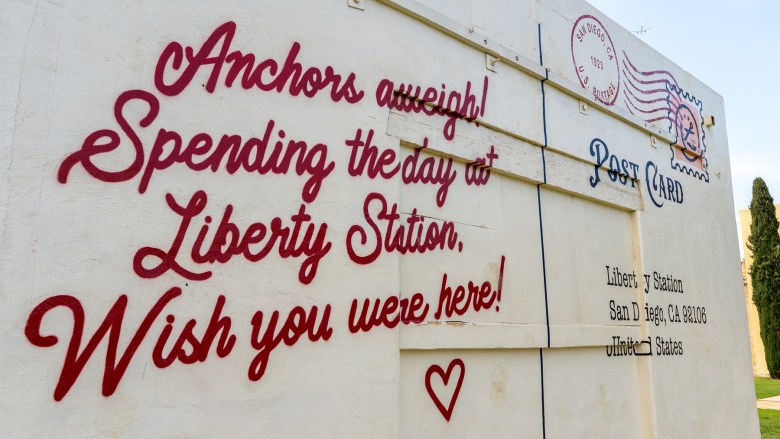
A former military training facility has morphed into a thriving cultural center over the past 25 years. Once known as the Naval Training Center in San Diego, the site now houses the vibrant Arts District Liberty Station, a hub for artistic expression and community engagement. Established in 2000, the district has evolved from a collection of neglected buildings into a bustling center featuring over 100 tenants, including art studios, galleries, shops, and performance spaces.
The transformation of Liberty Station began in the mid-1990s when the military downsized and closed the training center. The base, which had been operational for more than 75 years, ceased its functions incrementally starting in 1994, with the final closure occurring in 1997. The city of San Diego negotiated a lease for the land, paving the way for redevelopment into a mixed-use project that would prioritize arts and culture.
Lisa Johnson, President and CEO of Arts District Liberty Station, highlights the district’s dedication to enriching the lives of San Diegans and visitors alike. “We now support artists from San Diego, Imperial County, eastern Baja California, and tribal communities, strengthening artistic connections across the region,” she stated.
Initially, the site served as a training ground for Navy recruits, teaching them essential skills and traditions for military life. Today, the same buildings that once prepared sailors for service now foster creativity and artistic collaboration. Johnson remarked on this shift, saying, “Turning former barracks buildings into art studios and converting former military classrooms into educational spaces for music, arts, and dance is truly a feat.”
One of the key additions to the Arts District is the Joan and Irwin Jacobs Performing Arts Center, commonly referred to as “The Joan.” This facility is home to the Cygnet Theatre Company, which produces a year-round season of professional off-Broadway-style theatre and educational programs. Cygnet’s Executive Director, Bill Schmidt, emphasized the significance of the new venue, stating, “What the Arts District needed was a live venue to activate the campus, and we needed a new home. It was a perfect match.”
The theatre’s relocation from its previous site in Old Town to Liberty Station has proven beneficial. Previously housed in a 7,700-square-foot building with a 240-seat theatre, Cygnet now operates in a much larger 42,000-square-foot facility featuring two performance spaces—one seating 282 and the other flexible for up to 155 seats. In addition to the extra space, Schmidt noted the advantages of being part of the Arts District. “It’s a hub of arts activity, a beautiful campus, and has abundant free parking,” he said, referencing the importance of accessibility for San Diego residents and visitors.
Accessibility remains a cornerstone of the Arts District’s mission. Johnson pointed out that, given the high cost of living in San Diego, the district provides many free and low-cost options for arts, culture, and entertainment. This commitment ensures that meaningful experiences are available to everyone.
Among the diverse offerings within the district is the San Diego Craft Collective. This organization provides woodworking and craft classes for all ages and has found its permanent home within Liberty Station. Originally operating as a pop-up, the Craft Collective established its headquarters in 2019, creating a full woodworking studio and expanding to include a glass studio and ceramics workshops. Founder and President Steffanie Dotson expressed her enthusiasm for the supportive environment, stating, “Being part of Arts District Liberty Station allows the Craft Collective to reach a broader audience and really flourish as a creative nonprofit in a bona fide arts district.”
Furthermore, Dotson highlighted the community aspect of the district, describing it as a “bustling, creative, fun, family-friendly” atmosphere enriched by the presence of other local businesses, artists, and nonprofit organizations.
While the Arts District spans 100 acres, its footprint is not expected to grow due to contractual restrictions. Nonetheless, Johnson noted that the site continues to evolve. “While our formal footprint of oversight won’t expand, we often collaborate with other ownership groups at Liberty Station to infuse the entire campus with cultural opportunities,” she explained.
Plans for the future include the redevelopment of remaining buildings that have not yet been renovated. This initiative is in partnership with local developer and restaurateur Ryan Thorsen, who operates Mr. A’s eatery. Johnson expressed excitement about working with Thorsen, stating, “In addition to his creative approach, Ryan is deeply passionate about celebrating and honoring the history of the former Naval Training Center.”
The transformation of Liberty Station from a military training facility into a cultural arts hub illustrates the potential for repurposing historical sites. With ongoing developments and a commitment to community engagement, Arts District Liberty Station stands as a testament to the power of creativity in revitalizing urban spaces.