Designer Elizabeth Hay has transformed a townhouse in East Singapore into a cozy sanctuary, showcasing her distinct approach to interior design. Known for creating layered and expressive environments, Hay was tasked with designing a functional home for owners who appreciate bold decoration and travel. The challenge presented by the architecture, typical of Singapore’s 1980s and 1990s developments, was to inject charm and warmth into a space that was primarily practical.
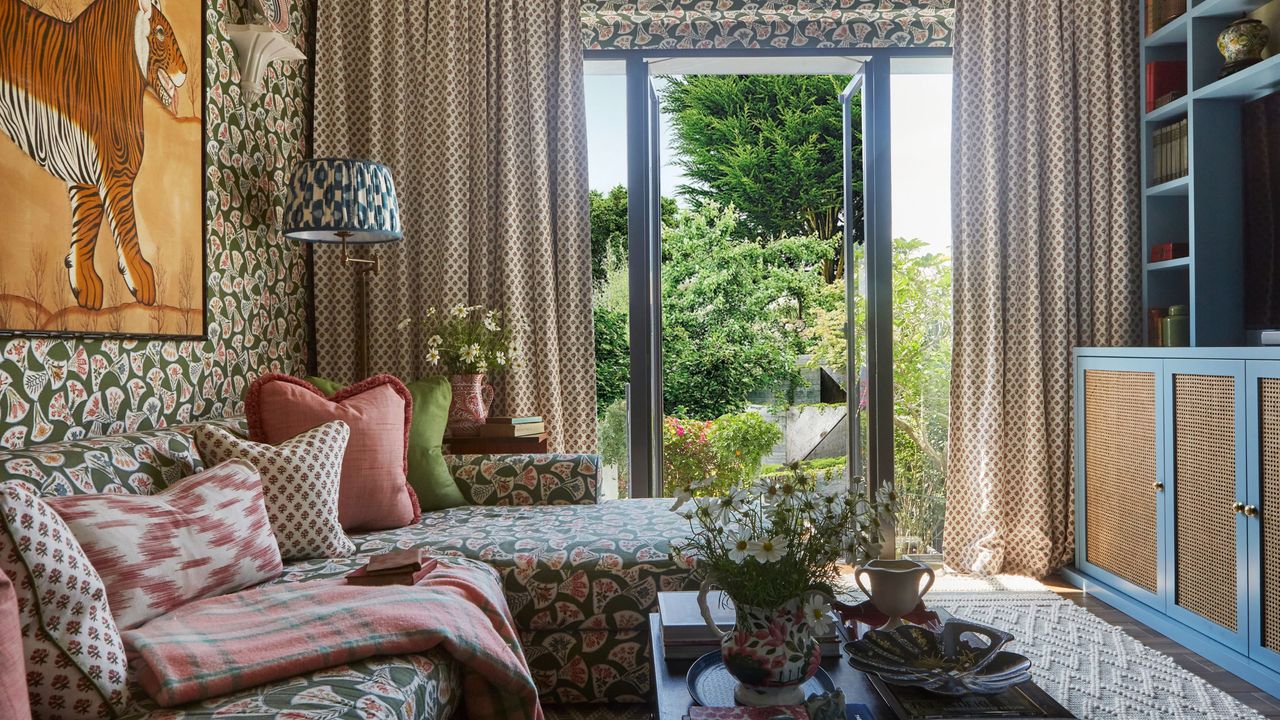
In response to the brief, Hay focused on the use of pattern rather than structural changes. The snug room stands out as a testament to her innovative use of fabric. “The aim was to create a private sanctuary… somewhere they could truly switch off and feel enveloped,” Hay explains. The central feature of the design is the MONFAUCON by Christopher Moore fabric, characterized by a graphic, fan-shaped motif adorned with traditional florals against a deep green background.
Creating a Cohesive Design
Rather than confining the fabric to upholstery or an accent wall, Hay extended it throughout the snug. This technique eliminates visual breaks, allowing the eye to perceive the space as a single, immersive environment. “Choose the right fabric for an all-over look,” she suggests, recommending organic patterns such as floral stripes or flowing motifs that create a calming atmosphere.
By integrating various tones and textures, Hay ensured that the secondary patterns and fabrics complemented the main print. “The entire living room color scheme was derived from the main fabric,” she notes, underscoring the importance of maintaining cohesion throughout the design. The pink accents and blue cabinetry were carefully chosen to echo the tones found within the central textile.
Hay emphasizes the significance of scale and tone in achieving a harmonious look. By controlling the color story and varying the scale of each pattern, she created an effect that feels soft and inviting rather than overwhelming. The introduction of contrasting textures, such as a subtle tonal rug, adds depth and visual relief, enhancing the overall cocooning feel of the room.
Strategic Layout and Lighting
The furniture arrangement plays a crucial role in the snug’s design. Instead of floating pieces in the center, Hay anchored the space with an L-shaped sofa tucked into the corner. “It maximizes the corner living room layout while creating a deeply comfortable seating zone,” she explains. This layout fosters a welcoming atmosphere perfect for lounging and relaxation.
Lighting in the space is designed to enhance intimacy. Hay opted for floor lamps and sculptural wall sconces with patterned shades, avoiding overhead lighting. “We layered floor lamps and wall lights to create a soft, cozy glow for evenings spent relaxing,” she shares. The choice of lighting complements the rich textures and colors, reinforcing the cozy ambiance.
The built-in media wall, painted a confident blue, serves as a visual palate cleanser within the room. “It wasn’t intended as a focal point, but it introduces contrast and freshness,” Hay notes. This color choice prevents the snug from feeling overly enclosed while maintaining its cohesive design.
In styling the room, Hay incorporated the owners’ collection of Asian antiques, ensuring the space felt personal and authentic. “It was important to incorporate their pieces to avoid a staged look,” she explains, highlighting the significance of personal touches in interior design.
The takeaway from this thoughtfully crafted snug is clear: commit to a cohesive design and then edit carefully. As Hay demonstrates, a balance of patterns, textures, and personal elements can create a warm, inviting space that feels both unique and functional.