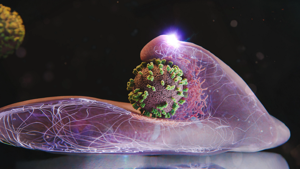
Researchers from Switzerland and Japan have successfully captured the exact moment a person becomes infected with the influenza virus. This breakthrough, published on October 10, 2023, in the journal Nature Communications, offers unprecedented insights into the infection process, which could pave the way for developing more effective antiviral therapies.
The study, conducted by scientists at the University of Geneva and the University of Tokyo, utilized high-resolution imaging techniques to observe how the influenza virus enters cells. By capturing this moment, researchers can better understand the mechanisms that allow the virus to hijack host cells, ultimately leading to infection.
This innovative approach has significant implications for public health. Traditional antiviral treatments often target various stages of a virus’s life cycle but may not effectively address the initial infection phase. With this new understanding, scientists aim to create targeted therapies that can disrupt the infection process right from the start.
Understanding the flu virus’s entry mechanism is crucial, as influenza remains a major global health concern. The World Health Organization estimates that seasonal influenza epidemics result in approximately 3 to 5 million severe cases and between 290,000 to 650,000 respiratory deaths each year. By developing more targeted antiviral therapies, researchers hope to reduce the burden of influenza on healthcare systems worldwide.
The researchers employed advanced imaging techniques, including fluorescence microscopy, to visualize the interaction between the influenza virus and human cells in real-time. This high-resolution observation allowed them to analyze the dynamic process of viral entry, shedding light on critical factors involved in infection.
As the world continues to grapple with the impact of viral infections, this research marks a significant step forward in understanding how viruses operate at a molecular level. The findings not only contribute to the scientific community but also hold promise for improving treatment options for individuals affected by influenza.
Looking ahead, the research team plans to expand their studies to include other respiratory viruses, aiming to uncover similar mechanisms that could inform treatment strategies for a wider range of infections. As the fight against viral diseases evolves, this groundbreaking work underscores the importance of innovative research in the quest for effective therapies.