Back pain affects countless individuals, often leading to discomfort that hinders daily activities. To address this common issue, certified yoga therapist Jillian Pransky recommends two restorative yoga exercises designed to alleviate tension and restore mobility.
Many people experience back tension for various reasons, including stress and long hours spent sitting. Pransky emphasizes the significant role of the psoas muscle in this discomfort. “The psoas is the only muscle connecting the legs to the spine,” she explains. “It stabilizes our posture and is closely tied to our stress response.” This muscle can become overly activated due to stress, contributing to persistent back pain.
Understanding the anatomy of the psoas is crucial. There are two psoas muscles, one on each side of the body, which start at the inner thigh bone and connect to the spine. When contracted, they can pull on the spine, leading to discomfort in the back, hips, and even digestive issues. Therefore, keeping the psoas relaxed is essential for minimizing back tension.
Two Effective Exercises to Alleviate Back Tension
Pransky’s recommended exercises come from restorative yoga, a practice focused on deep relaxation. The following poses specifically target the psoas, providing effective relief from back tension.
1. **Sphinx Pose and Crocodile Pose**
Begin on your belly in Sphinx Pose, resting your forearms on the ground and lifting your chest. Allow your hips to be heavy as you inhale, gently lifting your upper body. Transition into Crocodile Pose by bending one knee out to the side and bringing your cheek to the ground. Fully relax your body weight into the ground while breathing deeply. Repeat this for 2-3 rounds, then switch sides.
These two poses work together to reset the body. Sphinx Pose gently extends the front body, while Crocodile Pose encourages complete relaxation. According to Pransky, this sequence allows the body to “fully surrender,” promoting the relaxation response and relieving tension in the psoas and lower back.
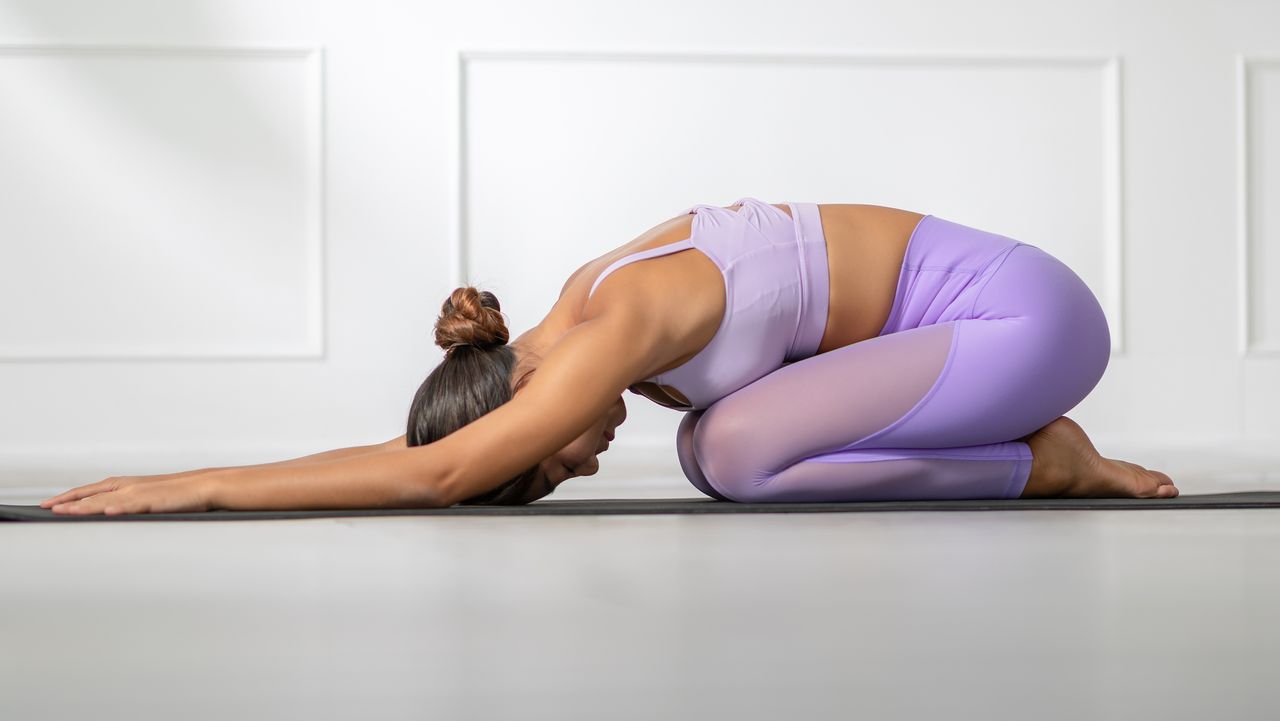
2. **Child’s Pose**
Start in a kneeling position with your big toes touching and knees apart. Extend your arms forward and lower your torso between your thighs, resting your forehead on the mat. Hold this position for 1-3 minutes, focusing on deepening your breath and softening any remaining tension.
Child’s Pose provides a simple method to ease discomfort in the lower back and hips. While it does not directly stretch the psoas, it helps the surrounding areas relax, indirectly benefiting the psoas. Pransky notes that this pose allows the body to “integrate the effects of previous movements,” providing grounding and a sense of security.
Incorporating these two yoga poses into your routine may help alleviate back tension and improve overall mobility. For those who experience chronic discomfort, these exercises offer a gentle yet effective approach to relieve pain and enhance well-being.